


Hey there! As a supplier in the Robotic Welding Integration field, I've been getting a lot of questions about the standards for weld bead appearance. It's a crucial aspect of robotic welding, and getting it right can make a huge difference in the quality of the final product. So, let's dive into what those standards are and why they matter.

Why Weld Bead Appearance Matters
First off, you might be wondering why the appearance of the weld bead is such a big deal. Well, it's not just about making the weld look pretty. The appearance of the weld bead can tell you a lot about the quality of the weld itself. A well - formed weld bead indicates proper heat input, good shielding gas coverage, and correct welding parameters. On the other hand, a poor - looking weld bead could be a sign of issues like porosity, lack of fusion, or excessive spatter, which can all compromise the structural integrity of the welded joint.
Basic Standards for Weld Bead Appearance
Width and Reinforcement
The width of the weld bead should be consistent along the length of the weld. In most cases, the width is determined by the welding process, the type of joint, and the thickness of the materials being welded. For example, in a butt joint, a wider weld bead might be required for thicker materials to ensure proper fusion. The reinforcement, which is the amount of weld metal above the surface of the base metal, should also be within a specified range. Too much reinforcement can create stress concentrations, while too little might not provide enough strength to the joint.
Uniformity
Uniformity is key when it comes to weld bead appearance. The bead should have a smooth, even surface without any sudden changes in width or height. Any irregularities in the bead can indicate problems with the welding equipment, such as inconsistent wire feed or unstable arc. A uniform weld bead also looks better and is more likely to meet the aesthetic requirements of the end - product.
Lack of Defects
There should be no visible defects in the weld bead, such as cracks, porosity, or undercutting. Cracks are a serious issue as they can propagate under stress and lead to joint failure. Porosity, which appears as small holes in the weld, is usually caused by improper shielding gas coverage or contaminated welding materials. Undercutting, where the base metal is melted away along the edges of the weld, weakens the joint and can also be a sign of excessive heat input.
Impact of Robotic Welding on Weld Bead Appearance
One of the advantages of robotic welding integration is that it can help achieve better weld bead appearance compared to manual welding. Robots can perform repetitive tasks with high precision, ensuring consistent weld bead width, reinforcement, and uniformity. They can also maintain a stable arc and wire feed, reducing the chances of defects.
However, robotic welding is not without its challenges. The programming of the robot needs to be accurate to ensure that the welding parameters are set correctly for each specific joint. Any errors in the programming can result in poor weld bead appearance. Additionally, the robot's sensors and control systems need to be regularly maintained to ensure optimal performance.
Meeting Industry Standards
Different industries have their own specific standards for weld bead appearance. For example, the automotive industry might have very strict aesthetic requirements for visible welds on car bodies. The aerospace industry, on the other hand, focuses more on the structural integrity of the welds, so the standards for defect - free welds are extremely high.
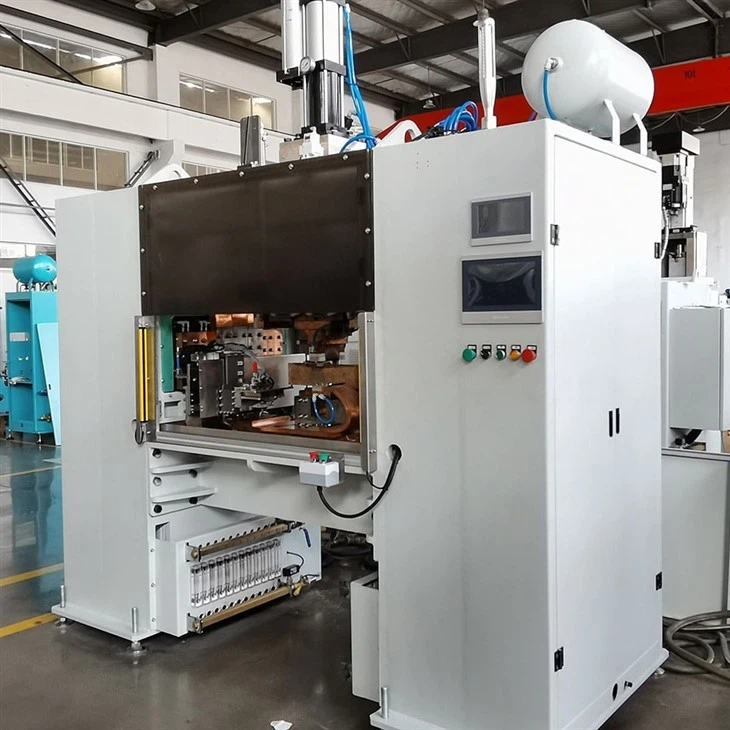
As a Robotic Welding Integration supplier, we work closely with our clients to understand their specific requirements and ensure that our welding systems can meet the relevant industry standards. We offer a range of welding machines, such as the Motor Terminal Welding Machine, Automatic Silver Contact Welding Machine, and Frame Circuit Breaker Busbar Welding Machine, which are designed to produce high - quality welds with excellent bead appearance.
Quality Control in Robotic Welding
To ensure that the weld bead appearance meets the standards, we implement a comprehensive quality control process. This includes pre - weld inspections of the materials and equipment, real - time monitoring of the welding process, and post - weld inspections of the finished welds.
During pre - weld inspections, we check the cleanliness of the base materials, the alignment of the joints, and the calibration of the welding equipment. Real - time monitoring allows us to detect any issues with the welding process, such as changes in the arc voltage or wire feed speed, and make adjustments immediately. Post - weld inspections involve visual inspections, non - destructive testing, and sometimes destructive testing to ensure that the weld meets all the required standards.
How Our Robotic Welding Integration Can Help
Our robotic welding integration solutions are designed to meet the highest standards for weld bead appearance. We use advanced welding technologies and state - of - the - art equipment to ensure consistent, high - quality welds. Our team of experts can work with you to develop customized welding programs that take into account your specific requirements and the standards of your industry.
Whether you need a Motor Terminal Welding Machine for your electrical components, an Automatic Silver Contact Welding Machine for your silver contact applications, or a Frame Circuit Breaker Busbar Welding Machine for your circuit breaker manufacturing, we've got you covered.
Conclusion
In conclusion, the standards for weld bead appearance in robotic welding integration are crucial for ensuring the quality and integrity of the welded joints. By focusing on width, uniformity, and the absence of defects, we can produce welds that not only look good but also perform well under stress. Our Robotic Welding Integration solutions are designed to meet these standards and help our clients achieve their manufacturing goals.
If you're interested in learning more about our products and how they can help you meet the weld bead appearance standards in your industry, don't hesitate to reach out for a procurement discussion. We're here to help you take your welding operations to the next level.
References
- Welding Handbook, American Welding Society
- AWS D1.1 Structural Welding Code - Steel
- ISO 5817 Welding - Fusion - welded joints in steel, nickel, titanium and their alloys (beam welding excluded) - Quality levels for imperfections


