


Hey there! As a supplier of bench spot welders, I often get asked about the heat-affected zone (HAZ) when using these machines. So, I thought I'd write a blog post to break it down for you.
First off, let's talk about what a bench spot welder is. It's a handy piece of equipment used to join two or more metal parts together by applying pressure and heat at specific points. We offer different types of bench spot welders, like the Dual Head Spot Welder, Capacitor Discharge Welder, and MFDC Spot Welder. Each type has its own unique features and is suitable for different applications.
Now, let's dive into the heat-affected zone. When you use a bench spot welder, the intense heat generated during the welding process doesn't just affect the exact spot where the weld is made. It also has an impact on the surrounding areas of the metal. This area that's been influenced by the heat, but not actually melted, is called the heat-affected zone.
The size and properties of the HAZ depend on several factors. One of the main factors is the welding current. If you use a high welding current, more heat is generated, and the HAZ will be larger. On the other hand, a lower welding current will result in a smaller HAZ. But you can't just go for the lowest current possible because you need enough heat to create a strong weld. It's all about finding the right balance.
The welding time also plays a crucial role. If the welding time is too long, the metal in the HAZ has more time to absorb heat, which can lead to a larger HAZ and potential changes in the metal's properties. For example, the metal might become more brittle or lose some of its strength. Shorter welding times can help keep the HAZ in check, but again, you need to make sure the weld is properly formed.
Another factor is the type of metal you're welding. Different metals have different thermal conductivities. Metals with high thermal conductivity, like copper, can quickly dissipate heat, resulting in a relatively smaller HAZ. In contrast, metals with low thermal conductivity, such as stainless steel, tend to hold onto the heat for longer, leading to a larger HAZ.
The HAZ can have some significant effects on the welded parts. One of the most common issues is a change in the metal's microstructure. The heat can cause the grains in the metal to grow or change shape, which can affect the mechanical properties of the metal. For instance, the hardness and toughness of the metal in the HAZ might be different from the base metal. This can potentially lead to problems like cracking or failure under stress.
In some cases, the HAZ can also cause corrosion issues. The changes in the metal's microstructure can make it more susceptible to corrosion. This is especially important in applications where the welded parts will be exposed to harsh environments.
So, how can you control the heat-affected zone when using a bench spot welder? Well, as I mentioned earlier, adjusting the welding current and time is a good start. You can also use cooling techniques. For example, you can use a water-cooled electrode to help dissipate heat more quickly. This can reduce the size of the HAZ and minimize the negative effects on the welded parts.
Proper preheating and post-weld heat treatment can also be beneficial. Preheating the metal before welding can help reduce the temperature gradient between the weld zone and the surrounding area, which can result in a smaller HAZ. Post-weld heat treatment, such as annealing, can help restore the metal's microstructure and improve its mechanical properties.

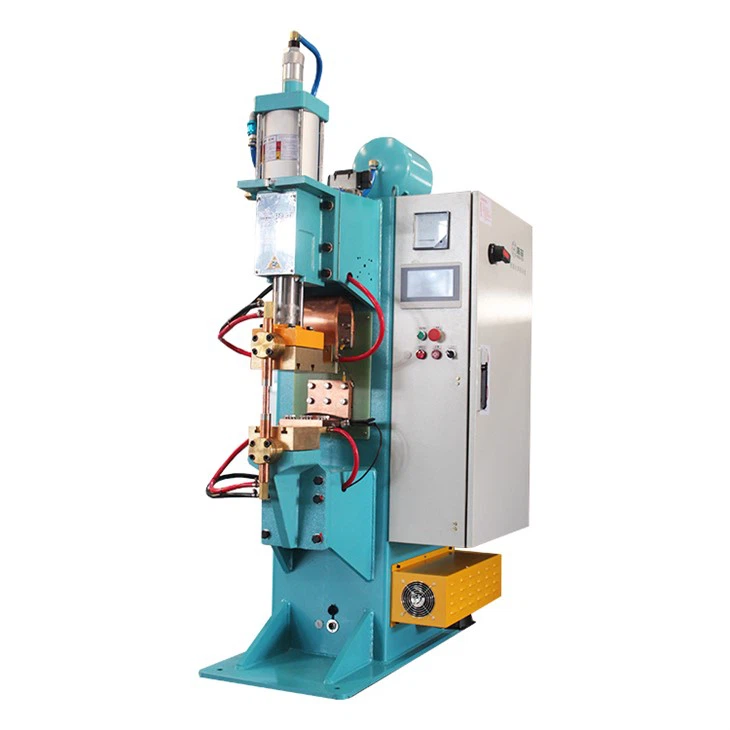
When choosing a bench spot welder, it's important to consider how well it can control the heat-affected zone. Our Dual Head Spot Welder is designed with advanced control systems that allow you to precisely adjust the welding parameters, helping you to minimize the HAZ. The Capacitor Discharge Welder offers a short and intense burst of energy, which can also help keep the HAZ small. And the MFDC Spot Welder provides a stable and consistent welding current, giving you better control over the welding process and the HAZ.
If you're in the market for a bench spot welder and want to learn more about how to manage the heat-affected zone, we're here to help. Our team of experts has years of experience in the welding industry and can provide you with all the information you need to make the right choice for your specific application. Whether you're working on small-scale projects or large industrial applications, we have the right bench spot welder for you.
Don't hesitate to reach out to us if you have any questions or if you're ready to start a conversation about purchasing a bench spot welder. We're always happy to assist you in finding the best solution for your welding needs.
References:
- Welding Handbook, American Welding Society
- Principles of Resistance Welding, RWMA (Resistance Welding Manufacturers Association)


