

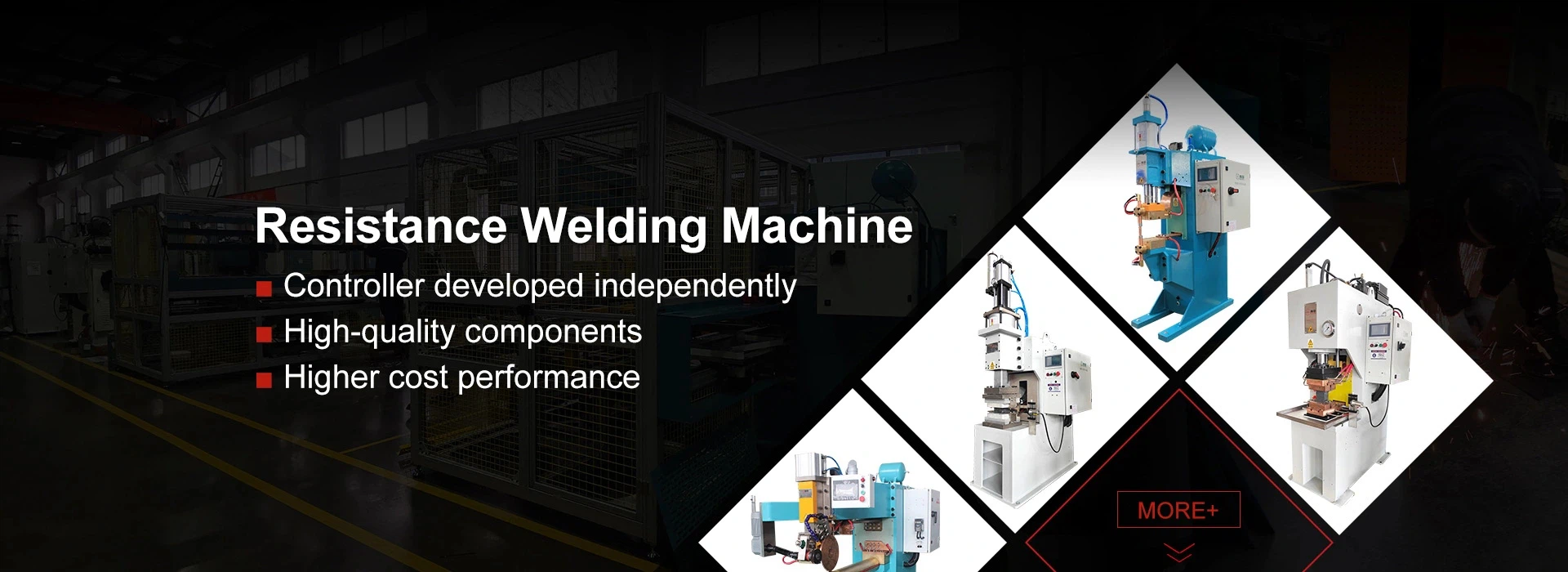
Copper braids used in switchgear, circuit breakers, electrical contacts and flexible conductive connections must be processed accurately before they can be connected to terminals, busbars or contact components. Loose copper strands need to be compacted into a stable shape, while the welding and cutting positions must remain consistent from one product to the next.
HAIFEI provides copper braid welding machines and customized automated production lines for processing bare copper and tinned copper braids. According to the product structure and required production capacity, the system can integrate automatic feeding, resistance welding, end compacting, length control, cutting, unloading and process monitoring.
Our equipment can be configured for individual production processes or developed as a complete copper braid processing line. It is suitable for manufacturers of switchgear components, circuit breakers, electrical flexible connectors, copper shunts and other current-carrying products.


Send us your copper braid samples, drawings or technical requirements. Our engineers will evaluate the braid size, welding area, cutting length and production target before recommending the machine configuration.
Get a Copper Braid Welding Solution
What Is a Copper Braid Welding Machine?
A copper braid welding machine uses controlled welding current and electrode pressure to compact and join the individual copper strands within a selected area. The processed section becomes dense and dimensionally stable, allowing it to be cut, punched, drilled, bent or connected to another conductive component during subsequent production.
Depending on the equipment configuration, the machine can perform several operations:
Compact loose copper strands into a flat or square section;
Weld the middle or end section of a copper braid;
Produce a stable cutting area before separation;
Cut continuous copper braid to a preset length;
Join copper braid to terminals, contacts or copper busbars;
Process single, double or multiple copper braids;
Automatically feed and unload finished components.
In different markets, this type of equipment may also be called a copper braid compacting machine, copper braid solidification machine, copper braid electroforging machine, copper braid press square machine or copper braid welding and cutting machine. Although the terminology varies, the basic requirement is similar: turning flexible braided copper strands into a repeatable conductive component suitable for assembly.


To learn more about our products, please click here to visit our website.
Copper Braid Processing Problems the Machine Is Designed to Solve
Manual processing can be acceptable for prototypes and small batches, but it becomes difficult to control when production volume increases. Variations in operator positioning, braid tension, welding current and cutting length can directly affect product dimensions and assembly quality.
Inconsistent compacting dimensions
Copper braids are flexible and can easily spread, twist or move during handling. If the material is positioned manually, the width and thickness of the compacted section may vary. This can create problems when the component must fit into a terminal, contact assembly or switchgear mechanism.
The HAIFEI system uses dedicated guiding and clamping structures to hold the braid before welding pressure is applied. The tooling is designed according to the required finished dimensions, helping maintain a more consistent compacted shape.
Loose strands after cutting
Cutting an untreated copper braid can leave loose wires, uneven edges or deformed ends. These problems make subsequent positioning and welding more difficult.
By welding and compacting the specified area before cutting, the individual strands are held together. The cutting mechanism then separates the component through the stabilized section, producing a cleaner and more manageable end.
Unstable product length
When operators measure and cut copper braid manually, dimensional differences may occur between batches. These differences can affect the installation position and flexibility of the finished connector.
An automated copper braid welding and cutting machine uses programmed length control and servo feeding or pulling. Once the required length is entered through the control interface, the machine repeats the same feeding, welding and cutting sequence for each component.
Variation in welding quality
Copper has high electrical and thermal conductivity, which means the process requires sufficient current, stable pressure and suitable electrode contact. An incorrect combination can result in incomplete consolidation, excessive indentation or unnecessary surface oxidation.
The welding power source, pressure system, tooling and cooling arrangement must therefore be selected according to the braid material, cross-sectional area and compacting dimensions. HAIFEI evaluates these conditions through sample testing before confirming the final equipment configuration.
Copper Braid Welding and Cutting Process
A complete copper braid processing cycle can include the following stages.
1. Material feeding and guiding
Continuous copper braid is loaded into the feeding section. Guide structures keep the material aligned and reduce twisting before it reaches the welding position. The feeding mechanism can be adjusted or customized for different braid widths and thicknesses.
2. Automatic length setting
The operator enters the required product length through the human-machine interface. A servo-controlled feeding or pulling mechanism moves the copper braid to the programmed position.
For manufacturers producing several connector lengths, different recipes can be stored to reduce setup time during product changeover.
3. Welding and compacting
The braid is clamped between the welding electrodes. Controlled electrode pressure gathers the individual copper strands, while the welding current produces localized resistance heating.
The combination of heat and pressure consolidates the braid into the required flat or square profile. Welding current, welding time and pressure are adjusted according to the braid specification and desired compacting dimensions.
4. Precision cutting
After the compacted area is formed, the cutting unit separates the finished component at the preset position. Because the strands have already been stabilized, the cut section is less likely to spread or deform during subsequent handling.
5. Automatic unloading
The finished copper braid connector can be discharged into a collection tray or transferred to the next workstation. For fully automated lines, the unloading system can be connected to inspection, marking, terminal assembly or secondary welding stations.
Machine Configurations for Different Production Requirements
Not every copper braid manufacturer needs the same level of automation. HAIFEI can configure the equipment according to the existing process, production volume and product range.
Configuration |
Main functions |
Suitable production |
|---|---|---|
| Copper braid welding machine | Manual loading, positioning and welding | Sampling, small batches and multiple product types |
| Semi-automatic compacting machine | Manual loading with controlled welding and compacting | Medium-volume production |
| Automatic welding and cutting machine | Feeding, length control, welding, compacting and cutting | Repetitive batch production |
| Fully automated production line | Feeding, welding, cutting, unloading, inspection and data collection | High-volume switchgear and connector production |
| Customized assembly line | Braid processing plus terminal, contact or busbar welding | Integrated component manufacturing |
A smaller production volume does not always require a fully automatic system. For customers with frequent product changes, a semi-automatic machine with interchangeable tooling may provide better flexibility. For customers producing standardized components continuously, automated feeding and cutting can reduce labor dependence and improve output consistency.
Copper Braid Welding Solutions for Switchgear and Circuit Breakers
Copper braids are widely used as flexible current-carrying connections because they accommodate movement, vibration and installation tolerances while maintaining electrical continuity.
HAIFEI equipment can be developed for copper braid components used in:
Low-voltage switchgear
Copper braids connect conductive components where a rigid copper busbar would restrict mechanical movement. The braid ends may need to be compacted before drilling, punching, terminal assembly or welding.
MCB and MCCB components
Circuit breaker assemblies may require copper braids to be joined to moving contacts, bimetal components or terminals. Depending on the product design, HAIFEI can develop fixtures and automatic feeding systems for both the braid and the contact components.
ACB current paths
Air circuit breaker current-path assemblies often involve larger conductive components and more complex handling requirements. The solution may include resistance welding equipment, dedicated positioning fixtures, component loading and automatic transfer.
Electrical contacts and flexible connectors
Copper braids can be welded to copper terminals, contact plates, busbars or other conductive parts. The equipment configuration depends on the material combination, contact area, component geometry and required joint performance.
For these applications, customers should provide drawings or samples of the complete assembly rather than only the copper braid dimensions. This allows the engineering team to evaluate tooling access, electrode shape, welding direction and component handling.
Materials and Copper Braid Types
The machine can be evaluated for different braided conductor constructions, including:
- Bare copper braid;
- Tinned copper braid;
- Flat copper braid;
- Round braided copper wire;
- Single-layer braided conductors;
- Multiple copper braids processed together;
- Flexible copper shunts;
- Copper braid and copper terminal assemblies;
- Copper braid and copper busbar assemblies.
Applications involving coated materials, dissimilar metals or highly compacted conductors require separate welding trials. Coating thickness, surface condition and strand diameter can influence the required welding energy and electrode design.
Can the Machine Process 4, 6 and 10 mm² Copper Braids?
Copper braids with cross-sectional areas such as 4, 6 and 10 mm² can be evaluated for welding, end compacting and automatic cutting. However, cross-sectional area alone is not enough to determine the correct equipment.
Before selecting the machine, our engineers also need to confirm:
- Braid width and thickness;
- Individual wire diameter;
- Bare copper or tinned copper construction;
- Number of braids processed at one time;
- Required compacted width and thickness;
- Welding or compacting length;
- Finished component length;
- Required cutting-edge condition;
- Whether the braid will be joined to another component;
- Target production quantity per shift.
Two braids with the same cross-sectional area can have different widths, strand structures and compacting requirements. Sample testing is therefore recommended before finalizing the power source and tooling.
Custom Automation for Complete Copper Braid Production
For customers who want to move beyond a standalone welding machine, HAIFEI can develop a production line around the actual manufacturing sequence.
A customized line may include:
- Copper braid roll or coil loading;
- Material tension control;
- Automatic guiding and straightening;
- Servo-controlled feeding;
- Welding and compacting;
- Automatic length measurement;
- Precision cutting;
- Finished-part unloading;
- Dimensional or visual inspection;
- Marking and production data recording;
- Transfer to terminal or contact welding;
- Automatic sorting of accepted and rejected components.
The final configuration depends on whether the customer is producing cut copper braid sections, finished flexible connectors or complete switchgear contact assemblies. Existing manual operations can also be retained where full automation would not provide a practical return on investment.
Why Work With HAIFEI?
Machine configuration based on actual samples
Copper braid welding cannot be selected only by looking at a general machine catalogue. We evaluate the material construction, compacting size, welding location and production process before recommending the equipment.
01
Welding trials before machine confirmation
Customers can send braid samples, terminals, contacts or assembly drawings for evaluation. Trial welding helps verify whether the proposed process can achieve the required shape and joint condition.
02
Single machines and complete automated lines
HAIFEI can supply a standalone welding unit or integrate material feeding, compacting, cutting, handling and inspection into a customized production system.
03
Tooling developed around the component
The electrode structure, positioning fixture and cutting tooling are designed according to the actual copper braid dimensions and product geometry rather than using one universal fixture for every application.
04
Support for product changeover
For customers producing several braid sizes or component lengths, the machine can be evaluated with adjustable guides, stored welding programs and replaceable tooling.
05
Information Required for a Copper Braid Welding Proposal
To prepare a suitable technical solution, please provide the following information:
- Photos or drawings of the copper braid;
- Copper braid cross-sectional area;
- Braid width and thickness;
- Bare or tinned copper;
- Required welding or compacting dimensions;
- Finished cutting length;
- Components to be welded to the braid;
- Current production method;
- Required production capacity;
- Preferred manual, semi-automatic or fully automatic operation;
- Available power supply and factory conditions.
If drawings are unavailable, you can send several representative samples and a video of your current production process.
FAQ
Q: Can the machine weld tinned copper braid?
A: Yes. Tinned copper braid can be evaluated, but the tin coating, strand structure and required compacting dimensions should be confirmed through sample testing.
Q: Can one machine process different copper braid sizes?
A: It may be possible to process several specifications by changing the welding program, material guides, electrodes or fixtures. The practical range depends on the difference between the smallest and largest products.
Q: Does the machine only weld, or can it also cut the braid?
A: Both configurations are available. A standalone machine can perform welding or compacting, while an automatic line can integrate feeding, length control, welding and cutting.
Q: Can the line produce different finished lengths?
A: Yes. For systems equipped with programmable servo feeding or pulling, operators can set different cutting lengths through the control interface.
Q: Can copper braid be welded directly to a terminal or contact?
A: Yes, depending on the terminal material, joint structure and welding area. Samples or assembly drawings are required to determine the welding method and fixture design.
Q: Is the machine suitable for switchgear components?
A: Yes. The equipment can be developed for flexible connections used in switchgear, MCBs, MCCBs, ACBs and other current-carrying electrical assemblies.
Q: Can you provide a fully automated copper braid production line?
A: Yes. The line can integrate braid feeding, compacting, welding, cutting, unloading, inspection and connection with subsequent assembly stations.
Q: How do I select the right copper braid welding machine?
A: The selection should be based on the braid cross-section, material condition, compacted dimensions, required cycle time and whether additional cutting or assembly processes are needed. Sending samples is the most reliable way to confirm the configuration.
Get a Copper Braid Welding Solution
Whether you need a standalone copper braid welding machine or a complete automated welding and cutting line, the equipment should be selected around your actual product rather than a general machine specification.
Send HAIFEI your copper braid samples, drawings and production requirements. Our engineering team will review the material structure, welding area, cutting length and automation target before preparing a technical proposal.
Send Your Copper Braid Samples for a Welding Test