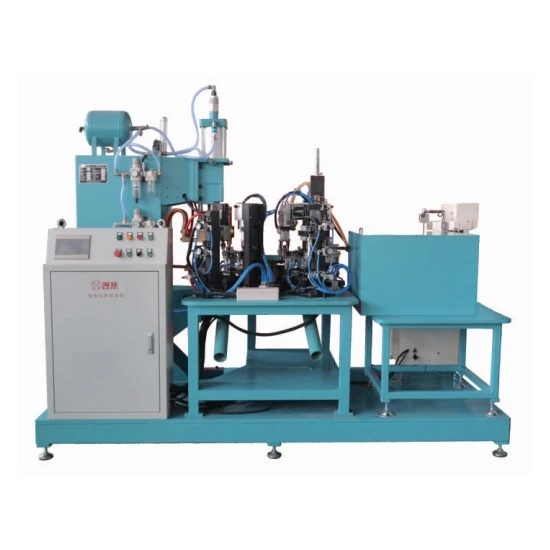


HAIFEI develops resistance welding equipment for sheet-metal panels, cabinets, reinforcement ribs, appliance hardware, corrugated pipes and sealed metal components.
The projects shown on this page use MFDC spot welding, capacitor discharge welding, resistance seam welding and robotic welding automation.
Machine structure, tooling and welding parameters are selected according to the workpiece material, thickness, weld position, surface requirement and production target.
Metal Fabrication Welding Projects at a Glance
The six projects below cover separate spot welds, short-pulse welding for thin coated sheet, continuous circumferential seams and automated welding of irregular paths.
| Application | Main Welding Challenge | Welding Process | Equipment |
| Large and irregular sheet-metal parts | Difficult support and limited welding angles | MFDC spot welding | Lifting-platform spot welder |
| Gas-insulated switchgear cabinets | Uneven weld formation and cabinet distortion | Controlled spot welding | Custom cabinet spot welding machine |
| Microwave hardware components | Thin galvanized sheet and coating damage | Capacitor discharge welding | Microwave hardware welding machine |
| Stainless-steel corrugated pipes | Thin walls, deformation and discontinuous seams | Resistance seam welding | Corrugated pipe seam welder |
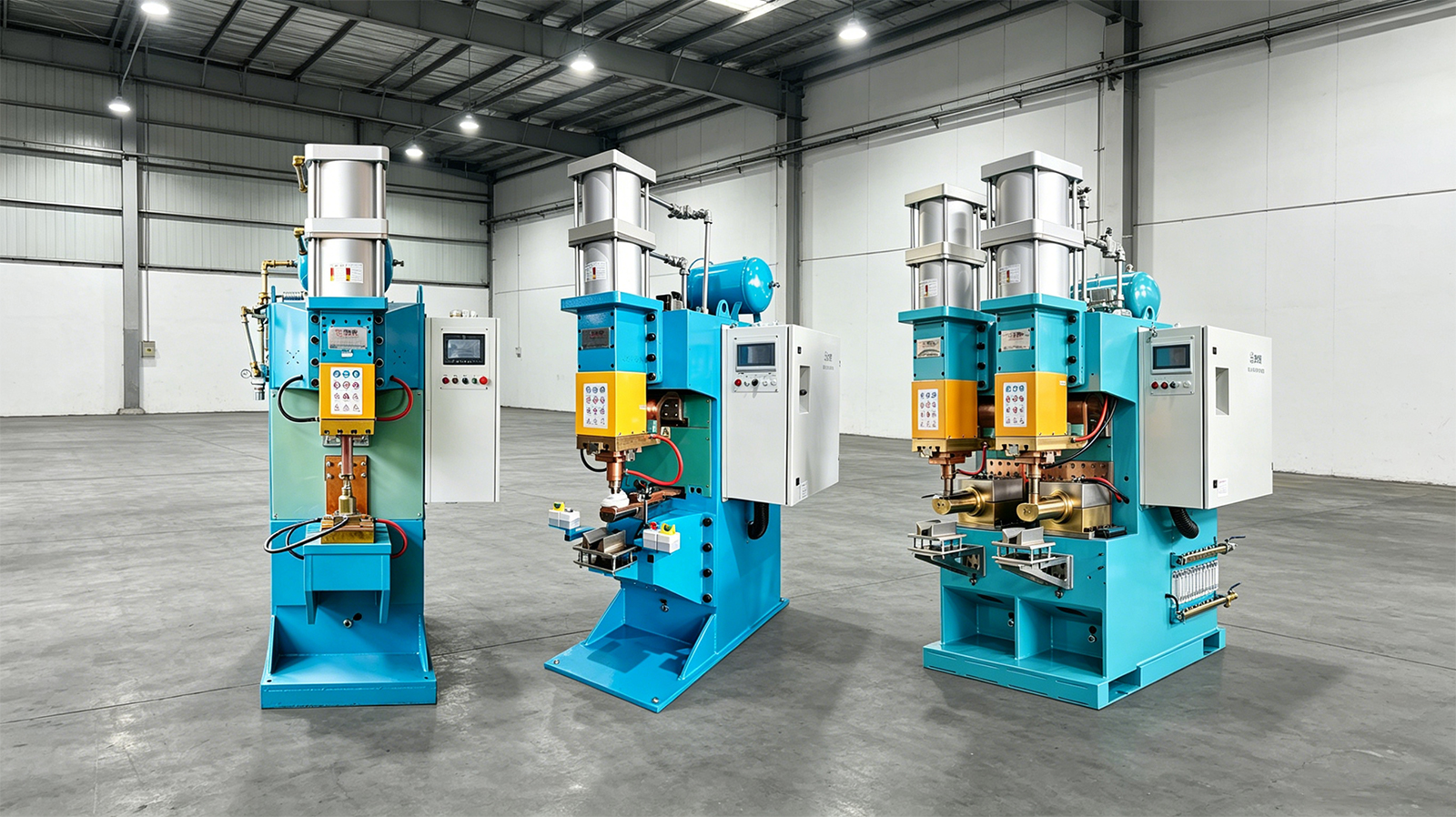
| Sheet-metal reinforcement ribs | Narrow rib positioning and multiple weld points | MFDC spot welding | Reinforcement rib spot welder |
| Sealed housings and pressure components | Irregular paths and inconsistent manual welding | Robotic seam welding | Robotic seam welding workstation |
The process cannot be selected by component name alone. Material grade, coating, thickness, weld access and acceptance criteria must be reviewed before the machine is specified.
Where Do Metal Fabrication Welding Problems Begin?
Thin Panels Can Distort or Show Welding Marks
Sheet-metal panels can develop indentations, burn marks, discoloration or local deformation when welding current, force and time are not matched correctly.
This is especially important when the reverse side of the panel remains visible after assembly. Electrode shape, fixture support and the welding sequence must be considered together.
Coated Sheet Requires a Controlled Process Window
Zinc coatings can affect contact resistance and heat generation during welding. Unstable contact may lead to expulsion, coating damage, surface marks or inconsistent fusion.
The process should be tested using the actual coating, material thickness and surface condition supplied for production.
Nuts and Fasteners Need Accurate Positioning
A strong projection weld is not enough if the nut is tilted or off-center. Poor positioning can cause bolt jamming, cross-threading or uneven tightening during assembly.
The nut projections, locating pin, electrode alignment, welding force and fixture structure all affect the finished connection.
Wire Products Can Move or Burn During Welding
Fine wire, stainless-steel mesh and woven metal products can shift under electrode pressure. Excessive energy may burn through the wire, while insufficient energy may produce a weak joint.
Dedicated locating tooling and a short, repeatable welding cycle are often required.
Continuous Joints Must Be Evaluated for Sealing
A visually continuous seam is not automatically leak-tight. Wheel alignment, overlap between weld nuggets, pressure, current and travel speed all influence seam quality.
When the finished component must contain air or liquid, a defined leak test should be included in the acceptance plan.
Large Components Are Difficult to Support and Position
Cabinet panels, elevator panels and irregular sheet-metal structures may require several welds at different angles. Repeatedly turning and repositioning the component can introduce location errors and increase handling time.
A lifting platform, movable welding head, multi-head arrangement or robotic workstation may be considered according to the component.
Featured Metal Fabrication Welding Projects
These six projects show how WUXI HAIFEI selects the welding process, machine structure and tooling around the actual workpiece. Visit each case page for the customer requirements and detailed solution.
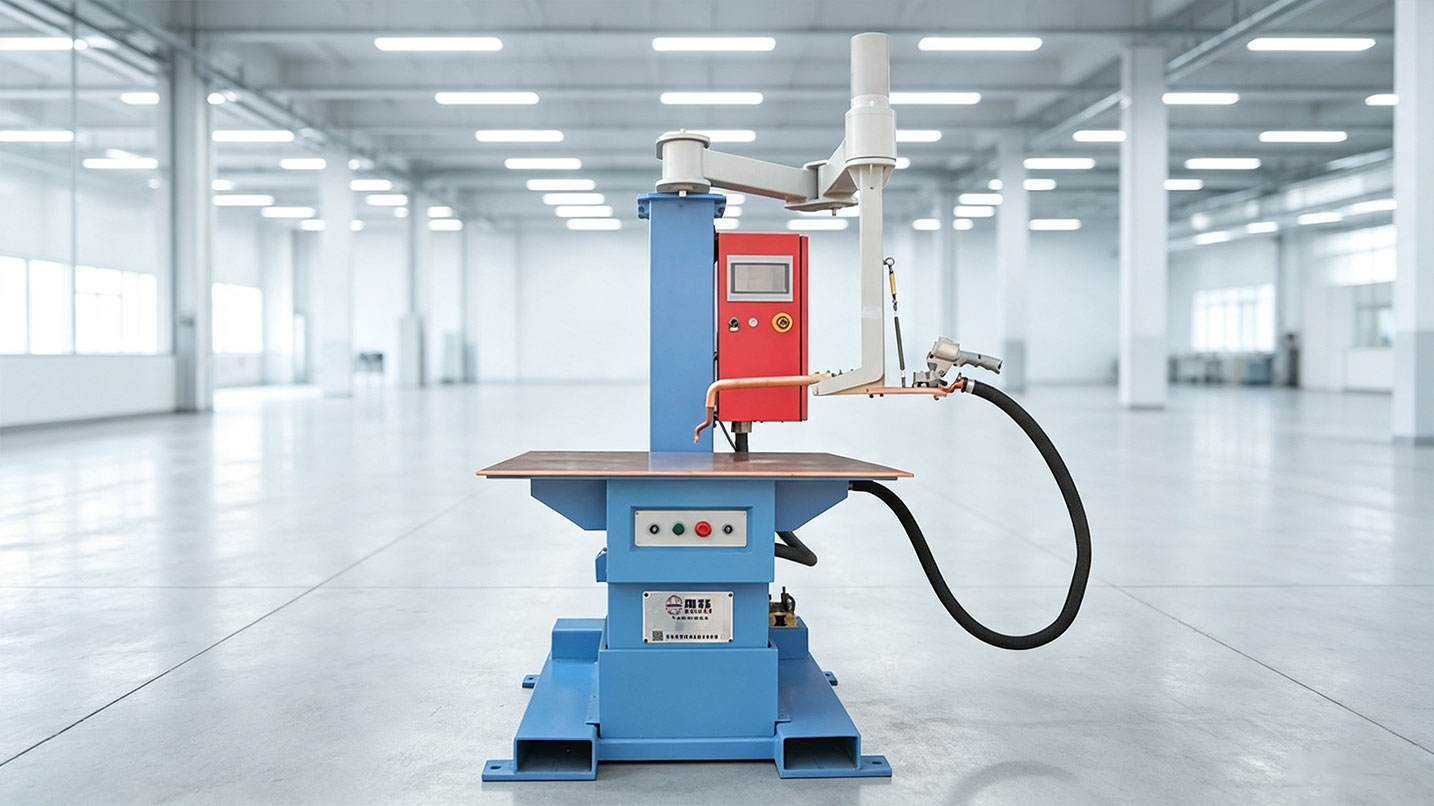
Lifting-Platform Spot Welding for Large Sheet-Metal Parts
This MFDC spot welder combines an adjustable platform with a flexible welding head. It supports large or irregular panels and provides access to side, inclined and multi-angle weld positions while reducing repeated lifting and repositioning.
Spot Welding for Gas-Insulated Switchgear Cabinets
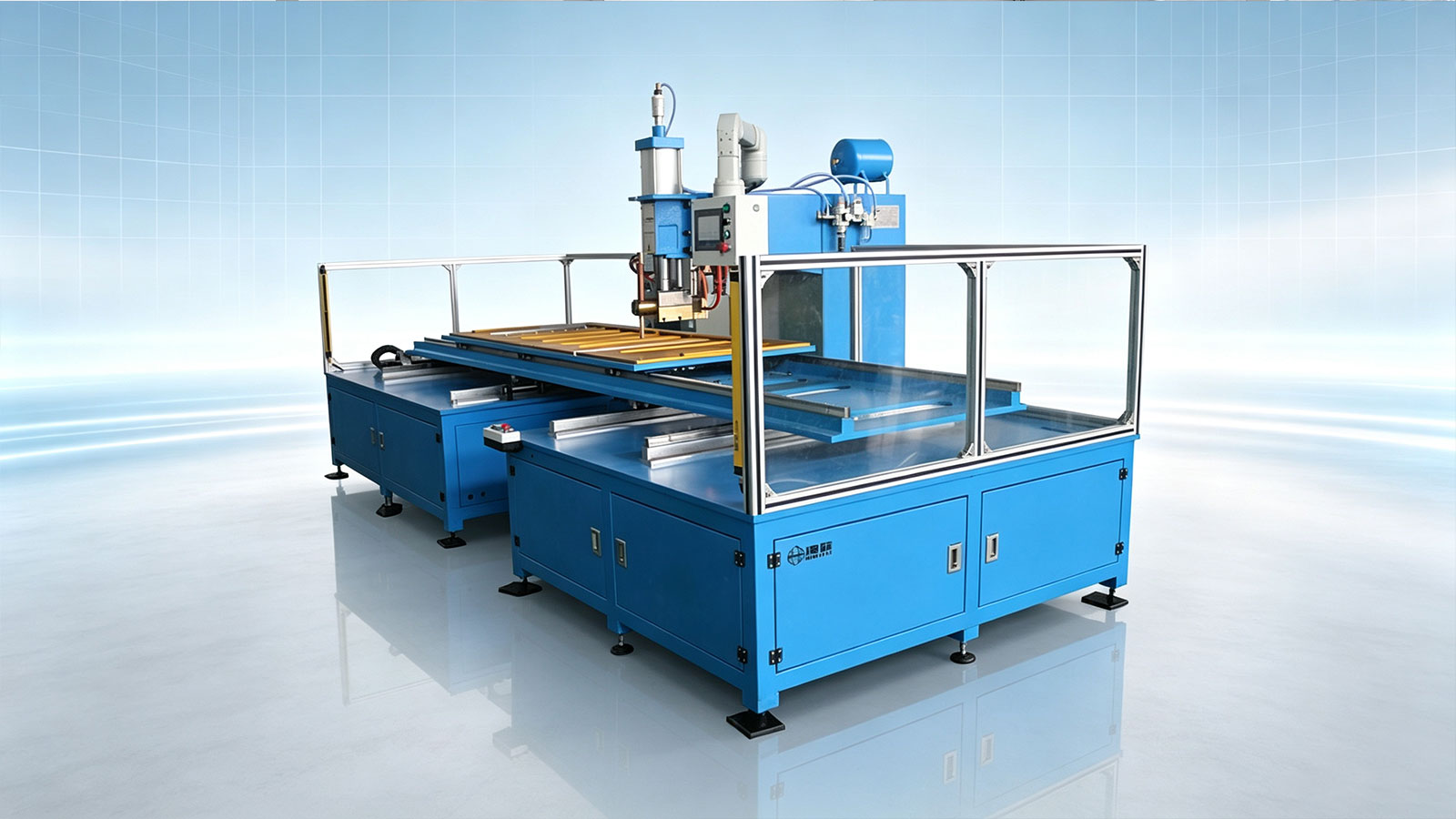
The system was developed for cabinet frames, reinforcement parts and sealed sheet-metal assemblies. Controlled welding current and pressure, together with dedicated clamping tooling, help improve weld consistency and limit cabinet distortion.
Capacitor Discharge Welding for Microwave Hardware
Thin galvanized microwave parts can deform or lose coating around the weld. A capacitor discharge welder uses a short energy pulse to join brackets, clips and grounding parts while limiting heat transfer into the surrounding sheet.
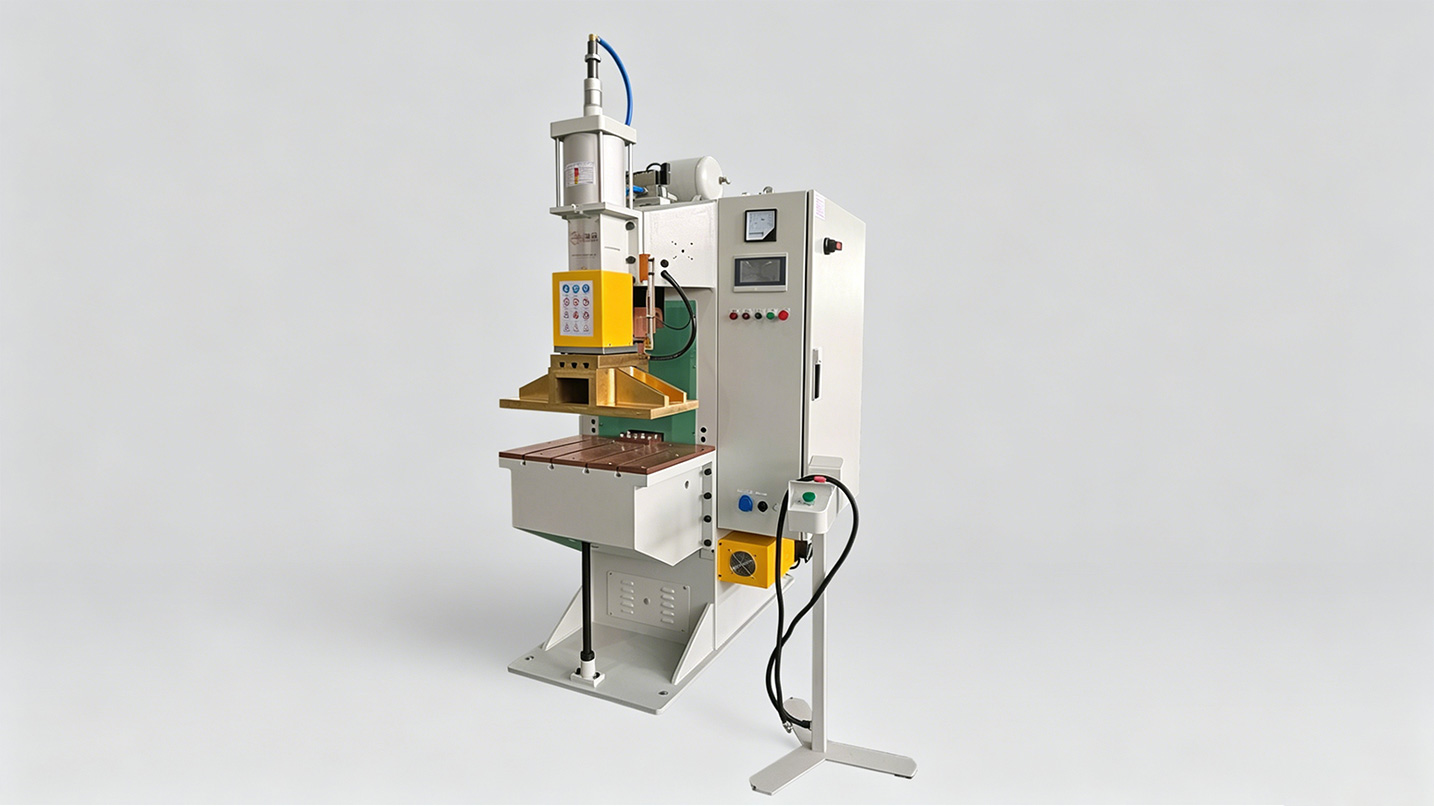
Seam Welding for Stainless-Steel Corrugated Pipes
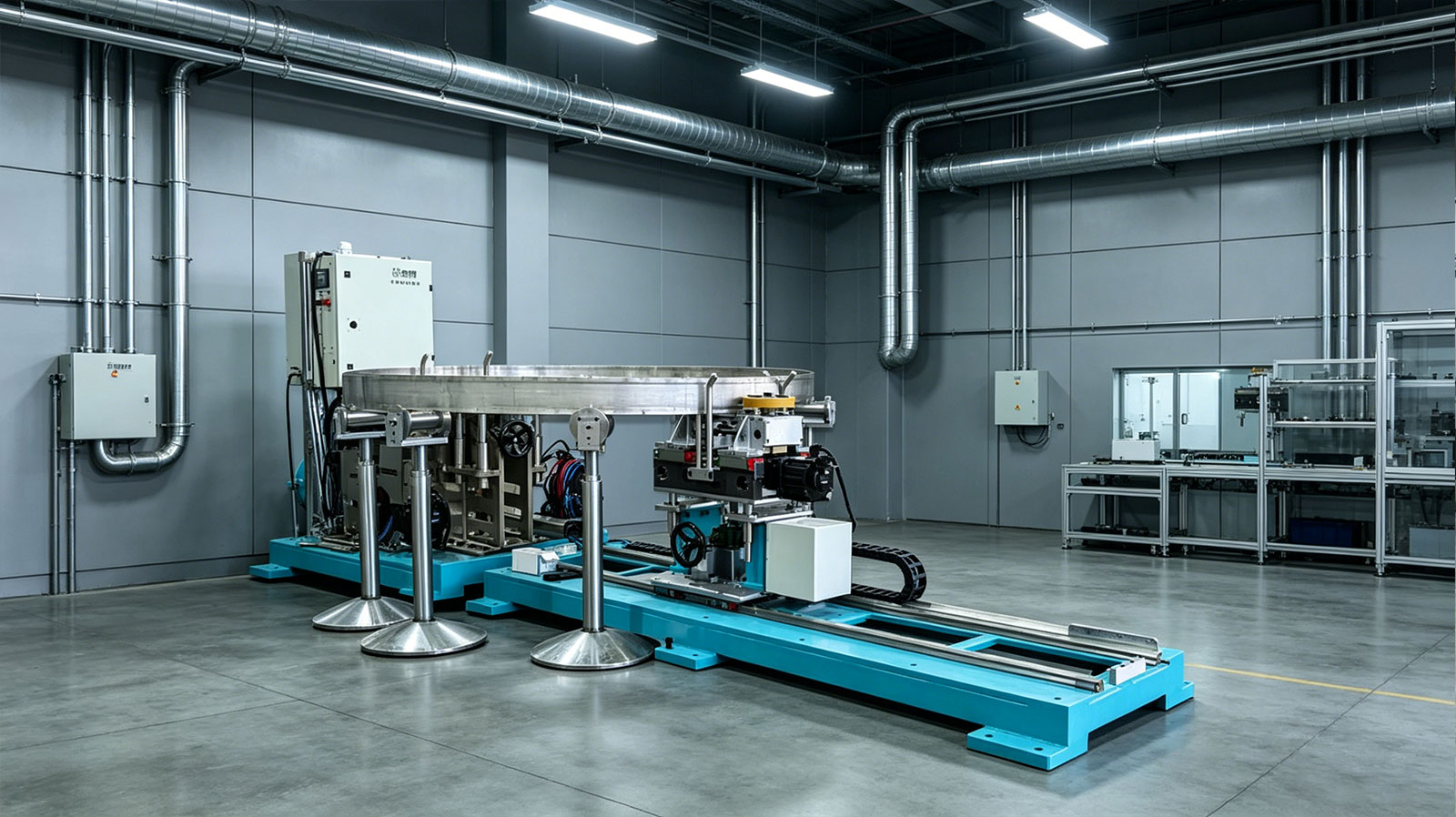
The corrugated pipe seam welder uses rotating wheel electrodes and dedicated positioning tooling to form a continuous circumferential seam. Current, pressure, rotation speed and cooling are set according to the pipe diameter, wall thickness and sealing requirement.
MFDC Spot Welding for Reinforcement Ribs
Dedicated tooling positions the narrow reinforcement rib and supports the surrounding panel. The controlled welding sequence helps produce evenly spaced welds while reducing indentation, warping and variation between multiple weld points.
Robotic Seam Welding for Sealed Metal Components
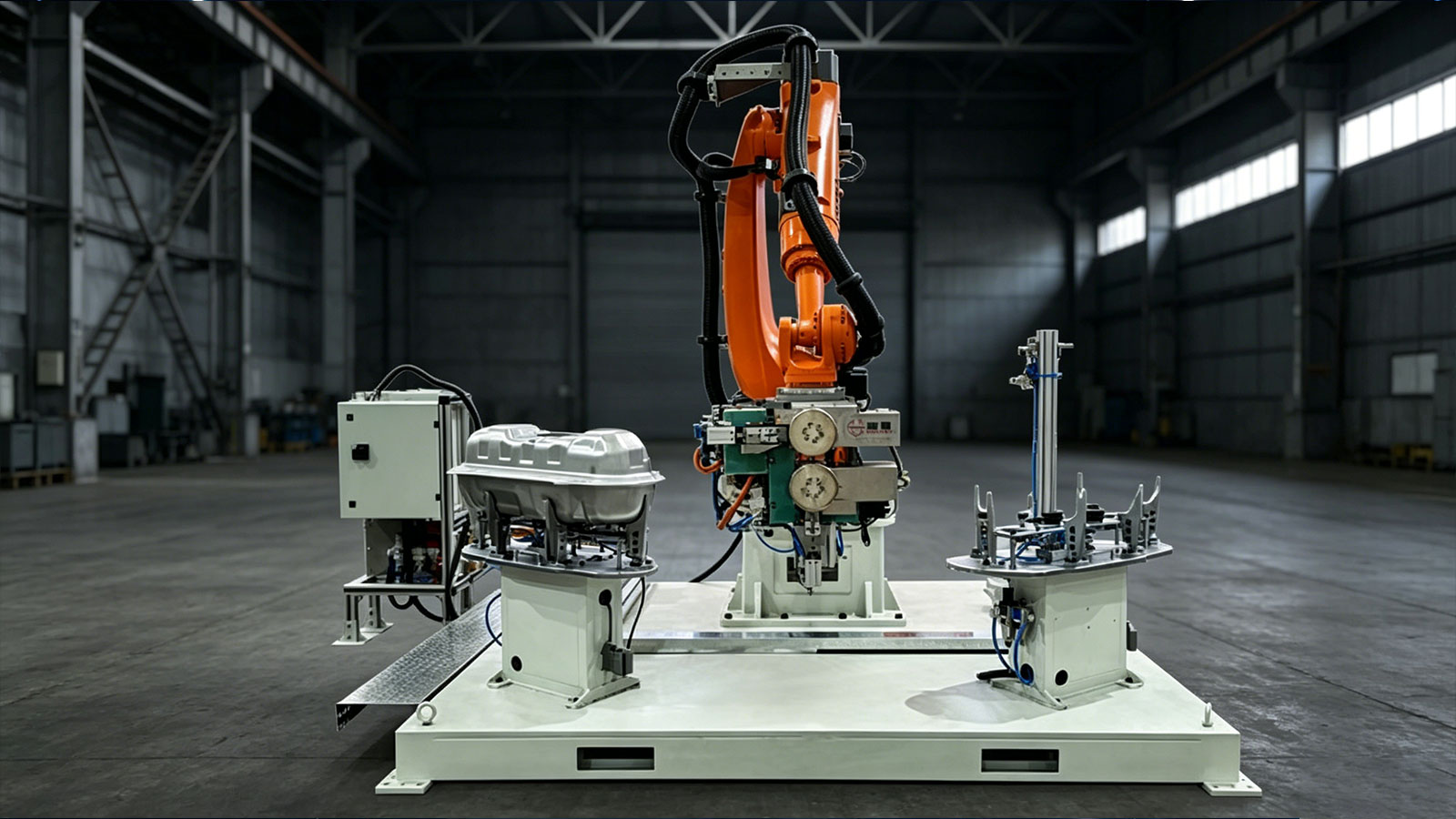
The robotic workstation follows straight, curved or irregular seam paths on housings, chambers and pressure components. Programmed movement, controlled welding parameters and dedicated fixtures improve seam continuity and repeatability.
FAQ
Q: What welding processes are used for metal fabrication?
A: Spot welding is used for separate sheet-metal joints and reinforcement ribs. Capacitor discharge welding can be evaluated for thin coated parts, while seam welding is used for continuous joints. Robotic welding is considered for irregular or curved paths.
Q: What is a lifting-platform spot welding machine?
A: It is a spot welder with an adjustable worktable that supports large or irregular components. The welding mechanism can be positioned to reach different weld locations and angles.
Q: Why use capacitor discharge welding for microwave parts?
A: The short discharge cycle concentrates heat near the weld and limits prolonged heat transfer into thin galvanized sheet. The final process must be tested using the actual coating and component thickness.
Q: Can spot welding make a cabinet airtight?
A: Spot welding can assemble and reinforce cabinet components, but airtightness depends on the complete joint and sealing design. A leak or pressure test is required when the cabinet must retain gas.
Q: Can seam welding be used for thin corrugated pipes?
A: Yes, when the pipe material, wall thickness, joint design and rotation accuracy are suitable. Current, wheel pressure, speed and cooling must be developed through sample testing.
Q: When is robotic seam welding necessary?
A: It can be considered when the welding path is curved, irregular or difficult to reach with a fixed machine. The parts and fixtures must be repeatable enough for programmed welding.
Hardware