


Automatic Projection Welding Machines and Flexible Nut Welding Lines
Haifei designs automatic projection welding machines and flexible welding lines for attaching nuts, bolts, studs and formed components to stamped metal parts. Depending on the workpiece, production volume and required cycle time, the system can combine automatic fastener feeding, part positioning, MFDC or capacitor discharge welding, weld monitoring, robot handling and finished-part inspection.
Our projection welding automation solutions are developed around the customer’s actual parts. Before the system configuration is confirmed, we evaluate the base material, sheet thickness, fastener type, projection design, weld location, required strength and production target. Sample welding can be performed to verify the process before tooling and automation design begin.
Typical applications include automotive brackets, seat components, chassis parts, battery trays, door assemblies, appliance panels and other sheet-metal parts requiring repeatable nut, bolt or stud welding.
-
![Robotic Welding Integration]() Robotic Welding IntegrationHaifei provides robotic welding integration for spot, projection, seam and diffusion welding. We combine robots, welding machines, fixtures, material handling, controls and safety devices around...view more
Robotic Welding IntegrationHaifei provides robotic welding integration for spot, projection, seam and diffusion welding. We combine robots, welding machines, fixtures, material handling, controls and safety devices around...view more -
![Robotic Diffusion Welding System Integrator]() Robotic Diffusion Welding System IntegratorFully automated copper flexible connector production line integrating foil cutting, robotic handling, diffusion welding, and conveyor unloading. Ideal for busbar and EV battery manufacturing.view more
Robotic Diffusion Welding System IntegratorFully automated copper flexible connector production line integrating foil cutting, robotic handling, diffusion welding, and conveyor unloading. Ideal for busbar and EV battery manufacturing.view more -
![Robotic Nut Projection Welding Fully Automated Workstation]() Robotic Nut Projection Welding Fully Automated WorkstationThe Robotic Nut Projection Welding Fully Automated Workstation is a highly integrated welding solution designed for automatic nut projection welding in high-volume production. The system combines...view more
Robotic Nut Projection Welding Fully Automated WorkstationThe Robotic Nut Projection Welding Fully Automated Workstation is a highly integrated welding solution designed for automatic nut projection welding in high-volume production. The system combines...view more -
![Robot-Assisted Suspension Spot Welding Machine]() Robot-Assisted Suspension Spot Welding MachineThe Robot-Assisted Suspension Spot Welding Machine combines the flexibility of an industrial robot with the high efficiency of a suspension-type spot welder. It is designed for high-volume,...view more
Robot-Assisted Suspension Spot Welding MachineThe Robot-Assisted Suspension Spot Welding Machine combines the flexibility of an industrial robot with the high efficiency of a suspension-type spot welder. It is designed for high-volume,...view more -
![Flexible Nut Projection Welding Workstation]() Flexible Nut Projection Welding WorkstationThis Flexible Nut Projection Welding Workstation is a high-end intelligent equipment integrating automatic feeding, precise welding, and quality inspection. Designed to solve the changeover...view more
Flexible Nut Projection Welding WorkstationThis Flexible Nut Projection Welding Workstation is a high-end intelligent equipment integrating automatic feeding, precise welding, and quality inspection. Designed to solve the changeover...view more -
![Aluminum Spot Welding Workstation]() Aluminum Spot Welding WorkstationHAIFEI Aluminum Spot Welding Workstation is designed for automated spot welding of aluminum plates, aluminum alloy parts, EV battery components, and lightweight structural parts. The system...view more
Aluminum Spot Welding WorkstationHAIFEI Aluminum Spot Welding Workstation is designed for automated spot welding of aluminum plates, aluminum alloy parts, EV battery components, and lightweight structural parts. The system...view more -
![Automated Projection Welding Workstation]() Automated Projection Welding WorkstationHaifei automated projection welding workstation is designed for high-volume nut and stud welding on automotive stamped parts, brackets, seat structures, door components, chassis parts, and...view more
Automated Projection Welding WorkstationHaifei automated projection welding workstation is designed for high-volume nut and stud welding on automotive stamped parts, brackets, seat structures, door components, chassis parts, and...view more -
![Welding Automation for Diffusion Welding]() Welding Automation for Diffusion WeldingWelding Automation for Diffusion Welding is designed for high-reliability joining of copper busbars, flexible connectors, and multilayer conductive components where conventional resistance welding...view more
Welding Automation for Diffusion WeldingWelding Automation for Diffusion Welding is designed for high-reliability joining of copper busbars, flexible connectors, and multilayer conductive components where conventional resistance welding...view more


Projection Welding Automation for Nuts, Bolts and Studs
Projection welding concentrates welding current and pressure at one or more raised projections on the fastener or workpiece. This makes it suitable for attaching weld nuts, bolts, studs, brackets and formed metal components where accurate positioning and consistent joint strength are required.
However, weld quality depends on more than the welding machine. Incorrect nut orientation, unstable feeding, poor fixture alignment, uneven electrode force, worn locating pins or unsuitable welding parameters can all lead to weak welds, damaged threads or missing fasteners.
A complete automatic projection welding system brings the related processes together in one controlled production sequence:
- Automatic feeding and orientation of nuts, bolts or studs
- Detection of reversed, missing or double-fed fasteners
- Manual, conveyor, turntable or robot-assisted part loading
- Accurate workpiece positioning and clamping
- MFDC or capacitor discharge projection welding
- Welding current, time, force or displacement monitoring
- Thread protection and fastener presence checking
- Automatic unloading and separation of rejected parts
- Production data recording and MES communication when required
The result is a more controlled process with less dependence on manual handling, particularly in medium- and high-volume production.

Automatic Projection Welding Systems
Haifei supplies different automation configurations rather than limiting every project to one standard machine. The appropriate system is selected according to part variety, fastener quantity, production volume and the level of traceability required.
Automatic Nut Projection Welding Machine
This configuration is designed for welding one or more nuts onto stamped steel parts, brackets, mounting plates and sheet-metal assemblies.
An automatic nut feeder delivers the fastener to the welding position, while sensors verify that the nut is present and correctly oriented. The operator loads the component into a dedicated fixture, and the machine completes positioning, clamping and welding automatically.
It is suitable for customers who want to increase output and reduce manual nut placement without immediately investing in a fully robotic production line.
Typical configuration:
- MFDC projection welding power supply
- Automatic nut feeder
- Nut orientation and presence detection
- Dedicated workpiece fixture
- PLC control and recipe storage
- Welding parameter monitoring
- Safety light curtain or enclosed guarding
Flexible Nut Projection Welding Workstation
A flexible nut projection welding workstation is developed for factories producing several related components or different fastener specifications.
Quick-change fixtures, selectable welding programs and modular feeding units allow the workstation to switch between approved workpiece models. Depending on the project, one workstation can be configured for several nut sizes or part families, provided that the welding force, electrical capacity and tooling arrangement are suitable.
This solution is commonly used for automotive stamped parts, seat structures, brackets, reinforcement plates and other medium-to-high-volume components requiring frequent product changeovers.
Typical configuration:
- One or multiple nut feeding units
- Quick-change welding fixtures
- Stored welding recipes for different parts
- Part model and tooling verification
- Nut presence and orientation detection
- Barcode or QR code scanning
- Production quantity and alarm records
- Optional torque or thread inspection station
Robotic Projection Welding Workstation
The robotic projection welding workstation is intended for parts that are heavy, difficult to position manually or require welding at several locations.
The robot can load the part, move it between welding positions, turn it over when necessary and transfer the finished component to the next station. The projection welder remains in a fixed, rigid position so that welding force and secondary current paths can be controlled more effectively.
Robot-integrated systems can also include machine vision, automatic gripper change, dual fixtures, conveyors and rejected-part separation.
Typical applications include:
- Automotive seat frames
- Chassis and suspension brackets
- Battery tray components
- Door reinforcement parts
- Large stamped assemblies
- Parts requiring several nuts or bolts at different positions
Multi-Station Projection Welding Line
For components requiring several welding and inspection steps, Haifei can integrate multiple stations into one connected production line.
A multi-station line may include part loading, nut feeding, welding, cooling, inspection, marking and unloading. Turntables, linear conveyors or robots transfer components between stations according to the required cycle time and available factory space.
This configuration is suitable for high-volume production where process consistency, fault prevention and production traceability are more important than simple machine output.
Typical Projection Welding Applications
Automotive Stamped Parts
Weld nuts and bolts are widely used on stamped brackets, mounting plates, door components, chassis parts and reinforcement structures. In these applications, incorrect fastener positioning or an incomplete weld can cause assembly problems later in the vehicle production process.
The automatic projection welding machine can check fastener presence, control the welding sequence and prevent an incomplete part from moving to the next station.
01
Automotive Seat Components
Seat frames and seat mounting parts frequently contain several nuts or bolts positioned on different surfaces. The workpiece may need to be turned or moved between welding points.
A robot-assisted or multi-station projection welding system can reduce repeated manual handling while maintaining the correct relationship between the part, fixture and welding electrode.
02
Chassis and Suspension Brackets
Chassis and suspension components often use thicker materials, high-strength steel or hot-formed steel. These materials require careful evaluation of current, welding time, electrode force and projection design.
Depending on the material and joint requirements, Haifei can evaluate an MFDC or capacitor discharge projection welding process through sample testing.
03
Battery Trays and Metal Enclosures
Battery trays and electrical enclosures may contain several weld nuts used for later assembly. The position and thread condition of every fastener must be controlled because a missing or damaged nut can interrupt downstream assembly.
The welding line can integrate fastener detection, welding data recording, marking and rejected-part separation.
04
Household Appliance Components
Projection welding is also used for appliance brackets, cabinet panels, compressor mounting parts and other formed sheet-metal components.
A semi-automatic nut welding machine is often sufficient for medium production volumes, while a turntable or conveyor system can be added when more than one welding step is required.
05
How the Automatic Projection Welding Process Works
The exact workflow depends on the part, but a typical nut projection welding line follows these stages:
Fastener Feeding
Nuts, bolts or studs are loaded into a feeding device. The system separates and orients each fastener before transferring it to the welding position.
The feeding method may use a vibration bowl, step feeder, drum feeder or another arrangement selected according to the fastener shape, surface condition and production rate.
Fastener Verification
Sensors check whether the fastener has reached the correct position. Additional detection can be included to identify reversed nuts, double feeding, missing fasteners or incorrect specifications.
For projects with several nut types, barcode scanning, tooling identification or recipe interlocking can be used to reduce model selection errors.
Workpiece Loading and Positioning
The component is loaded manually, by conveyor or by robot. Locating pins and clamping points position the part according to its datum surfaces rather than relying on the operator’s judgement.
The fixture must provide sufficient rigidity while allowing the welding head to apply force directly through the projection area.
Projection Welding
The electrodes clamp the workpiece and fastener under a controlled force. The welding power supply then delivers the programmed current sequence.
The projections heat and collapse, forming the required weld joints between the fastener and base material. The welding program may include preheating, upslope, multiple pulses or holding time depending on the material and projection design.
Process Monitoring
The control system records the selected welding parameters. According to the project, monitoring can include current, voltage, welding time, electrode force, displacement or other process signals.
If a monitored value falls outside the approved range, the system can generate an alarm and prevent the part from being released as an accepted component.
Unloading and Inspection
After welding, the component is removed manually or transferred automatically. The system can also include nut presence checking, thread inspection, marking and rejected-part separation.
Torque, push-out or destructive tests are normally performed according to the customer’s drawing, internal quality standard or approved inspection plan.
Advantages of Our Flexible Projection Welding Lines
- High Efficiency and Stability
Multi-station synchronous welding, high throughput, consistent weld quality
- Flexible Customization
Fixtures and processes tailored to different product specifications and weld requirements
- Intelligent and Digital
PLC/industrial PC control, welding data monitoring
MES system integration for production traceability
- Comprehensive Technical Support
From system design and sample verification to production line integration
On-site installation, commissioning, training, and long-term after-sales service
- End-to-End Support from Sample to Mass Production
- Welding process validation and sample testing
- Customized production line design and process optimization
- Equipment manufacturing, integration, and commissioning
- On-site installation, training, and long-term technical support
Why Choose HAIFEI?
HAIFEI has developed resistance welding and customized welding equipment since 2009. Our engineering capability covers the welding power source, machine structure, electrodes, fixtures, automatic feeding, robot handling and production-line controls.
Customers can send samples for welding evaluation before the machine configuration is finalized. This allows the proposed system to be based on actual material, joint structure and quality requirements.
We provide both individual welding machines and complete automated welding lines, allowing customers to select a practical level of automation according to current production volume and future expansion plans.
Manufacturing Process
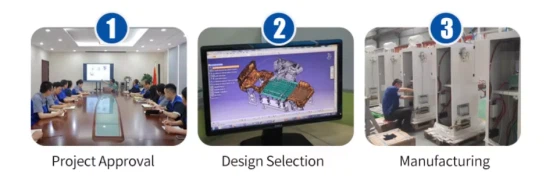
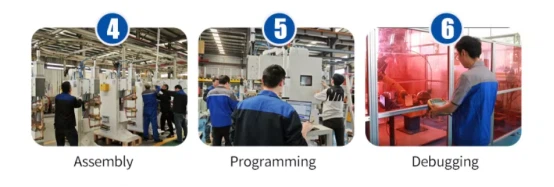
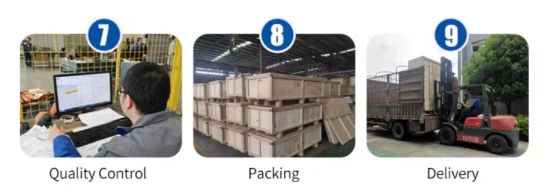
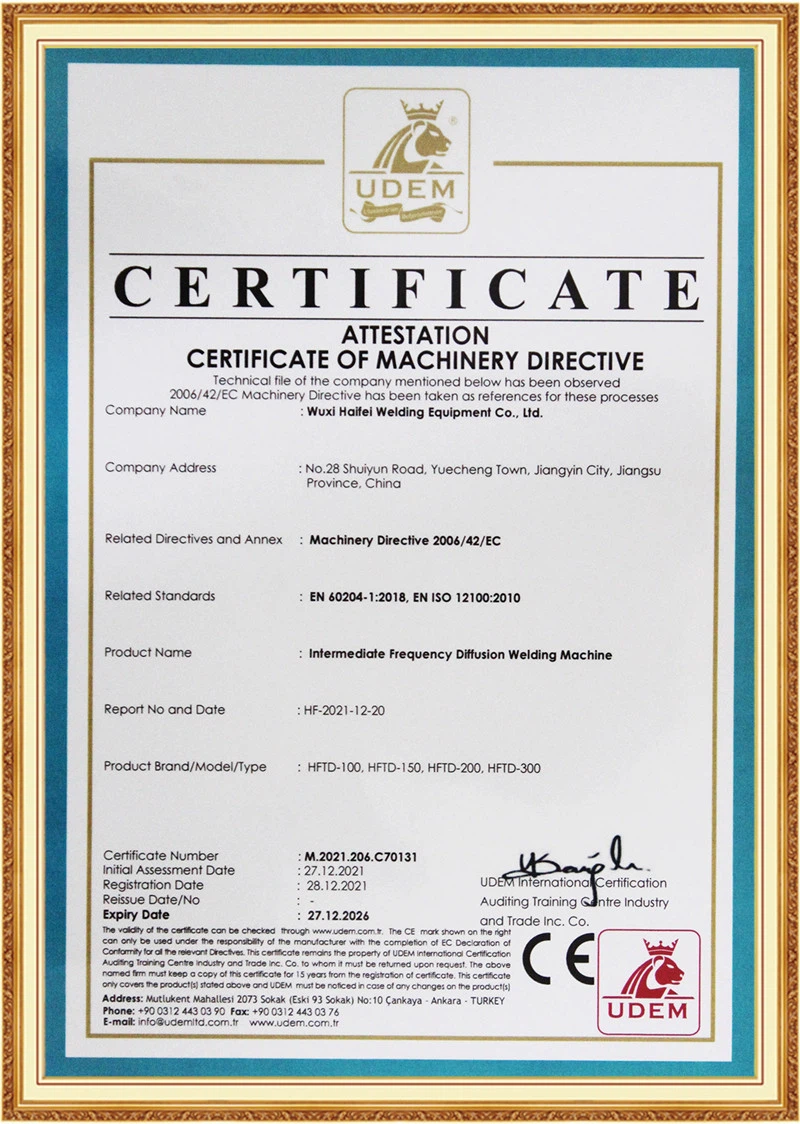
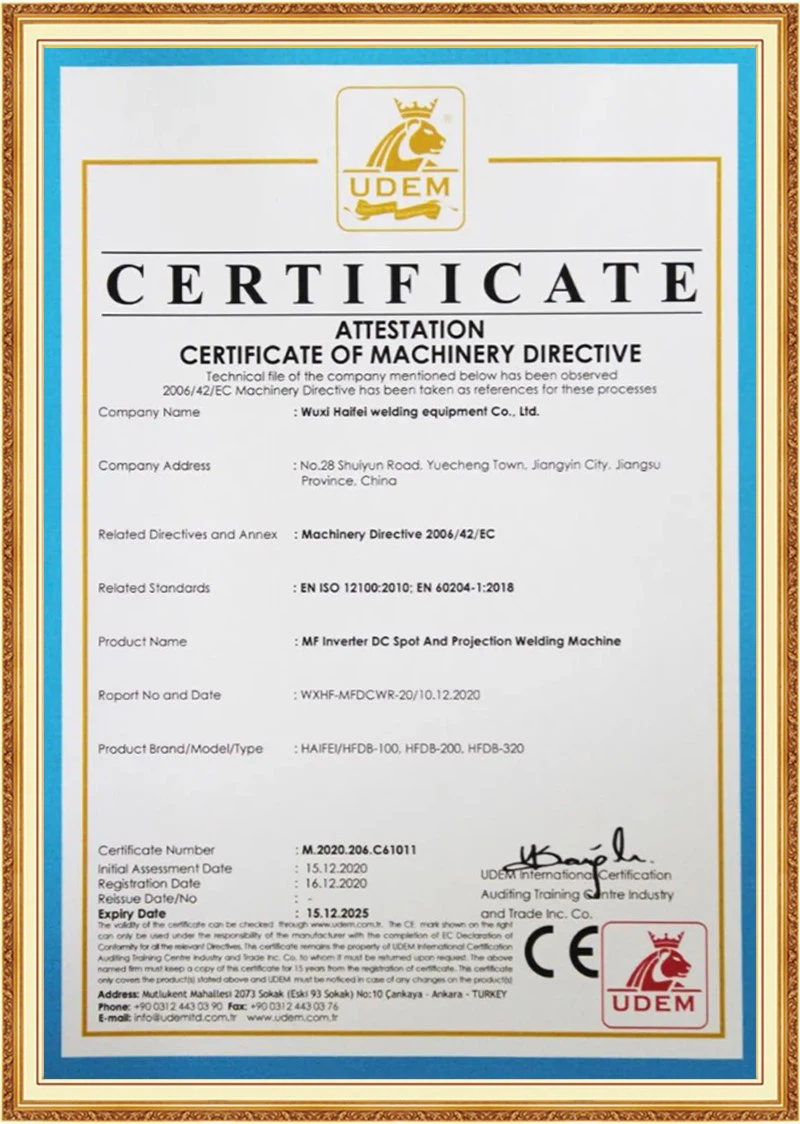
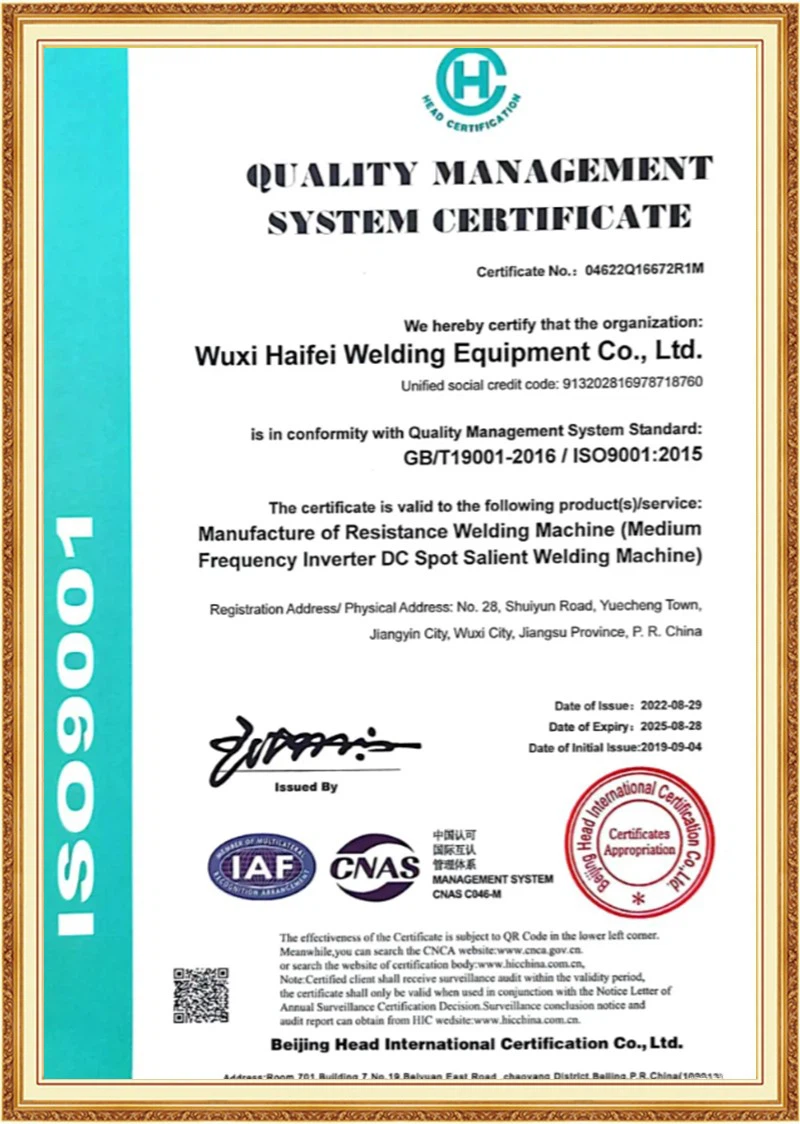
Certificate
Payment Terms
T.T with 30% downpayment, 70%before shipment.
Paypal or West Union also accept.
Packaging & Shipping

FAQ
Q: Which industries and products are suitable for a Flexible Projection Welding Station?
A: Flexible Projection Welding Stations are widely used in industries such as automotive manufacturing, new energy, batteries & energy storage, electric motors, and power equipment. They are particularly suitable for welding applications with multi-variety, multi-specification, and high-consistency requirements, such as busbars, terminals, connecting plates, and structural components.
Q: What is the core difference between a Flexible Projection Welding Station and traditional projection welding equipment?
A: Compared to traditional single-station projection welding equipment, a Flexible Projection Welding Station offers advantages such as quick changeover, modular tooling, and strong automation integration capabilities. It significantly reduces changeover time and is better suited for medium-to-high volume and mixed-production line needs.
Q: What types of welding power supplies can a Flexible Projection Welding Station be paired with?
A: A Flexible Projection Welding Station can typically be paired with medium-frequency projection welders or capacitor discharge (CD) projection welders. The specific choice depends on the workpiece material, thickness, and weld point requirements. The system supports customized matching of power supplies and processes based on project needs.
Q: Does the Flexible Projection Welding Station support automation and robot integration?
A: Yes. The Flexible Projection Welding Station can be integrated with industrial robots, automatic loading/unloading systems, conveyor lines, and MES systems to achieve full-process automation from feeding and welding to unloading, meeting the requirements of modern smart factories.
Q: How do I evaluate if a Flexible Projection Welding Station is suitable for my production line?
A: It is recommended to evaluate based on four aspects: the frequency of product specification changes, the number of weld points, cycle time requirements, and future scalability. An experienced Flexible Projection Welding Line Manufacturer will typically provide process validation and production line design during the early project phase to reduce selection risks.
Q: Is maintenance and upgrading of a Flexible Projection Welding Station complex later on?
A: For a Flexible Projection Welding Station designed with modularity, maintenance costs are manageable and upgrades are flexible. In the future, workstations can be added, control systems upgraded, or more automation modules integrated based on changes in production capacity or products, avoiding complete line replacement.
Wuxi Haifei Intelligent Equipment Co., Limited is well-known as one of the leading flexible projection welding line manufacturers and suppliers in China. Please rest assured to buy high quality flexible projection welding line made in China here from our factory. For price consultation, contact us.
robotic welding positioners, automatic bore welding machine, robotic welder


