

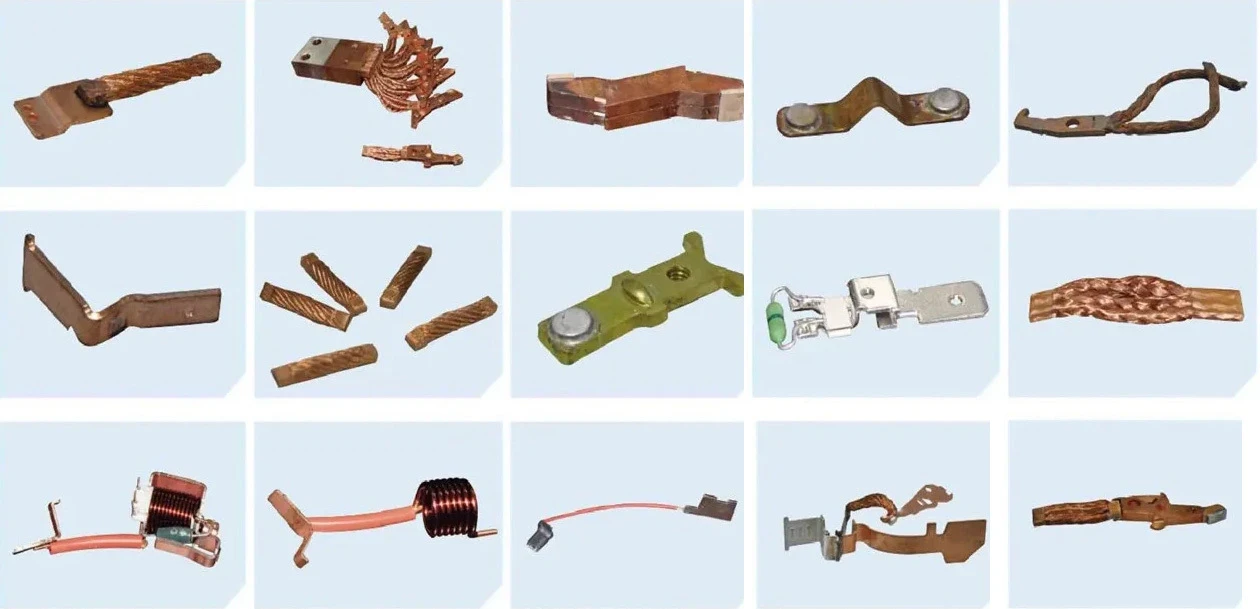
HAIFEI develops welding and automated processing solutions for current-carrying connections and structural components used in low-voltage switchgear, circuit breakers, contactors, relays, control cabinets and power distribution equipment.
Applications include silver contacts, rigid copper and aluminum busbars, laminated flexible busbars, copper braided connectors, terminals, tinned wire harnesses, enclosure panels and welded fasteners.
The appropriate machine is selected according to the conductor material, plating, joint structure, electrical requirements, mechanical strength, production volume and inspection standard. Customers can submit drawings and representative parts for sample testing before the equipment configuration is confirmed.
What Components Can HAIFEI Process for the Low-Voltage Electrical Industry?
HAIFEI provides application-specific equipment rather than applying one welding process to every electrical component. Depending on the workpiece, the solution may use diffusion welding, MFDC resistance welding, projection welding, capacitor discharge welding, ultrasonic metal welding or a customized automatic production system.
| Component or Assembly | Typical Process to Evaluate | Main Production Objective |
| Silver contacts and contact assemblies | Precision resistance welding | Accurate positioning with controlled heat input |
| Accurate positioning with controlled heat input | Application-specific resistance or busbar welding | Stable joints with controlled deformation |
| Laminated copper foil busbars | Diffusion welding | Compact terminal areas while retaining central flexibility |
| Copper braided connectors | Diffusion welding or resistance hot pressing | Consolidated strands and stable terminal geometry |
| Copper braid lap joints | Dedicated resistance welding | Consistent overlap and reduced strand movement |
| Copper braid cut-and-square parts | Integrated cutting and end-forming | Controlled length and repeatable terminal dimensions |
| Tinned wires and electrical harnesses | Ultrasonic metal welding after testing | Joining conductors with limited thermal influence |
| Electrical terminals and small components | Precision MFDC spot welding | Small, repeatable welds with controlled energy |
| Stainless-steel enclosure panels and nuts | Capacitor discharge projection welding | Secure fastener joints with reduced panel marking |
| Multi-part current-path assemblies | Customized welding automation | Positioning, welding, inspection and traceability |
This table provides an initial process direction only. Material grade, coating, cross-section, contact area and acceptance criteria must be reviewed before final process selection.
Low Voltage Breaker Connection Samples
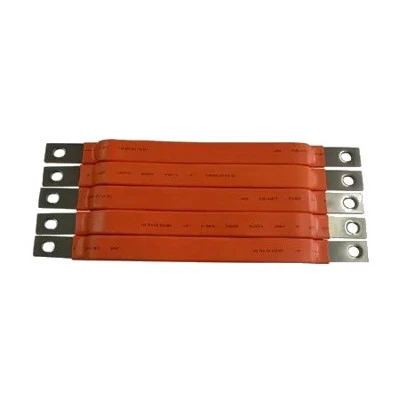
Aluminium-busbar

Copper-busbar-nickel-plated

Flexible-aluminium-busbar
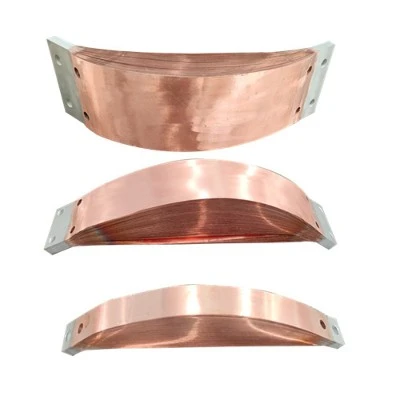
Flexible-copper-busbar
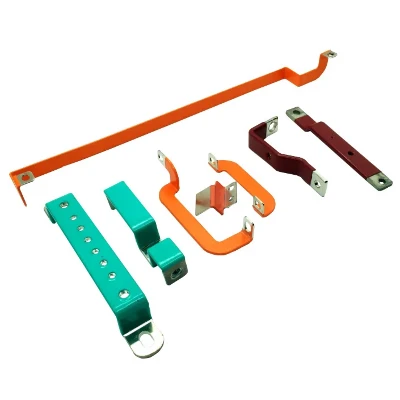
Flexible-copper-busbar

Round-stranded-cables-with-overall-braiding
Featured Low-Voltage Electrical Equipment and Case Applications
The following section introduces representative Haifei equipment projects. Each application should link to a dedicated case page containing the customer background, workpiece information, technical challenges, equipment configuration, validation method and project images.
Silver Contact Automatic Welding Machine
Silver contacts are used in relays, contactors, switches and other electrical switching components. Their small dimensions make manual positioning difficult, while excessive or unstable heat can cause contact displacement, surface damage or inconsistent bonding.
Haifei has developed both dedicated silver contact welding machines and automated production-line solutions. Depending on the project, the system can integrate component feeding, orientation, positioning, welding, forming, unloading and process-recipe management.
The fixture, electrode geometry and welding parameters are developed using the customer's actual contact alloy, carrier material and joint structure.


Frame Busbar Welding Systems
Frame busbar assemblies carry and distribute current in switchgear, control cabinets and power distribution equipment. Copper and aluminum conduct heat rapidly, and large or irregular assemblies can be difficult to position consistently.
Haifei develops dedicated busbar welding systems around the workpiece structure. The engineering scope may include a suitable welding power source, movable welding mechanism, modular fixture, controlled welding sequence, recipe storage and production-data recording.
Because rigid busbar, laminated busbar and assembled frame busbar joints have different heating and pressure requirements, the process must be confirmed through drawing review and sample welding.
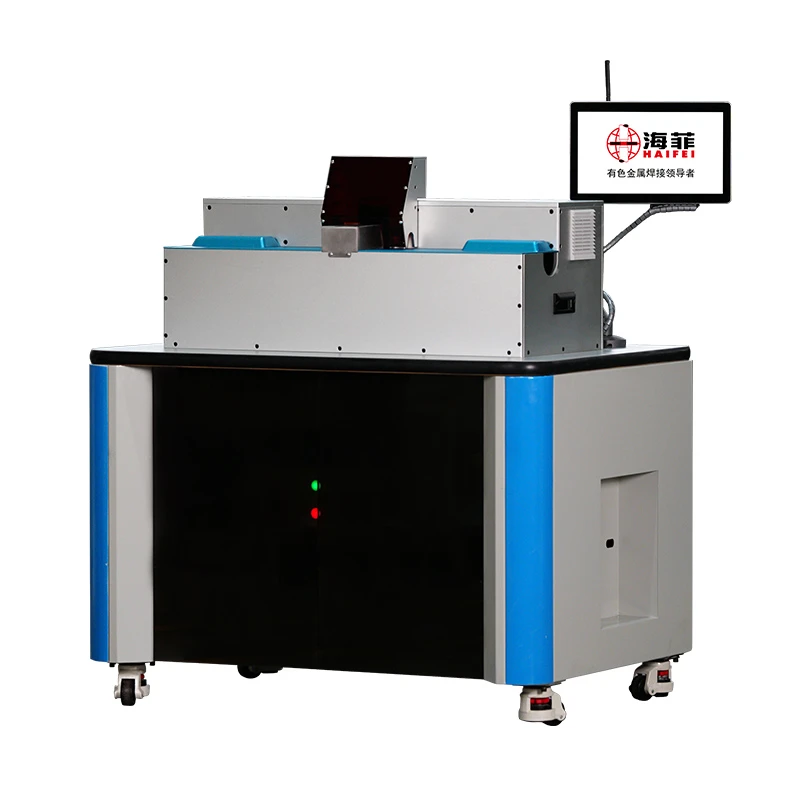
Copper Braid Cutting, Squaring and Terminal Forming
Not every low-voltage electrical project is limited to the welding operation. Copper braid production may also require controlled feeding, cutting, end squaring, compaction and unloading.
Haifei has developed integrated equipment that combines multiple braid-processing stages in one workstation. The objective is to reduce manual transfer between separate machines and improve the consistency of braid length, terminal shape and end condition.
The equipment configuration depends on whether the customer processes a single braid, multiple braided conductors or different product dimensions. Changeable tooling and stored recipes can be evaluated for compatible product families.

Tinned Wire and Electrical Terminal Welding
Tinned conductors, cable assemblies and small electrical terminals require careful energy control because their dimensions, coatings and conductor structures may differ significantly.
Ultrasonic metal welding can be evaluated for selected wire-to-wire or wire-to-terminal connections. Precision MFDC resistance welding may be suitable for certain terminals, contact carriers and small metal components.
Process selection depends on the conductor cross-section, coating, terminal material, joint access and required pull strength. Sample evaluation is necessary before choosing between ultrasonic and resistance welding.
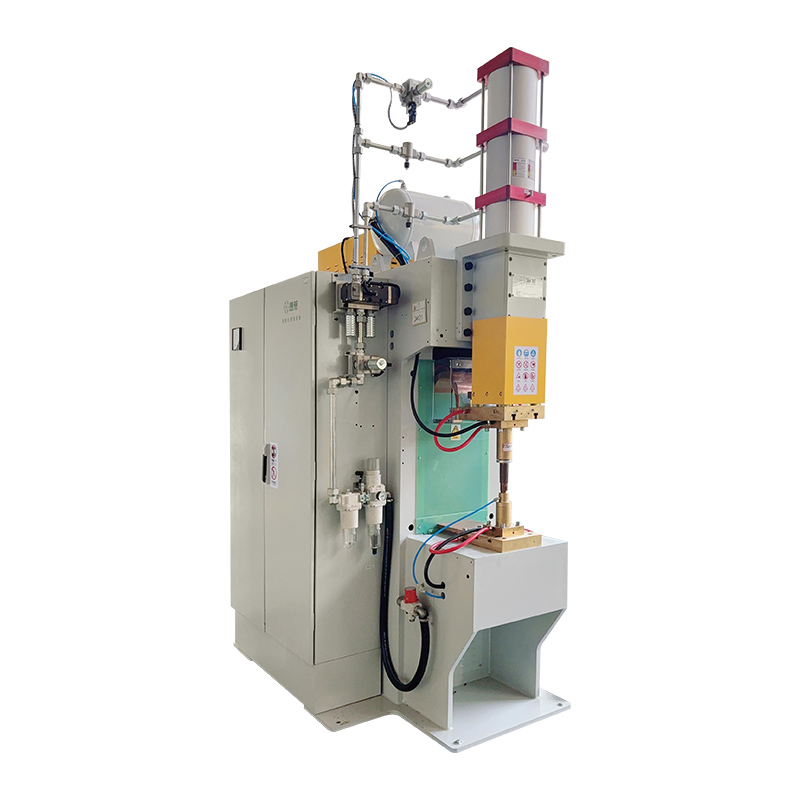
Stainless-Steel Panel and Nut Projection Welding
Electrical cabinets and low-voltage equipment enclosures may require nuts, studs or other fasteners to be welded to stainless-steel panels.
For suitable projection structures, Haifei can evaluate capacitor discharge welding. The short energy-release cycle concentrates heat around the projections and can help limit the thermal influence on the surrounding sheet.
The complete solution may include nut feeding, part detection, positioning tooling, welding, weld counting and mistake-proofing functions. Panel thickness, nut specification, projection geometry and torque or push-out requirements must be confirmed before equipment selection.
Why Are Low-Voltage Electrical Connections Difficult to Weld?
Copper and Aluminum Dissipate Heat Quickly
Highly conductive materials transfer heat away from the joint. Insufficient energy may leave an incomplete bond, while excessive energy can cause deformation, oxidation or damage to surrounding surfaces.
Electrical and Mechanical Performance Must Be Achieved Together
A joint may look acceptable while still having unstable electrical performance. Depending on the component, the customer may need to verify contact resistance, conductivity, temperature rise, tensile strength, peel strength, shear strength or fatigue performance.
Thin Strands and Foil Layers Can Move During Processing
Copper braids and laminated foils are made from many thin conductors. Inadequate positioning or uneven pressure can cause strand spreading, layer gaps, inconsistent terminal thickness or local conductor damage.
Silver Contacts Require Accurate Positioning
Silver contact components are small and sensitive to heat distribution. The contact must be positioned consistently while the process limits displacement, excessive indentation and surface damage.
Coatings Change the Welding Behavior
Nickel-plated, tin-plated and other coated conductors may behave differently from bare copper or aluminum. Coating type and thickness should therefore be included in the application review.
Product Variety Makes Changeover Important
Low-voltage component manufacturers often produce multiple dimensions and joint structures. Fixtures, electrodes and stored process recipes should be designed around a confirmed compatible product range.
Recommended Quality Checks
| Inspection Item | What It Helps Verify |
| Contact resistance | Electrical consistency of the completed joint |
| Conductivity or temperature-rise test | Performance under the customer's defined electrical load |
| Pull, peel, shear or push-out test | Mechanical integrity of the joint |
| Cross-section examination | Internal bond formation and possible voids |
| Dimensional inspection | Position, terminal thickness, flatness and assembly fit |
| Surface inspection | Expulsion, cracks, oxidation, indentation or discoloration |
| Repeated production trial | Process stability over consecutive cycles |
| Parameter records | Traceability of welding current, time, force or other monitored values |
How Is a Low-Voltage Electrical Welding Solution Developed?
Application Review
HAIFEI reviews the drawing, conductor material, plating, joint structure, dimensions, product variants, output requirement and acceptance criteria.
Process and Equipment Evaluation
Engineers compare suitable welding or forming processes and determine whether a standard machine, dedicated workstation or automatic line should be evaluated.
Sample Testing
Representative customer materials are used to identify a preliminary process window. Testing is especially important for copper, aluminum, silver alloys, plated parts, foil stacks and braided conductors.
Joint Verification
The sample is evaluated according to agreed inspection methods. These may include electrical resistance, temperature rise, pull or shear strength, cross-section, dimensions and appearance.
Tooling and Automation Design
After the process is confirmed, HAIFEI designs the electrodes, fixtures, pressure system, cooling, safety guarding and required automation functions.
Trial Production and Acceptance
The completed system is tested with representative workpieces. Cycle stability, model changeover, weld consistency and inspection functions are verified against the agreed technical specification.
FAQ
Q: What welding process is used for low-voltage electrical busbars?
A: The process depends on the busbar structure. Laminated copper foil and braided connectors are often evaluated using diffusion welding, while selected rigid busbar assemblies may use resistance welding or a dedicated busbar welding process. Material, cross-section, coating and joint geometry must be reviewed before selection.
Q: Is diffusion welding suitable for copper braided connectors?
A: It can be suitable when the terminal section must be consolidated while the remaining conductor stays flexible. Braid width, thickness, strand structure, bonding area and finished dimensions need to be confirmed through sample testing.
Q: Can Haifei weld silver contacts to copper carriers?
A: Haifei can evaluate silver-alloy contacts and copper-based carriers using application-specific resistance welding. Feasibility depends on the contact material, carrier material, joint design, surface condition and electrical acceptance requirements.
Q: Can one machine process different busbar sizes?
A: A machine may support multiple models when the required pressure, energy, working clearance and tooling arrangement are compatible. Changeable fixtures, electrodes and stored recipes can be incorporated after the product range is reviewed.
Q: Can copper braid cutting and end forming be integrated?
A: Yes. For suitable specifications, feeding, cutting, end squaring, compaction and unloading can be integrated into one system. The configuration depends on the braid structure, dimensional tolerance and required production sequence.
Q: How is the electrical quality of a welded joint verified?
A: Common checks include contact-resistance measurement, conductivity testing and temperature-rise testing under a customer-defined load. These should be combined with mechanical and dimensional inspection rather than relying only on appearance.