

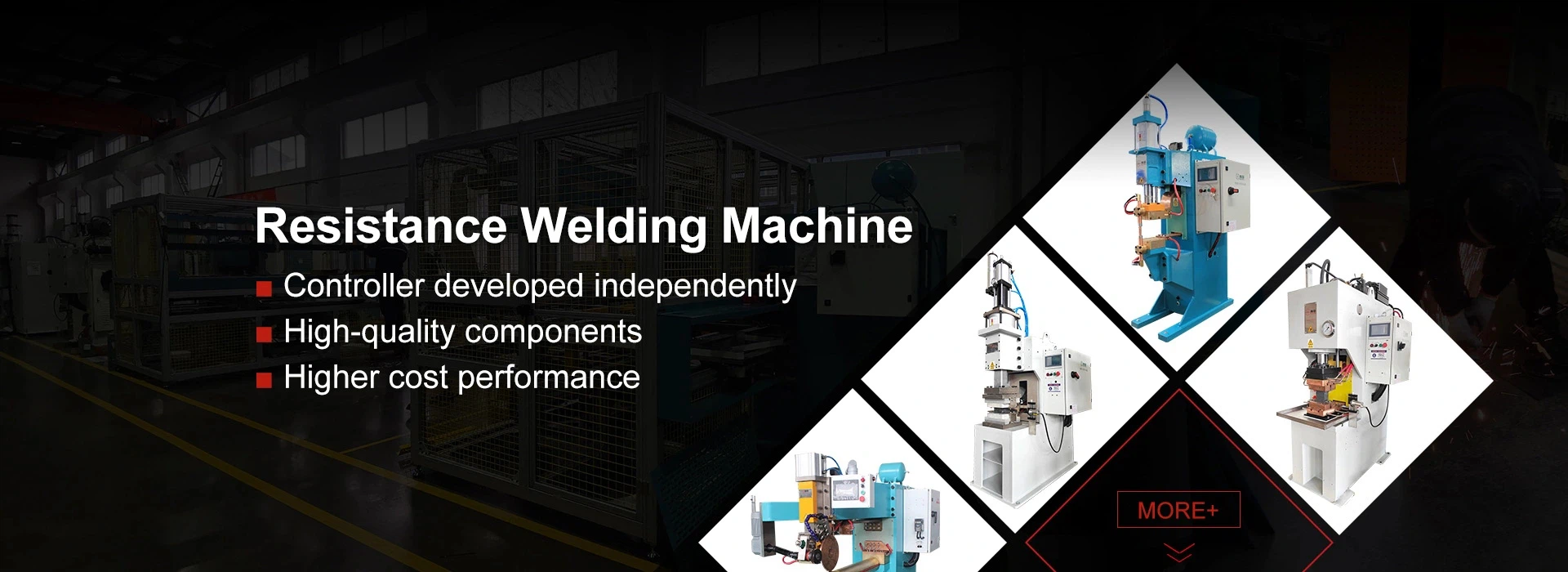
Haifei develops resistance welding, diffusion welding, ultrasonic welding and automated assembly solutions for battery modules, battery packs and energy storage systems.
Our solutions cover laminated copper and aluminum flexible connectors, rigid busbars, dissimilar-metal joints, battery pack panels, partitions, enclosures and other conductive or structural components.
Because material combinations, layer counts, joint structures and quality requirements vary significantly, the welding process and machine configuration are selected through drawing review and sample welding-not by component name alone.
What Battery and Energy Storage Components Can We Weld?
Haifei provides application-specific welding solutions for conductive connections and structural parts used in battery packs and stationary energy storage systems.
| Component | Typical Welding Process | Application Focus |
| Laminated copper foil flexible connectors | Diffusion welding | Consolidating foil layers into compact conductive terminals |
| Aluminum foil flexible connectors | Aluminum diffusion welding | Producing flexible connections with stable terminal areas |
| Copper or aluminum rigid busbars | Resistance welding or application-specific welding | Module and pack electrical connections |
| Copper-aluminum transition joints | Diffusion welding or a verified dedicated process | Connecting dissimilar conductive materials |
| Aluminum-nickel or copper-nickel joints | Diffusion, ultrasonic or resistance welding after testing | Transition connections and terminal assemblies |
| Copper braid and busbar connections | MFDC spot welding or dedicated resistance welding | Flexible current-carrying connections |
| Battery pack panels and partitions | Multi-head or automatic spot welding | Structural assembly with multiple weld positions |
| Battery box and enclosure components | Resistance spot welding | Joining thin-sheet shells, brackets and partitions |
| Battery tabs and thin conductive stacks | Ultrasonic or resistance welding after sample evaluation | Low-deformation electrical connections |
Final process selection depends on the material grade, surface coating, thickness, number of foil layers, joint area, electrical requirements and mechanical acceptance standard.
Why Are Battery and Energy Storage Components Difficult to Weld?
Battery welding is not simply a matter of generating enough heat. The process must produce a repeatable electrical and mechanical connection without damaging thin conductors or surrounding parts.
High Electrical and Thermal Conductivity
Copper and aluminum dissipate heat rapidly. Insufficient energy may produce an incomplete joint, while excessive or poorly controlled heat can cause deformation, surface damage or unstable weld quality.
Oxide Layers on Aluminum
The natural oxide film on aluminum can interfere with stable bonding. Surface condition, contact pressure, tooling and the heating cycle must therefore be evaluated together.
Multilayer Foil Consolidation
Copper and aluminum flexible busbars may contain dozens or hundreds of thin foil layers. Uneven pressure can leave gaps between layers, create wrinkles or produce inconsistent terminal thickness.
Dissimilar-Metal Connections
Copper, aluminum and nickel have different electrical, thermal and mechanical properties. A process that works for a single material may not be suitable for a copper-aluminum or aluminum-nickel joint.
Thin-Sheet Deformation
Battery pack panels, partitions and enclosure parts can deform under excessive welding force or heat. The fixture, electrode design and welding sequence are therefore part of the complete solution.
Electrical and Mechanical Requirements
A visually acceptable weld is not necessarily an electrically reliable weld. The finished joint may need to satisfy resistance, conductivity, pull, peel, shear, dimensional and temperature-rise requirements.


How Do We Select the Welding Process?
There is no single welding method suitable for every battery component. HAIFEI selects the process according to the joint structure and the required electrical and mechanical performance.
Diffusion Welding for Flexible Busbars
Diffusion welding is commonly evaluated for laminated copper foil and aluminum foil flexible connectors. Controlled heating and pressure consolidate the foil layers at the terminal while retaining flexibility in the middle section.
Important development factors include:
- Foil material and surface condition
- Individual foil thickness and total layer count
- Terminal bonding area
- Finished terminal thickness
- Heating and holding cycle
- Pressure uniformity
- Tooling flatness and alignment
- Required electrical resistance and mechanical strength
For detailed equipment configurations, visit our diffusion welding machine section.
MFDC Spot Welding for Panels and Conductive Parts
Medium-frequency direct-current spot welding can be evaluated for battery pack panels, enclosure parts, partitions and selected braid-to-busbar or plate-overlap connections.
Compared with a simple manual operation, an application-specific system can incorporate component positioning, multi-head welding, controlled weld sequences and automatic unloading.
The electrode shape, welding current, pressure, weld spacing and fixture design are confirmed through sample testing.
Ultrasonic Welding for Thin Conductors
Ultrasonic metal welding may be suitable for battery tabs, foil stacks, cables and terminal connections where low thermal input is required.
Its suitability depends on the material combination, stack thickness, joint area and access available for the horn and anvil.
Capacitor Discharge Welding for Suitable Structures
Capacitor discharge welding is mainly considered for projections, fasteners and components that benefit from a short welding pulse.
"Capacitor energy storage welding" describes the way the welding machine stores and releases electrical energy. It should not be confused with every welding application used in the battery energy storage industry.
Haifei's Battery Energy Storage Welding Solutions
Automatic Spot Welding for Battery Pack Panels
Battery pack panels and partitions may contain multiple weld positions distributed across a thin-sheet assembly. Manual welding can lead to inconsistent weld spacing, missed welds and component distortion.
Haifei can configure a multi-head or automatic spot welding system with:
- Application-specific positioning fixtures
- Simultaneous or programmed sequential welding
- Controlled welding current and electrode force
- Interchangeable tooling for different panel models
- Automatic positioning and unloading options
- Weld-count monitoring and production data recording
The welding sequence and fixture support are developed to reduce accumulated deformation while maintaining production efficiency.
Discuss Your Battery Pack Panel Application
How Is a Battery Welding Solution Developed?
Application Review
The component drawing, material specification, joint structure, production target and acceptance criteria are reviewed.
Welding Process Selection
Our engineers compare suitable processes according to the component's electrical, thermal and mechanical requirements.
Sample Welding
Representative customer materials are used to establish an initial process window and verify welding feasibility.
Joint Testing
Samples can be evaluated according to agreed inspection methods, such as electrical resistance, pull strength, peel strength, cross-section, dimensions and appearance.
Machine and Tooling Design
The welding power source, pressure system, electrodes, fixtures, cooling system and automation functions are configured around the confirmed process.
Trial Production and Acceptance
The system is tested using representative parts. Production cycle, consistency, changeover and inspection functions are verified against the agreed acceptance standard.
Recommended Welding Quality Checks
A battery welding project should define measurable acceptance criteria before the equipment is built.
| Inspection Item | What It Evaluates |
| Electrical resistance or conductivity | Electrical performance of the completed connection |
| Pull, peel or shear testing | Mechanical integrity of the joint |
| Cross-section examination | Layer consolidation, weld formation and internal defects |
| Terminal thickness and flatness | Dimensional consistency and assembly suitability |
| Visual inspection | Cracks, expulsion, discoloration, deformation and surface damage |
| Temperature-rise testing | Thermal performance under the customer's specified current |
| Continuous trial production | Stability over repeated production cycles |
The required test method and acceptance value should be supplied by the customer or agreed during project development.
FAQ
Q: What welding process is used for battery busbars?
A: The process depends on the busbar material and structure. Laminated copper or aluminum foil busbars are often evaluated using diffusion welding, while selected rigid busbars, overlap joints or braid connections may use resistance welding. Thin tabs and foil stacks may be suitable for ultrasonic welding.
Q: Can one machine weld both copper and aluminum flexible busbars?
A: It may be possible for selected specifications, but copper and aluminum normally require different process parameters, tooling and heating cycles. The available pressure, power capacity and component dimensions must also be checked. Sample testing is necessary before confirming one machine for both materials.
Q: How are multilayer foil welds inspected?
A: Typical inspection methods include terminal thickness measurement, electrical resistance testing, pull or peel testing and cross-section examination. The exact method should reflect how the connector will be used in the battery system.
Q: Can the same welding system produce different connector sizes?
A: A system can support multiple models when the size range, machine capacity and process requirements are compatible. Changeable fixtures, electrodes and stored welding recipes may be used to reduce changeover time.
Q: Is capacitor energy storage welding the same as battery energy storage welding?
A: No. Capacitor energy storage welding refers to a welding power source that stores energy in capacitors and releases it in a short pulse. Battery energy storage welding describes applications used to manufacture battery modules, packs and energy storage system components.