

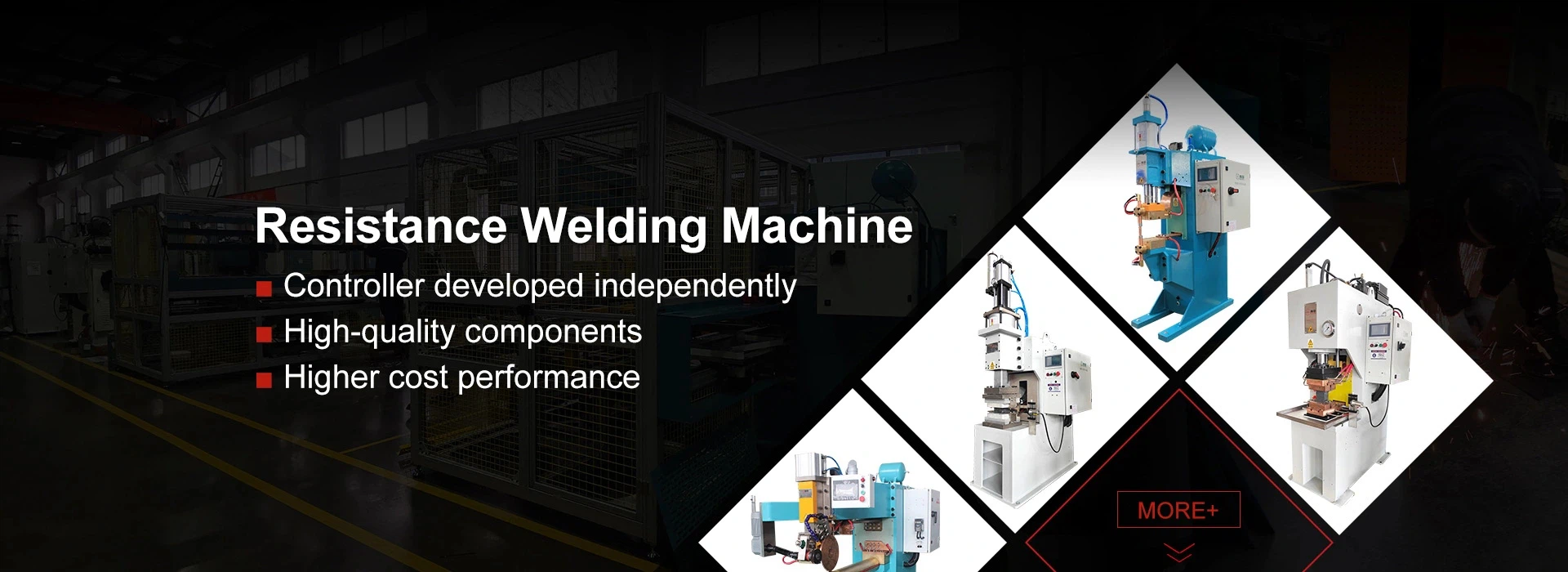
Haifei develops customized spot welding, projection welding, seam welding and automated production systems for household appliance components.
Typical applications include range hood panels, dishwasher inner tubs, heat exchanger plates, refrigerator compressors, air conditioner compressors, brackets, tubes, terminals and thin-sheet housings.
The welding process, fixture and automation level are selected according to the component material, thickness, joint structure, sealing requirement and production target.
What Household Appliance Components Can HAIFEI Weld?
Haifei provides resistance welding and automation solutions for household appliance sheet-metal assemblies and refrigeration compressor components.
Application |
Typical Components |
Welding Process |
Main Requirement |
| Range hood manufacturing | Body panels, frames, brackets and reinforcing ribs | Automatic spot welding | Stable weld positions with limited panel deformation |
| Dishwasher manufacturing | Thin stainless steel inner tubs | CNC seam welding | Continuous seams and reliable sealing |
| Heat exchanger manufacturing | Thin stainless steel plates and layered assemblies | Automatic spot welding | Accurate weld distribution and controlled deformation |
| Refrigerator compressor manufacturing | Terminals, housings, copper tubes and mounting parts | Projection, spot and seam welding | Electrical reliability, structural strength and sealing |
| Air conditioner compressor manufacturing | Terminals, tubes, shells, brackets and mounting lugs | MFDC projection, spot and seam welding | Stable welding under pressure, vibration and thermal cycling |
The final equipment configuration is confirmed through drawing review, sample welding and agreed quality tests.
What Makes Household Appliance Welding Difficult?
Thin Sheet Metal Is Easy to Deform
Range hood panels, dishwasher tubs and heat exchanger plates are generally made from thin sheet metal. Excessive or uneven heat input can cause warping, bulging, indentation or dimensional changes.
Visible Surfaces Require Cleaner Welds
Many appliance components have painted, polished or stainless steel surfaces. Spatter, oxidation, deep electrode marks and heat discoloration can increase grinding, polishing and rework.
Large Components Need Accurate Positioning
Large panels and three-dimensional housings can move during loading and welding. Dedicated fixtures are required to maintain joint alignment and repeatable weld positions.
Sealed Components Require Stable Joint Quality
Dishwasher tubs and compressor housings must control water, refrigerant or pressurized media. Incomplete seams, pores and inconsistent weld formation can increase leakage risk.
Compressor Joints Perform Several Functions
A compressor terminal must provide an electrical connection while maintaining the integrity of the sealed housing. Tubes, shells and mounting parts have different welding requirements and normally need separate stations and tooling.
Different Models Require Practical Changeover
Appliance manufacturers often produce several component sizes. Fixtures, electrodes and stored welding programs should therefore be designed around the required product range.
Featured Household Appliance Welding Cases
Automatic Spot Welding for Range Hood Frames and Panels

Range hood assemblies can include body panels, smoke collection hoods, supporting frames, brackets and reinforcing ribs. These components have relatively large visible surfaces but are often produced from thin sheet metal.
Manual positioning and unstable welding energy can result in misplaced welds, missed welds, surface marks and panel deformation.
Haifei developed an automatic spot welding solution using controlled resistance welding, component-specific fixtures and programmed welding sequences.
The solution focuses on:
- Controlling heat input at each weld position
- Holding large panels in a repeatable position
- Maintaining stable welding current and electrode force
- Reducing missed or misplaced welds
- Supporting stored programs for compatible components
- Reducing dependence on manual welding experience
CNC Seam Welding for Dishwasher Inner Tubs
Dishwasher inner tubs are commonly formed from thin stainless steel sheets. The long joint must be welded continuously while controlling distortion and maintaining the required sealing performance.
Unstable welding speed, electrode pressure or current can lead to uneven seams, local gaps, oxidation and tub deformation.
Haifei developed a CNC seam welding solution with a programmable welding path and dedicated inner-tub fixture.
The solution focuses on:
- Maintaining stable electrode-wheel movement
- Coordinating current, pressure and welding speed
- Controlling heat input on thin stainless steel
- Supporting the tub during continuous welding
- Producing a uniform continuous seam
- Storing programs for compatible tub specifications
Leak-testing requirements should be defined before the equipment acceptance standard is confirmed.

Automatic Spot Welding for Heat Exchanger Plates

Heat exchanger plates are used in refrigeration equipment, HVAC systems and industrial temperature-control equipment.
These stainless steel plates may be thin, flexible and formed with complex surface patterns. Poor support or excessive welding heat can result in warping, collapse, burn-through or inconsistent gaps between plates.
Haifei developed an automatic spot welding solution with CNC positioning and application-specific tooling.
The solution focuses on:
- Automatically positioning each weld location
- Distributing welds according to the plate structure
- Supporting thin or formed plates uniformly
- Controlling localized welding heat
- Reducing missed welds and spacing errors
- Storing parameters for compatible plate models
Refrigerator Compressor Welding Solutions
Refrigerator compressor manufacturing involves several different welding operations. Typical components include electrical terminals, compressor housings, copper tubes, mounting brackets and structural parts.
The application must consider joint strength, electrical performance, component positioning and refrigerant sealing.
Haifei can develop dedicated stations for:
- Terminal projection welding
- Compressor housing projection welding
- Copper tube welding
- Shell seam welding
- Bracket and mounting-part welding
- Automatic loading and unloading
- Welding parameter recording and traceability
Because each station performs a different function, the complete system is configured according to the customer's compressor structure and production sequence.
The refrigerator compressor page provides more information about individual welding stations, production-line integration and application evaluation.

Air Conditioner Compressor Welding Solutions

Air conditioner compressors operate under repeated vibration, temperature changes and pressure fluctuations. Their terminals, tubes, shells and mounting components therefore have different electrical, sealing and mechanical requirements.
Common production challenges include unstable terminal welds, copper tube deformation, shell leakage, inconsistent bracket positioning and limited process traceability.
Haifei provides application-specific solutions covering:
- MFDC projection welding for compressor terminals
- Customized resistance welding for copper tubes
- Seam welding for compressor shells
- Spot or projection welding for brackets and mounting lugs
- Dual-station and rotary-indexing welding systems
- Automatic loading, positioning and inspection
- Welding data recording and production-line communication
The equipment configuration is developed according to the compressor model, tube dimensions, weld locations, sealing standard and required production capacity.
Which Welding Process Is Suitable for Each Application?
| Welding Requirement | Recommended Process | Typical Application |
| Separate structural weld points | Resistance spot welding | Range hood frames and heat exchanger plates |
| Local joints formed by projections | MFDC projection welding | Compressor terminals, housings and brackets |
| Continuous sealed joint | Resistance seam welding | Dishwasher tubs and compressor shells |
| Thin copper tube connection | Customized resistance welding after testing | Compressor suction, discharge and process tubes |
| Multiple repeatable weld positions | Automatic welding workstation | Appliance panels and compressor components |
| Connected multi-process production | Customized automated line | Refrigerator and air conditioner compressors |
The process should not be selected from the component name alone. Material, thickness, joint structure, electrode access, sealing standard and production output must also be reviewed.
Why Choose HAIFEI for Appliance Welding Automation?
Haifei supplies the welding process, equipment and tooling as one coordinated solution.
1
Spot, projection and seam welding capabilities
2
Application development based on actual components
3
Dedicated fixtures, electrodes and welding wheels
4
Experience with thin-sheet and compressor component welding
5
Standalone, semi-automatic and fully automatic configurations
6
Sample welding before final equipment specification
7
Process monitoring and data-recording options
8
Multi-station production-line integration
FAQ
Q: What welding processes are used in household appliance manufacturing?
A: Resistance spot welding is commonly used for panels, frames and brackets. Projection welding can be used for compressor terminals and formed joints. Seam welding is used for continuous joints such as dishwasher tubs and compressor shells.
Q: Can thin stainless steel be welded without deformation?
A: Deformation can be reduced through controlled current, welding time, electrode force, welding sequence and fixture support. The result should be verified using the customer's actual material and component.
Q: Are refrigerator and air conditioner compressors welded in the same way?
A: They may use similar welding processes, but the terminal structure, shell dimensions, tube arrangement and production sequence can differ. Tooling and welding parameters must be developed for the actual compressor model.
Q: What compressor components can Haifei weld?
A: Typical applications include terminals, compressor housings, copper tubes, shells, mounting brackets and structural components.
Q: How is compressor welding quality checked?
A: The inspection plan may include visual inspection, electrical testing, mechanical testing, dimensional checks and leak testing. The acceptance method should follow the compressor manufacturer's product standard.
Q: Can one welding system produce several appliance models?
A: It may be possible when the models have compatible materials, dimensions and welding requirements. Changeable fixtures and stored programs can support model changeover.