

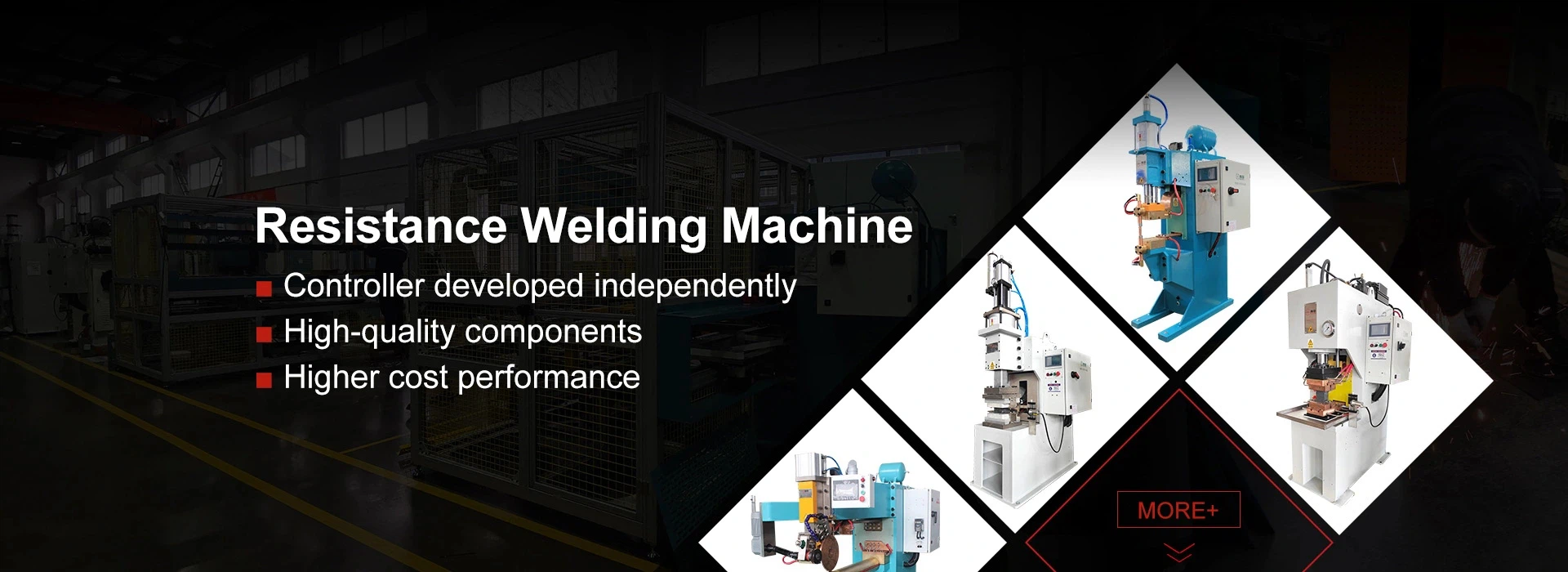
Your Leading Butt Welding Machine Manufacturer
In metal fabrication and industrial manufacturing, butt welding is widely used for joining rods, pipes, and structural components. Butt welding machines precisely control current, time, and forging pressure to create a metallurgical bond at the joint interface, producing strong, consistent welds with minimal defects.
With high weld consistency, stable productivity, and excellent compatibility with automation systems, butt welding machines have become an essential solution in automotive manufacturing, mechanical engineering, energy systems, and pipe fabrication industries.
As a professional welding equipment manufacturer, Haifei Intelligent Equipment Co., Ltd. is committed to providing reliable butt welding solutions designed to meet different materials, production conditions, and cycle time requirements.
-
![Resistance Butt Welding Machine]() Resistance Butt Welding MachineThe Haifei Resistance Butt Welding Machine delivers flawless, high-strength joints for critical components. Utilizing advanced resistance heating and programmable upset pressure, it creates...view more
Resistance Butt Welding MachineThe Haifei Resistance Butt Welding Machine delivers flawless, high-strength joints for critical components. Utilizing advanced resistance heating and programmable upset pressure, it creates...view more

Why Choose Us
Rich Experience
Founded in 2009, Haifei has grown from a small business to a world-renowned welding equipment manufacturer. The customer-centric, win-win cooperation philosophy makes the company more mature and powerful.
Production Capacity
Our modern 10,000 m² production facility and team of 100+ engineering specialists enable us to deliver innovative, high-performance welding solutions to industries worldwide.
Production Market
Haifei has more than 40,000 successful welding application cases, with customers in Europe, North America, Southeast Asia, India, and other regions.
24H Online Service
If you encounter difficulties in using the product, we will respond to your needs as soon as possible and provide you with the greatest support.
What Is a Butt Welding Machine?
A butt welding machine is a type of resistance welding equipment designed to join two metal workpieces end to end. During welding, the parts are securely clamped and aligned. Electrical current passes through the contact surface, generating resistance heat. Under controlled axial pressure, the heated material undergoes plastic deformation, forming a solid, high-strength joint.
Unlike fusion welding processes that require filler wire or flux, butt welding produces clean, uniform welds with mechanical strength that often matches or exceeds that of the base material.

Working Principle of Butt Welding Machines
The butt welding process typically includes clamping, current application, heating, forging pressure, and cooling. As welding current flows through the joint interface, resistance generates rapid localized heating. At the same time, precisely controlled pressure forges the materials together, completing the weld.
Advanced welding controllers allow multi-stage control of current and pressure, enabling optimal welding conditions for different materials and cross-sectional sizes.
Role Within a Welding System
In real production environments, butt welding machines usually operate as part of an integrated welding system. They work in coordination with welding power supplies, control units, cooling systems, and automation equipment.
In automated production lines, butt welding machines can be synchronized with robots, conveyors, and inspection systems to achieve continuous, high-throughput manufacturing.
Key Technical Features and Advantages
Stable and Repeatable Welding Performance
By precisely controlling welding current, time, and pressure, butt welding machines ensure highly repeatable weld quality. This consistency significantly reduces variability caused by manual operation and is ideal for high-volume production.
High Weld Strength and Reliable Joint Quality
Butt welding combines resistance heating with controlled plastic deformation. The resulting weld structure is dense, with a well-managed heat-affected zone and stable mechanical and electrical performance.
Compatibility With Multiple Materials and Profiles
Butt welding machines are suitable for carbon steel, stainless steel, copper, aluminum, and their alloys. They can weld round bars, square bars, and pipes, making them versatile across many industrial applications.
Easy Integration Into Automated Production
With compact structures and stable welding processes, butt welding machines are easy to integrate into automated feeding systems, robotic workstations, and flexible production lines.
Typical Application Industries
Automotive and Automotive Components
Used for welding shafts, structural components, and pipes, meeting strict automotive standards for strength and consistency.
Pipe and Metal Fabrication
Widely applied in carbon steel and stainless steel pipe welding, delivering reliable joint quality for industrial piping systems.
Machinery and Heavy Equipment Manufacturing
Suitable for structural and load-bearing components, improving overall strength and service life.
New Energy and Power Industries
Commonly used for butt welding copper and aluminum conductors in energy storage systems and electrical equipment.
Types of Butt Welding Machines
-
Standard Butt Welding Machines
Standard models are well suited for small to medium production volumes and process validation. They feature straightforward operation and reliable performance, offering excellent value for general welding applications.
-
Fully Automatic Butt Welding Machines
Fully automatic butt welding machines incorporate automated feeding, positioning, and parameter memory functions. They support continuous operation, increasing productivity while reducing labor dependency.
-
Robotic Butt Welding Workstations
Robotic butt welding workstations integrate butt welding machines with industrial robots. These systems are designed for high-cycle, high-consistency applications and support multi-station welding, automatic loading/unloading, and synchronized process control.
-
High-Precision CNC Butt Welding Machines
High-precision CNC butt welding machines use digital control and servo-driven systems to accurately manage displacement, pressure, and timing. They are ideal for applications with strict dimensional and consistency requirements.
How to Choose the Right Butt Welding Machine
-
Select Based on Material and Size
Different materials have varying electrical resistance and thermal behavior. Machine capacity should be selected according to material type and workpiece dimensions.
-
Match Production Volume and Automation Level
For high-volume production, fully automatic or robotic butt welding solutions are recommended to maximize efficiency.
-
Evaluate Stability and Maintenance Costs
Control accuracy, cooling system design, and consumable lifespan all affect long-term operating costs.
-
Consider Future Expansion and Upgrades
Machines with modular designs and expandable interfaces provide greater flexibility for future production upgrades.
Reliability and Service Support
Industrial-Grade Reliability
Designed with industrial-grade components, the machines are built for high load and long-term continuous operation.
Extensive Industry Experience
Butt welding machines have been deployed across a wide range of industries, ensuring strong process adaptability.
Customized Welding Solutions
Equipment configurations can be customized to match specific materials, part geometries, and production line requirements.
Comprehensive Technical Support
From equipment selection and commissioning to long-term maintenance, professional technical support is provided throughout the equipment lifecycle.
Manufacturing Process


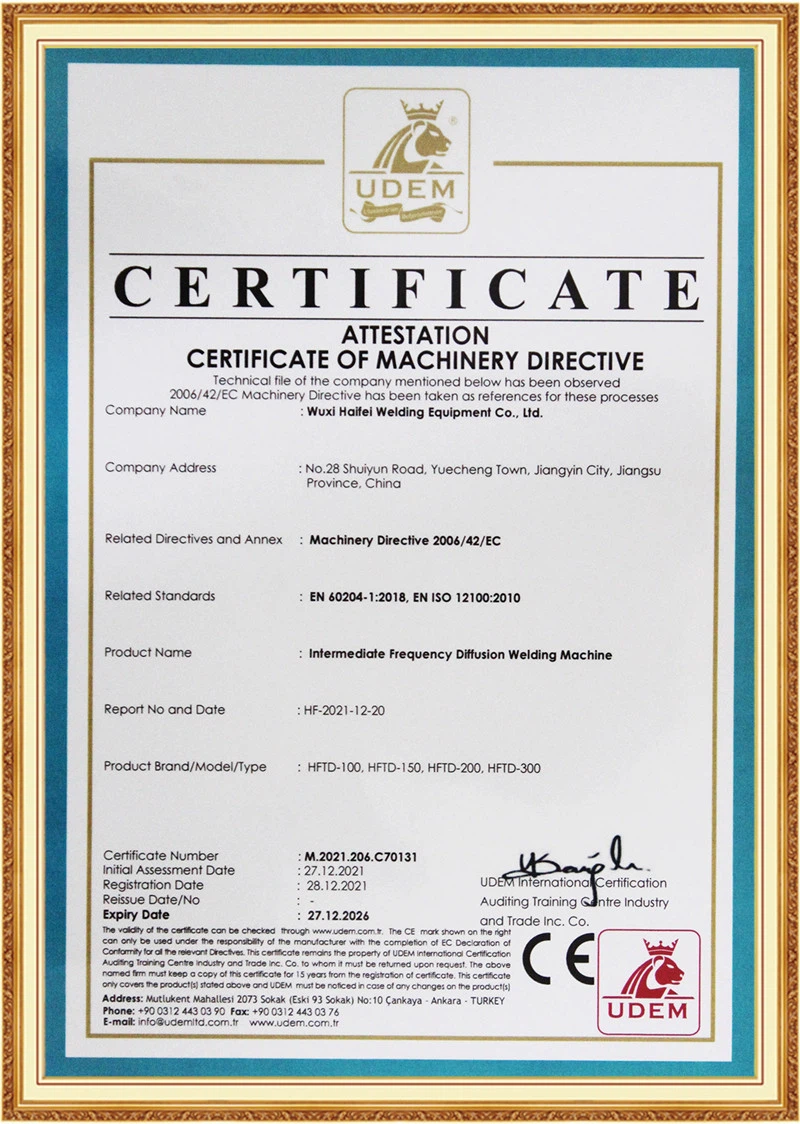
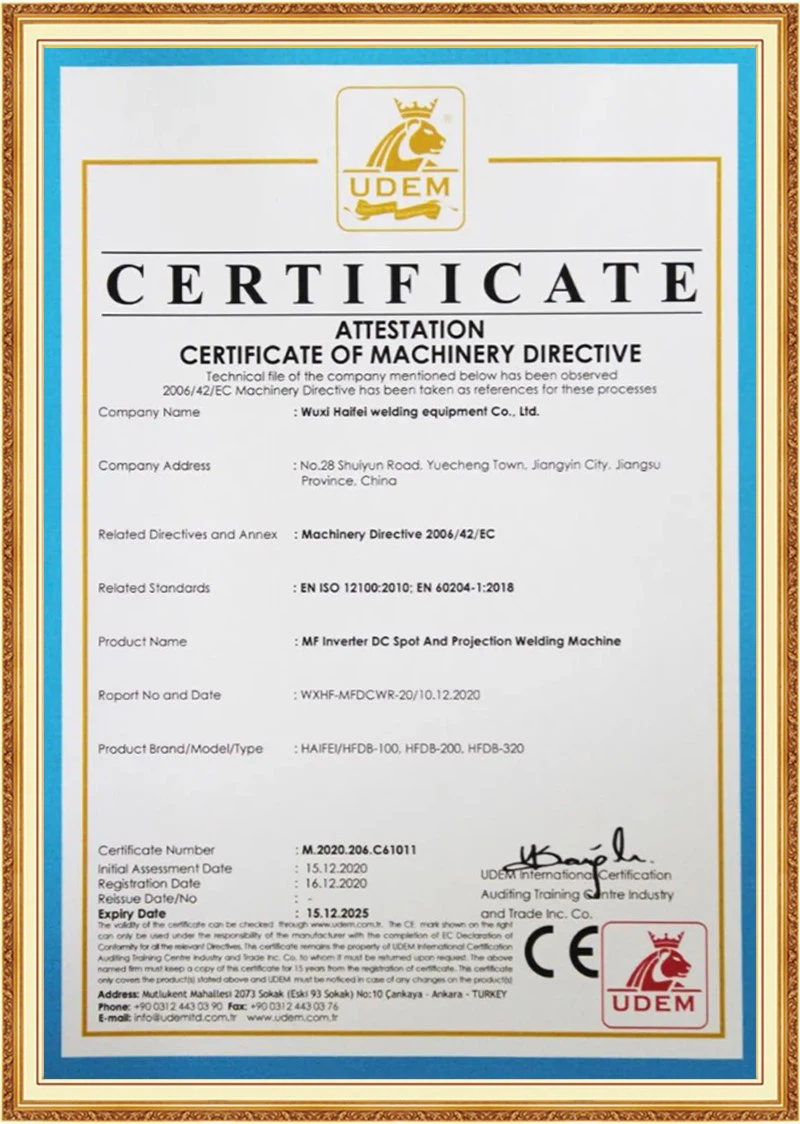
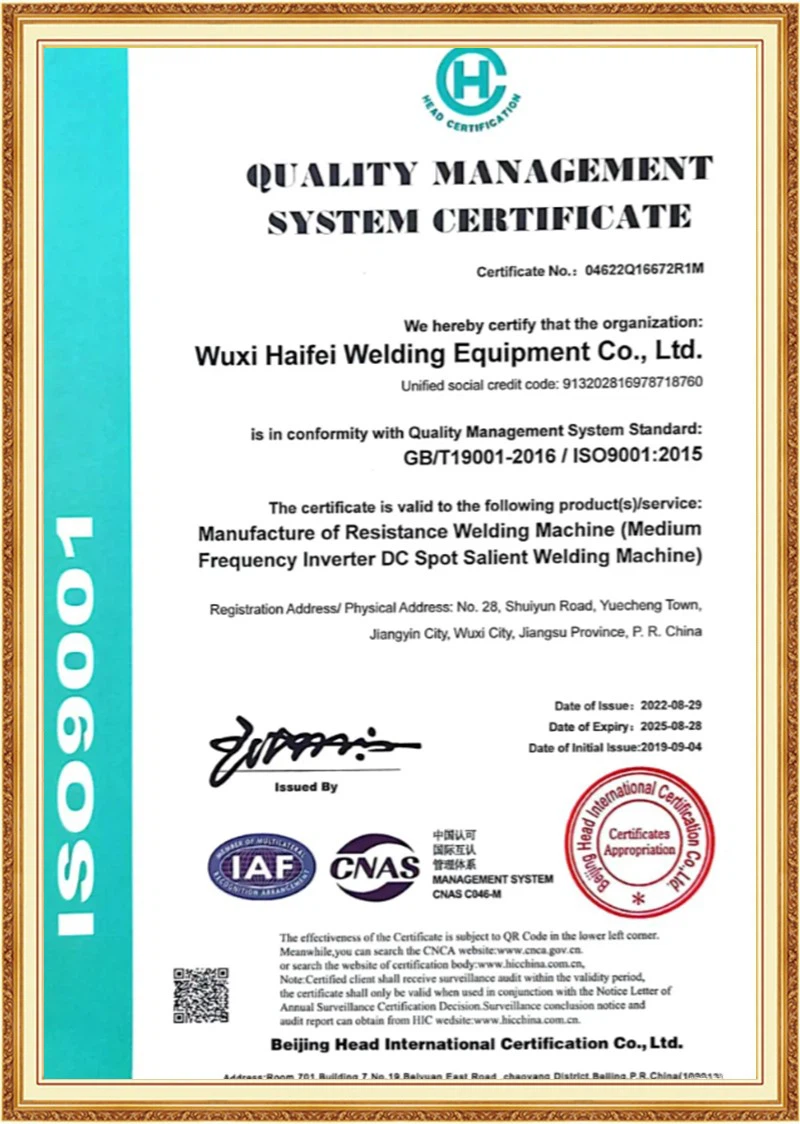
Certificate
Payment Terms
T.T with 30% downpayment, 70%before shipment.
Paypal or West Union also accept.
Packaging & Shipping

FAQ
Q: Why choose our factory ?
A: HAIFEI operates from a 10,000 m² advance manufacturing facility certified to ISO9001:2015 standards. The producing process is under strict management in quality. Our products are sold around the world and highly thought of since excellent quality and perfect service at home and abroad.
Q: Which materials can be welded with a butt welding machine ?
A: Common materials include carbon steel, stainless steel, copper, aluminum, and their alloys.
Q: Are butt welding machines suitable for automated production lines ?
A: Yes. Butt welding machines integrate easily with automation and robotic systems.
Q: How do we ensure quality ?
A: Always pre produce samples before mass production; Always conduct a final inspection before shipment.
Q: What is the difference between a butt welding machine and a spot welder ?
A: Butt welding machines are used for end-to-end joints, while spot welders are designed for lap joints.
We're well-known as one of the leading butt welding machine manufacturers and suppliers in China. Please rest assured to buy high quality butt welding machine made in China here from our factory. For price consultation, contact us.


