


Custom Welding Automation Systems & Automated Welding Machines
HAIFEI designs and builds custom welding automation systems around the customer’s actual workpiece, welding process and production target. Rather than adding automation to a standard machine, we evaluate how the parts are loaded, positioned, welded, inspected and unloaded, then develop a system that fits the complete production sequence.
Depending on the application, the equipment can integrate an MFDC welding power source, dedicated fixtures, automatic feeding, servo positioning, robotic handling, weld monitoring, inspection and data recording. We provide manual-load workstations, semi-automatic machines and fully automated welding lines for busbars, electrical components, automotive parts, compressors, metal enclosures and flexible conductors.
To evaluate a project, send us your part drawing, material information, welding position, required output and current production method. Our engineers will review the welding process before recommending the automation level and system configuration.
Request an Automation Evaluation
-
![Automatic Copper Braids Crimping And Cutting Machine]() Automatic Copper Braids Crimping And Cutting MachineThe HFDB-660 Automatic Copper Braided Crimping and Cutting Machine is a high-precision, fully automated solution designed for the new energy industry. This integrated system handles the entire...view more
Automatic Copper Braids Crimping And Cutting MachineThe HFDB-660 Automatic Copper Braided Crimping and Cutting Machine is a high-precision, fully automated solution designed for the new energy industry. This integrated system handles the entire...view more -
![Frame Circuit Breaker Busbar Welding Machine]() Frame Circuit Breaker Busbar Welding MachineThe Haifei 2500KVA Frame Circuit Breaker Busbar Welding Machine is engineered for the low-voltage electrical equipment industry. Utilizing advanced MFDC welding technology, it achieves flux-free,...view more
Frame Circuit Breaker Busbar Welding MachineThe Haifei 2500KVA Frame Circuit Breaker Busbar Welding Machine is engineered for the low-voltage electrical equipment industry. Utilizing advanced MFDC welding technology, it achieves flux-free,...view more -
![Automatic Silver Contact Welding Machine]() Automatic Silver Contact Welding MachineThe Automatic silver contact welding machine adopts a dynamic resistance monitoring system, which can capture the resistance changes in real time during the welding process and adjust the current...view more
Automatic Silver Contact Welding MachineThe Automatic silver contact welding machine adopts a dynamic resistance monitoring system, which can capture the resistance changes in real time during the welding process and adjust the current...view more -
![Welding Automation for Automotive Parts]() Welding Automation for Automotive PartsOur Automotive Parts Welding Automation System delivers high-speed, precision joining for modern vehicle manufacturing. This advanced robotic welding solution combines AI-driven process control...view more
Welding Automation for Automotive PartsOur Automotive Parts Welding Automation System delivers high-speed, precision joining for modern vehicle manufacturing. This advanced robotic welding solution combines AI-driven process control...view more -
![Copper Braid Wire Automatic Squaring Welding Machine]() Copper Braid Wire Automatic Squaring Welding MachineThe HFDB-440 Copper Braid Wire Automatic Squaring Welding Machine is designed for the batch production of braided copper flexible connectors, copper shunts, and flexible electrical conductors. It...view more
Copper Braid Wire Automatic Squaring Welding MachineThe HFDB-440 Copper Braid Wire Automatic Squaring Welding Machine is designed for the batch production of braided copper flexible connectors, copper shunts, and flexible electrical conductors. It...view more -
![Automatic Copper Braided Welding and Cutting Machine]() Automatic Copper Braided Welding and Cutting MachineOur HFDB-100 Automatic Copper Braided Wire Shunt Cutting and Squaring Machine is a high-precision, fully automated solution designed for the new energy industry. This integrated system handles the...view more
Automatic Copper Braided Welding and Cutting MachineOur HFDB-100 Automatic Copper Braided Wire Shunt Cutting and Squaring Machine is a high-precision, fully automated solution designed for the new energy industry. This integrated system handles the...view more -
![Silver Contact Spot Welding Machine]() Silver Contact Spot Welding MachineThe DB200H Silver Contact Spot Welding Machine uses 1000 Hz medium-frequency inverter DC power to weld silver or copper contacts onto copper electrical parts. It provides programmable current,...view more
Silver Contact Spot Welding MachineThe DB200H Silver Contact Spot Welding Machine uses 1000 Hz medium-frequency inverter DC power to weld silver or copper contacts onto copper electrical parts. It provides programmable current,...view more -
![Automatic Seam Welding Machine]() Automatic Seam Welding MachineThe HAIFEI Automatic Seam Welding Machine is a fully automated robotic welding workstation designed for continuous, high-precision seam welding of tanks, battery enclosures, automotive components,...view more
Automatic Seam Welding MachineThe HAIFEI Automatic Seam Welding Machine is a fully automated robotic welding workstation designed for continuous, high-precision seam welding of tanks, battery enclosures, automotive components,...view more -
![Air Conditioner Compressor Welding Machine]() Air Conditioner Compressor Welding MachineProduct Overview HAIFEI Air Conditioner Compressor Welding Machine is a customized resistance welding solution for air conditioner compressor manufacturing. It can be designed for compressor...view more
Air Conditioner Compressor Welding MachineProduct Overview HAIFEI Air Conditioner Compressor Welding Machine is a customized resistance welding solution for air conditioner compressor manufacturing. It can be designed for compressor...view more -
![Automotive Wire Welding Machine]() Automotive Wire Welding MachineOur Automotive Wire Welding Machine is a high-performance, automated solution specifically designed for the precision welding of car seat frames, backrests, and headrest rods. Engineered to meet...view more
Automotive Wire Welding MachineOur Automotive Wire Welding Machine is a high-performance, automated solution specifically designed for the precision welding of car seat frames, backrests, and headrest rods. Engineered to meet...view more -
![Automotive Seat Frame Equipment]() Automotive Seat Frame EquipmentHaifei Intelligent Equipment Co., Ltd.'s projection welding machine series adopts a modular design, supporting free combination of 2-16 workstations, and realizes multi-workstation collaborative...view more
Automotive Seat Frame EquipmentHaifei Intelligent Equipment Co., Ltd.'s projection welding machine series adopts a modular design, supporting free combination of 2-16 workstations, and realizes multi-workstation collaborative...view more -
![Servo Welding Machine]() Servo Welding MachineThis Servo Welding Machine is a breakthrough in the field of resistance welding. Unlike traditional pneumatic equipment, it achieves digital control of the electrode pressing process through a...view more
Servo Welding MachineThis Servo Welding Machine is a breakthrough in the field of resistance welding. Unlike traditional pneumatic equipment, it achieves digital control of the electrode pressing process through a...view more


Custom Welding Automation at a Glance
Project question |
HAIFEI capability |
|---|---|
| What can be customized? | Welding process, power source, electrodes, fixtures, feeding, positioning, handling, inspection and unloading |
| What automation levels are available? | Manual-load workstations, semi-automatic machines and fully automatic production lines |
| Which welding processes can be integrated? | MFDC spot welding, projection welding, seam welding, resistance brazing, diffusion welding and ultrasonic metal welding |
| What workpieces can be evaluated? | Busbars, electrical contacts, automotive components, compressor parts, metal enclosures and flexible conductors |
| Can different product models run on one system? | Yes, where part geometry and process requirements permit. Changeable fixtures and stored recipes can be considered during the design stage |
| Can we send samples for welding trials? | Yes. Welding trials help confirm the power source, electrodes, pressure, fixture method and acceptance criteria before final design |
| What information is required? | Part drawings, materials, weld locations, production target, quality standard and available workshop space |
What Is Customized Welding Automation?
Customized welding automation refers to application-specific welding systems that integrate welding equipment, robotics, fixtures, control software, and quality monitoring into a unified production solution. Unlike standard standalone machines, these systems are designed to:
- Match specific product geometries and welding processes
- Achieve consistent weld quality with minimal operator dependence
- Support high-volume, continuous, or unmanned production
- Allow future scalability and process upgrades
From semi-automatic workstations to fully integrated robotic production lines, customized welding automation provides manufacturers with greater control, higher efficiency, and lower total cost of ownership.

Semi-Automatic or Fully Automatic Welding?
The correct automation level depends on product stability, production volume, loading difficulty, available labor and the number of product variants. Full automation is not always the most economical choice.
| Production condition | Recommended automation level |
|---|---|
| Several product variants with relatively low volume | Manual-load or flexible semi-automatic workstation |
| Stable workpiece design and repeat batch production | Dedicated automatic welding machine |
| Multiple weld points with fixed spacing | Servo-positioned or indexing welding system |
| Heavy or difficult-to-handle workpieces | Robot-assisted loading and unloading |
| High output with continuous production | Multi-station fully automatic welding line |
| Frequent product changeover | Interchangeable fixtures and stored process recipes |
| Strict traceability requirements | Automated monitoring and production data recording |
| Existing stable welding process but inefficient handling | Retrofit or add loading, positioning and unloading automation |
A semi-automatic system can provide a better balance when the operator can load the product safely but welding consistency needs to be controlled by the machine. Full automation becomes more valuable when manual handling is the main production bottleneck or when the process requires continuous operation.
What Can Be Integrated into a Custom Welding Machine?
Welding Power Source
The power source is selected according to the material, joint area, required current, production cycle and quality standard. Available processes include MFDC resistance welding, capacitor discharge welding, seam welding, resistance brazing, diffusion welding and ultrasonic metal welding.
Custom Fixtures and Electrodes
The fixture determines how consistently the parts are located and held during welding. HAIFEI designs fixtures and electrodes according to the customer’s drawings, welding position and product tolerance. Replaceable inserts or changeable fixtures can be considered for product families.
Automatic Feeding
Nuts, bolts, contacts, plates and other small components can be fed through bowl feeders, linear feeders or dedicated mechanisms. Feeding feasibility depends on the component shape, surface condition and orientation requirements.
Servo Positioning
Servo axes can move the workpiece or welding head between several positions. This is useful for parts with multiple weld points, adjustable spacing or stored programs for several models.
Robotic Handling
Robots can load, unload, turn or transfer workpieces between stations. Robot integration is recommended when the handling movement is complex or flexible model changeover is required.
Process Monitoring
Depending on the welding method, the equipment can monitor parameters such as welding current, time, electrode force, displacement and dynamic resistance. Alarm limits and production records can be configured according to the project.
Inspection and Traceability
Optional inspection functions may include part-presence sensors, visual inspection, resistance measurement, production counting, barcode identification and parameter recording. Inspection requirements should be defined together with the customer’s acceptance standard.
Safety Protection
The final equipment can include safety guards, door interlocks, light curtains, emergency stops and controlled access. The safety design is determined by the machine layout and destination-market requirements.
Industries We Serve
Low-Voltage Electrical Equipment
Custom welding automation is used for circuit breaker busbars, silver contacts, conductive plates, switch components and other current-carrying assemblies. These applications normally require stable positioning and repeatable electrical joints.
Automotive and Electric Vehicle Components
Typical applications include seat frames, brackets, reinforcement parts, wire assemblies, fasteners and battery-related components. Systems can be designed for multi-point welding, automatic fastener feeding and model changeover.
Battery and Energy Storage
Welding automation can be developed for busbars, terminals, conductive components, flexible connectors and structural battery parts. Material combination and quality requirements must be reviewed before the welding process is selected.
Compressor Manufacturing
Dedicated welding equipment can be used for compressor shells, terminals, copper tubes and related assemblies. The system structure depends on whether the project requires projection welding, brazing, seam welding or several processes in one line.
Metal Tanks and Enclosures
Motorcycle fuel tanks, industrial containers and electrical enclosures may require spot welding, projection welding and seam welding at different production stages. HAIFEI can evaluate individual workstations or a connected production line.
Copper Busbars and Flexible Conductors
Equipment can be developed for solid copper busbars, laminated foil connectors and copper braided conductors. The recommended process is based on conductor structure, welding area, electrical requirements and target production volume.
How We Develop a Custom Welding Automation Project
Workpiece and Requirement Review
The project begins with the customer’s drawing, sample, material information, welding location and production target. We also review the existing production method to identify where inconsistency or handling time occurs.
Welding Process Verification
Where required, sample welding trials are carried out to evaluate the power source, electrode structure, pressure, welding parameters and joint result. The trial also helps identify whether the original part design is suitable for automated welding.
Automation Concept Design
After confirming the welding process, the engineering team develops the equipment layout. This stage determines how the parts will be loaded, positioned, welded, inspected and unloaded.
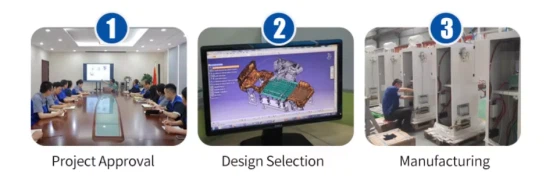
Detailed Engineering and Manufacturing
The mechanical structure, electrical controls, fixtures, electrodes, guarding and operating program are developed according to the approved concept. The customer should confirm the final workpiece version before tooling production begins.
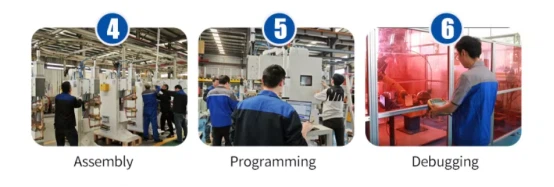
Assembly and Factory Testing
The machine is assembled and tested at HAIFEI. Where possible, customer samples are used to check the welding sequence, fixture operation, model changeover and continuous running condition.
Acceptance, Delivery and Training
Before shipment, the agreed acceptance items are reviewed with the customer. Installation, commissioning and operator training can be arranged according to the destination and project scope.
Why Work with HAIFEI on a Custom Welding Machine?
Welding Process and Automation Developed Together
A reliable automation system starts with a stable welding process. HAIFEI evaluates the power source, electrode, pressure and joint conditions before finalizing the handling and production layout.
01
Equipment Designed Around the Workpiece
The machine is configured according to the actual part rather than forcing the product into a fixed standard layout. Fixtures, electrodes, feeding mechanisms and movement paths are developed as one system.
02
Flexible Automation Levels
Customers can begin with a manual-load workstation, choose a semi-automatic machine or develop a complete production line. The recommendation is based on production needs rather than the highest possible automation level.
03
Sample Testing Before Final Selection
Where the application requires verification, customers can send parts or materials for welding trials. Trial results provide a more reliable basis for selecting the process and equipment.
04
Support from Design to Commissioning
HAIFEI manages process evaluation, mechanical design, electrical integration, fixture development, machine assembly, testing and commissioning within the agreed project scope.
05
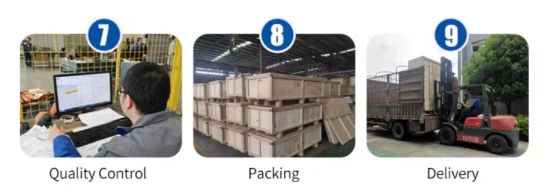
Manufacturing Process
Ordering Process
Send Us Inquiry → Receive Our Quotation → Negotiate Details → Confirm the Sample → Sign Contract/Deposit → Mass Production →Cargo Ready → Balance/Delivery → Further Cooperation
Certificate
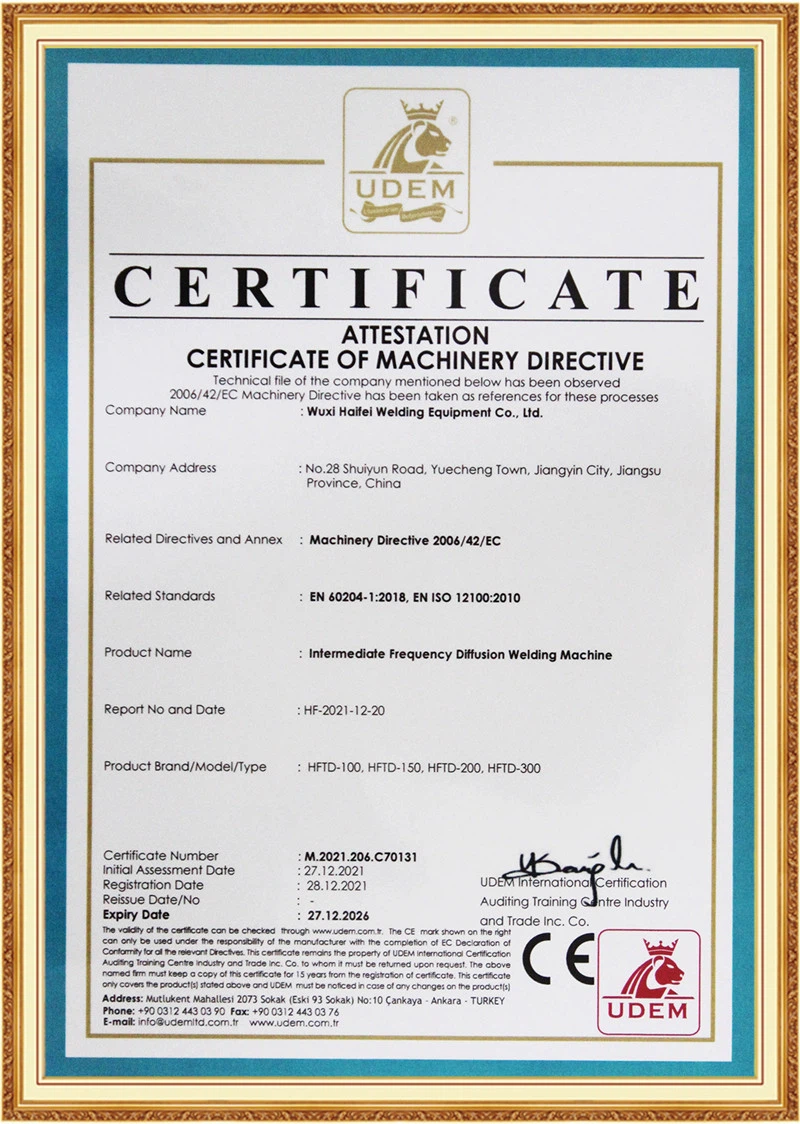
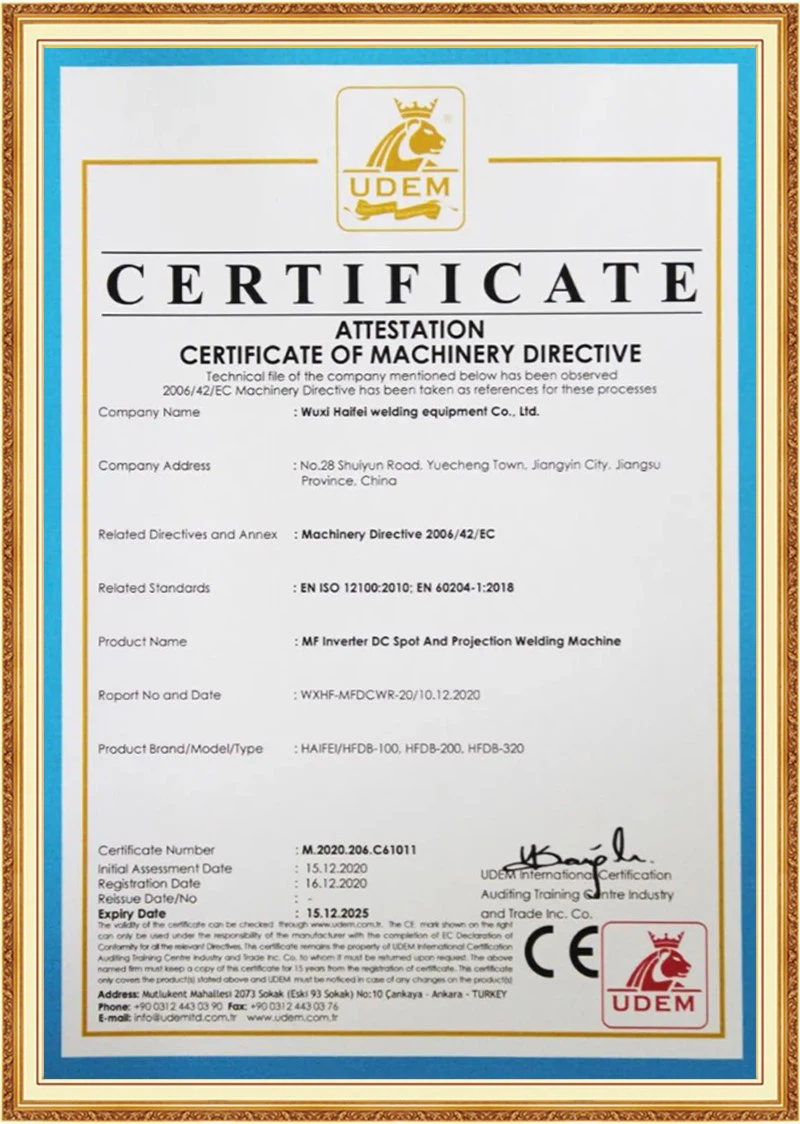
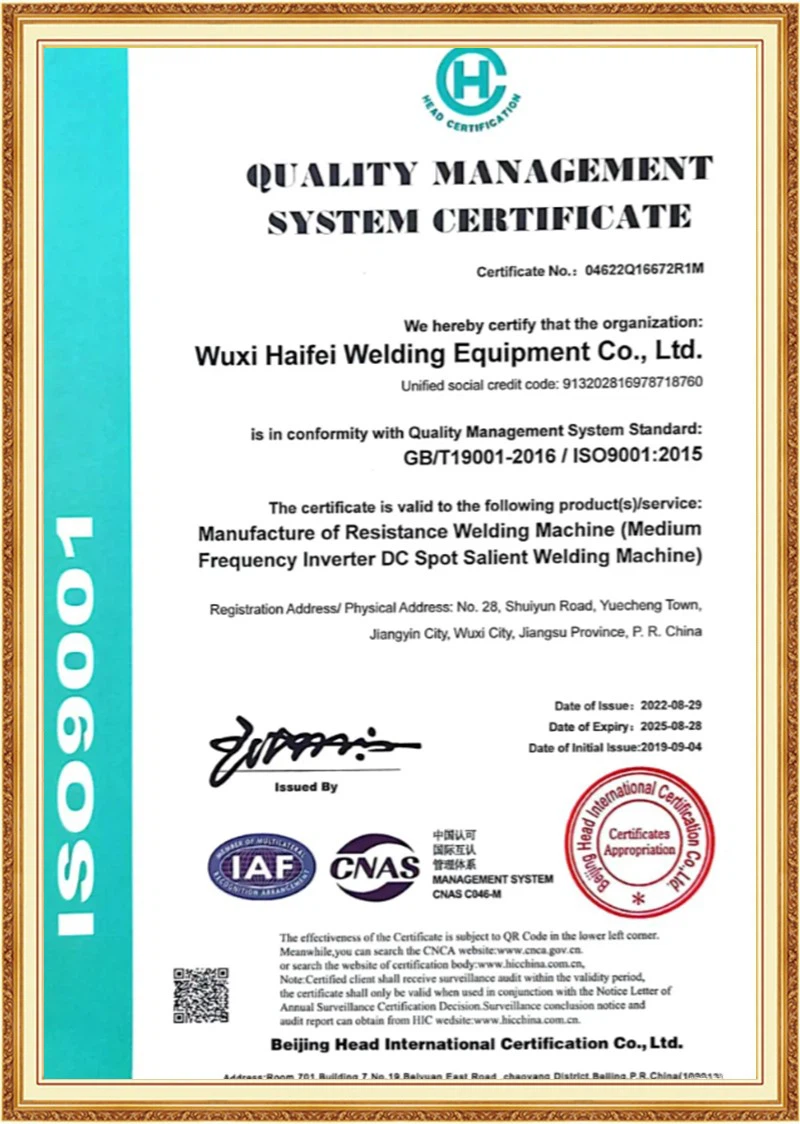
Payment Terms
T.T with 30% downpayment, 70%before shipment.
Paypal or West Union also accept.
Packaging & Shipping

FAQ
Q: What information is needed to design a custom automated welding machine?
A: We normally need the workpiece drawing, material, thickness, welding position, required output and quality standard. Information about the current production method is also useful when determining the automation level.
Q: Can HAIFEI automate our existing manual welding process?
A: Yes, provided the welding process is stable and suitable for repeatable positioning. We first evaluate whether the main issue comes from welding parameters, fixtures, loading or part variation before proposing an automation concept.
Q: Should we choose a semi-automatic or fully automatic welding system?
A: Semi-automatic equipment is often suitable for moderate production volumes or frequent product changes. Full automation is more appropriate for stable, high-volume production where loading and unloading create a significant bottleneck.
Q: Can one welding machine handle different workpiece models?
A: In many projects, multiple models can be accommodated through interchangeable fixtures, adjustable positioning and stored parameter recipes. Feasibility depends on the differences between the products.
Q: Can we send workpieces for welding tests before ordering?
A: Yes. Sample testing is recommended when the welding process, machine capacity, electrode design or joint acceptance result still needs to be confirmed.
Start Your Custom Welding Automation Project
A useful automation proposal begins with the workpiece, not a standard machine catalogue. Send us your drawing, material, weld position, current production method and target output. Our engineers will review the welding process and determine whether a dedicated workstation, semi-automatic machine, robotic cell or complete welding line is the appropriate solution.
Request a Custom Welding Solution
Wuxi Haifei Intelligent Equipment Co., Limited is well-known as one of the leading custom machines manufacturers and suppliers in China. Please rest assured to buy high quality custom machines made in China here from our factory. For price consultation, contact us.
automated track welders, automatic welding positioner, robotic welder


