

5G Communication Component Welding Solutions
Haifei develops customized welding equipment for thin metal components used in 5G communication devices, electronic thermal management systems and other compact equipment.
One representative application is the welding of VC vapor chambers. These components use a sealed internal cavity and capillary structure to spread heat rapidly. Their thin construction makes the welding process particularly sensitive to heat input, welding-path stability, fixture pressure and sealing quality.
Hhaifei evaluates the actual component dimensions, material, thickness, internal structure and acceptance requirements before developing the welding process, fixture and automation configuration.
Discuss Your Welding Application
What Components Can Be Evaluated?
Our current project experience focuses on VC vapor chambers and related thin thermal-management components.
| Component | Welding requirement | Main process concern |
|---|---|---|
| VC vapor chambers | Continuous and dense joining around the specified path | Leakage, deformation and internal capillary damage |
| Ultra-thin heat spreaders | Controlled joining with limited thermal influence | Warping, bulging and surface collapse |
| Vacuum thermal components | Reliable sealing of the external structure | Pinhole leakage and incomplete joints |
| Thin metal thermal plates | Repeatable welding along a programmed path | Heat distribution and dimensional stability |
The suitable welding method must be confirmed from the actual material, joint structure and product drawing. Components that appear similar may require different energy control, tooling or welding paths.

What Makes VC Vapor Chamber Welding Difficult?
Thin Plates Are Easily Deformed
VC vapor chambers and ultra-thin heat spreaders are sensitive to concentrated or excessive heat. An unsuitable process can cause bulging, local collapse, warping or loss of flatness.
This may affect subsequent assembly even when the joint itself appears complete.
Small Welding Defects Can Cause Vacuum Leakage
A vapor chamber must maintain its sealed internal environment. Irregular manual movement or unstable heat input can leave pinholes, discontinuities or incomplete sections along the joint.
The welding path therefore needs to remain continuous and repeatable.
The Internal Capillary Structure Must Be Protected
Excessive temperature can oxidize or damage the internal capillary structure. This may interfere with fluid return and reduce the thermal performance of the finished component.
Heat input must consequently be considered together with sealing quality rather than focusing only on visible weld appearance.
Product Dimensions May Change Between Models
Manufacturers may produce several vapor chamber sizes and thicknesses. The welding system must account for different paths, locating points and clamping requirements without applying uneven pressure to the thin plate.
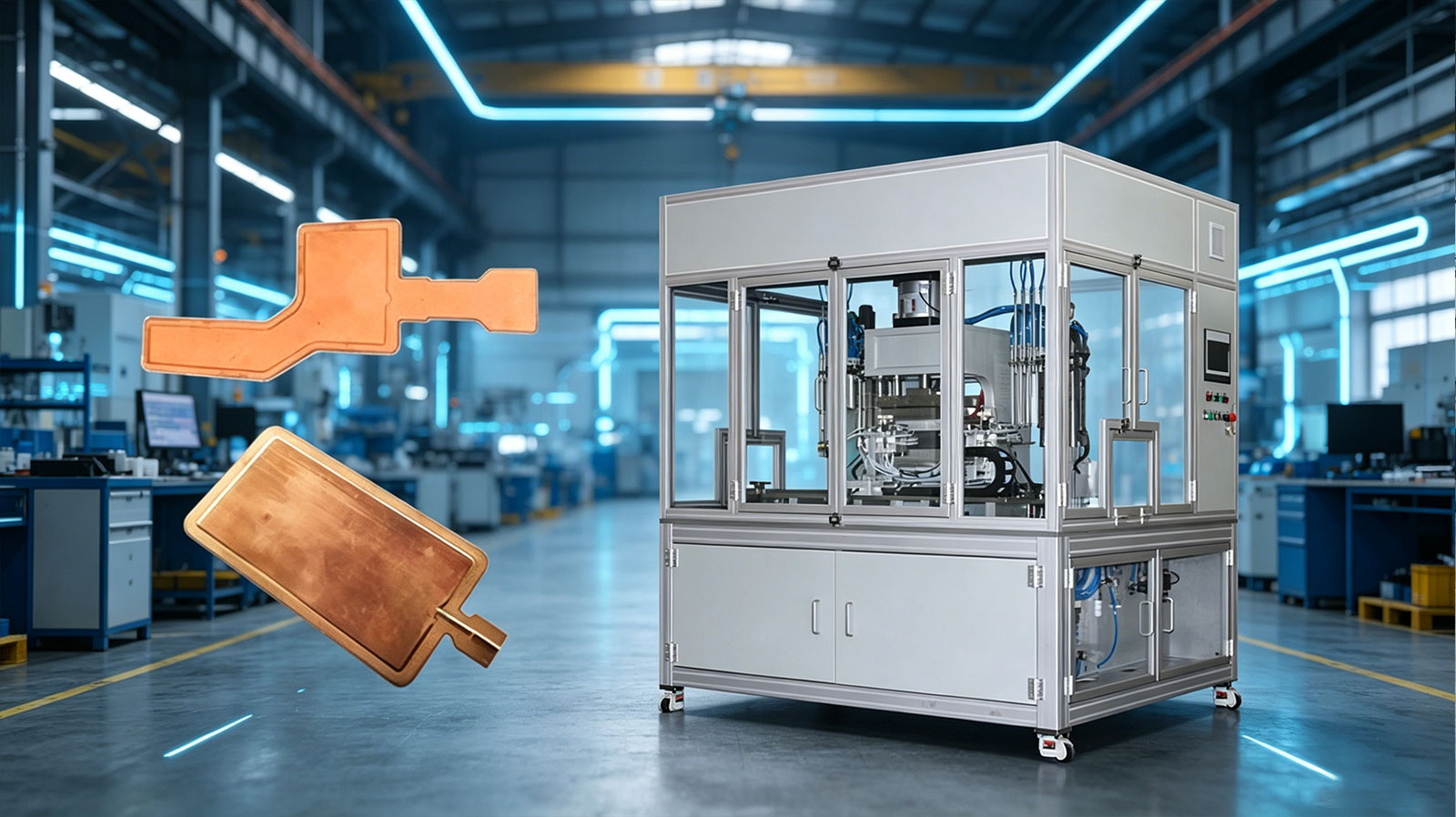
Featured Project: Automatic Welding Machine for VC Vapor Chambers

-
Customer Background
The customer develops and manufactures high-end VC vapor chambers, ultra-thin heat spreaders and vacuum thermal-management components.
These products are used in digital electronics, intelligent equipment, new-energy terminals and industrial control systems where compact dimensions and effective heat transfer are required.
-
Problems with the Previous Welding Process
The customer's existing process presented three main difficulties:
- The thin plates were easily affected by widely distributed heat, resulting in bulging, collapse or warping.
- Manual welding movement and unstable heat input could produce pinholes, discontinuities and incomplete joints, increasing the risk of vacuum leakage.
- Excessive welding temperature could damage or oxidize the internal capillary structure and affect the thermal function of the component.
What Did the Customer Require?
The customer required an automated solution that could:
- Control the welding path more consistently than manual operation
- Limit heat input and reduce deformation of the thin plate
- Produce a continuous, dense joint around the required area
- Reduce pinholes, incomplete sections and leakage risks
- Protect the internal capillary structure from excessive thermal damage
- Accommodate different vapor chamber dimensions and thicknesses
- Maintain stable operation during batch production
HaifeiI's Customized Solution
Welding Process Verification
Haifei carried out several rounds of welding tests using VC vapor chambers of different dimensions and thicknesses.
The purpose was to determine a suitable operating window for the welding path, energy input, clamping condition and product structure before finalizing the machine configuration.
CNC-Controlled Welding Path
The automatic welding machine was equipped with a CNC path-control system.
Instead of relying on the operator to guide the welding position manually, the machine follows a programmed path. This helps maintain more consistent movement along the required joint and reduces variation caused by manual operation.
The path program can be developed according to the shape and dimensions of the customer's product.
Low-Heat-Input Closed-Loop Control
A low-heat-input closed-loop system was used to control the thermal influence on the thin plate.
The purpose of this configuration is to provide sufficient energy for joining while limiting the affected area around the weld. This helps reduce the risk of plate deformation and thermal damage to the internal structure.
The final settings must be established through testing with the actual material and component.
Dedicated Positioning Fixture
Haifei designed a dedicated fixture to locate and support the vapor chamber during welding.
The fixture distributes the holding force across the workpiece and keeps the upper and lower sections in close contact. Proper fixture support helps reduce local lifting, bulging or collapse while maintaining the programmed welding position.
Fixture design must be adjusted when the component size, profile, plate thickness or joint location changes.
How the Solution Addressed the Project Problems?
| Original problem | Haifei configuration | Intended improvement |
|---|---|---|
| Inconsistent manual welding path | CNC-programmed path control | More repeatable welding movement |
| Excessive or uneven heat input | Low-heat-input closed-loop control | Smaller heat-affected area and reduced deformation risk |
| Thin plate bulging or collapse | Dedicated supporting and positioning fixture | More stable plate contact and flatness |
| Pinhole or discontinuous joints | Process testing and controlled automatic welding | Denser and more continuous joint formation |
| Risk of internal capillary damage | Controlled thermal input | Reduced exposure of the internal structure to excessive heat |
| Different product dimensions | Adjustable programs and customized tooling | Better adaptation to multiple product specifications |
Testing and Project Acceptance
Before final delivery, Haifei conducted welding trials on components with different dimensions and thicknesses and optimized the process settings.
The equipment was also subjected to continuous trial operation during pre-acceptance. Evaluation focused on:
- Welding-path consistency
- Joint continuity
- Workpiece positioning
- Visible plate deformation
- Equipment operating stability
- Suitability for the customer's component range
Leakage limits, vacuum-retention requirements, flatness tolerances and thermal-performance tests should be defined by the customer according to the finished product standard. These acceptance values should not be replaced by general machine specifications.
Can the Equipment Be Customized for Other Thermal Components?
Yes. The machine structure, welding path and fixture can be evaluated for other thin metal thermal-management components, but suitability cannot be determined from the product name alone.
Haifei will need to review:
- Component drawing and external dimensions
- Upper and lower plate materials
- Individual plate thickness
- Joint shape and welding position
- Internal capillary or support structure
- Required flatness
- Sealing or leakage-test standard
- Product varieties
- Required production output
- Loading and unloading preference
Sample testing is recommended before confirming the final equipment configuration.
Why Work with HAIFEI?
Process Testing with Actual Components
Different plate thicknesses and internal structures respond differently to heat and pressure. HAIFEI can use customer samples to evaluate the welding path, thermal influence and fixture concept before final machine configuration.
Equipment and Fixture Development
The welding machine and fixture are developed as one system. This is important for thin vapor chambers because unstable support can affect both product flatness and joint formation.
Automation Based on Production Needs
The automation level can be planned according to product variety, target output and operator involvement. The focus is on achieving a practical production process, not adding unnecessary functions.
Pre-Delivery Trial Operation
The equipment can be tested with agreed samples before shipment. Inspection standards and acceptance methods should be confirmed during the technical review stage.
FAQ
