


Products Description
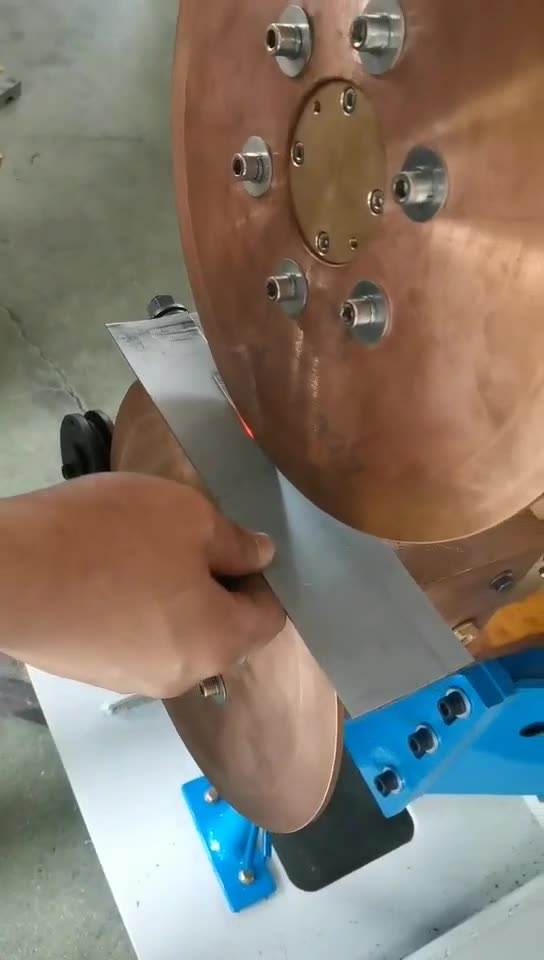
Seam welding operates under the principle of coalescence, uniting two metal sheets or workpieces through a series of overlapping spot welds.
The welding process in which two similar or dissimilar materials are joined at the seam by the application of heat generated from electrical resistance. The seam welding is a types of resistance welding, in which weld is produced by roller electrodes instead of tipped electrodes.
Most seam welding processes produce a continuous or intermittent seam weld near the edge of two overlapped metals by using two machine driven roller electrodes. As in the seam welding process, the roller electrodes move over the metal workpieces, the workpieces are under pressure and the current passing through them heats the two workpieces of the metal to the melting point. Thus, this process, sometimes, also called the seam spot welding.

Core Selling Points of Resistance Seam Welding Machine
Continuous Seam Formation
Rotating electrode wheels create overlapping weld points to form a continuous seam for tanks, containers, drums, and sheet metal shells.
Flexible Welding Modes
Supports continuous and intermittent seam welding for different sealing, heat input, and production requirements.
AC, DC, and MFDC Options
Machine configuration can be selected according to material, thickness, seam length, and production capacity.
Adjustable Welding Parameters
Welding current, electrode pressure, and wheel speed can be adjusted to improve seam consistency and reduce common welding defects.
Water-Cooled Electrode Wheels
Cooling helps control electrode temperature during continuous operation and supports stable batch production.
Custom Fixture Design
Fixtures and electrode wheel layouts can be designed according to workpiece shape, seam position, and loading method.
Suitable Materials
Haifei resistance seam welding machines are commonly used for carbon steel, stainless steel, galvanized steel, and selected coated metal sheets. For copper, brass, aluminium, nickel alloy, or special materials, the welding feasibility should be checked according to material grade, thickness, surface condition, conductivity, heat dissipation, and seam quality requirement.
For special materials, sample welding is recommended before confirming the final machine configuration.
Typical Workpieces for Resistance Seam Welding
Metal Tanks and Fuel
Containers
Used for workpieces that require continuous sealed seams. The machine configuration should be selected according to tank material, wall thickness, seam length, and leakage test standard.
01
Stainless Steel Drums and Food Containers
Suitable for cylindrical or sheet metal containers where clean weld appearance, stable overlap, and corrosion-resistant material handling are required.
02
Automotive Metal
Components
Can be used for selected automotive sheet metal parts, cylindrical parts, shells, and sealed assemblies requiring continuous or intermittent seam welding.
03
Home Appliance Tanks
and Shells
Used in production of water heater tanks, washing machine drums, air conditioner parts, and other appliance metal shells.
04
Custom Sheet Metal
Assemblies
For non-standard parts, Haifei can evaluate the joint structure, electrode wheel access, fixture method, and automation feasibility before recommending a machine.
05
Welded Products

Specification and Parameters
AC Seam Welder
|
|
Items \ Model |
unit |
FN-100H |
FN-160H |
FN-200H |
|
1 |
Rated capacity |
KVA |
100 |
160 |
200 |
|
2 |
Power supply |
V/Ø/Hz |
380V±10% / 3 phases / 50Hz |
||
|
3 |
Rated duty cycle |
% |
50% |
50% |
50% |
|
4 |
Secondary voltage no load |
V |
5.94 - 7.6 |
5.94 - 9.04 |
9.04 - 10 |
|
5 |
Welding thickness |
mm |
1.2+1.2 |
1.8+1.8 |
2+2 |
|
6 |
Electrode force Max. |
KN |
7 |
8 |
10 |
|
7 |
Cylinder stroke |
mm |
100 |
130 |
105 |
|
8 |
Cooling water consumption |
L/h |
1200 |
1500 |
2050 |
|
9 |
Working environment |
|
temperature: 1~45℃ humidity: 35~90% |
||
DC Seam Welder
|
|
Items \ Model |
unit |
FN-100HB |
FN-160HB |
FN-200HB |
|
1 |
Rated capacity |
KVA |
100 |
160 |
200 |
|
2 |
Power supply |
V/Ø/Hz |
380V±10% / 3 phases / 50Hz |
||
|
3 |
Rated duty cycle |
% |
50% |
50% |
50% |
|
4 |
Secondary voltage no load |
V |
3.52 - 7.04 |
4.52 - 9.05 |
10.6 - 12.67 |
|
5 |
Welding thickness |
mm |
1.2+1.2 steel |
1.8+1.8 steel |
2+2 steel |
|
6 |
Electrode force Max. |
KN |
10 |
10 |
10 |
|
7 |
Cylinder stroke |
mm |
100 |
100 |
100 |
|
8 |
Cooling water consumption |
L/h |
1440 |
1800 |
2460 |
|
9 |
Working environment |
|
temperature: 1~45℃ humidity: 35~90% |
||
Common Seam Welding Issues and Adjustment Directions
Issue |
Possible Cause |
Adjustment Direction |
|---|---|---|
| Weak seam strength | Current too low, speed too fast, pressure mismatch | Increase current, reduce speed, check electrode force |
| Burn-through | Current too high, speed too slow, material too thin | Reduce current, increase speed, adjust pressure |
| Poor sealing | Insufficient weld overlap, unstable current, poor surface contact | Check wheel speed, current stability, surface condition |
| Deep indentation | Excessive electrode pressure or overheating | Reduce pressure, improve cooling, adjust heat input |
| Electrode wheel wear | Long production time, poor cooling, dirty surface | Improve cooling, clean workpiece, maintain electrodes |
| Unstable seam appearance | Poor fixture positioning or material variation | Check fixture, feeding, material consistency |
Why Choose HAFEI ?
Certifications
40+ Patents and 2 National Software Copyrights, 10,000㎡ Factory with 100+ skilled employees.

Invention Patent Certificate

Design patent certificate

Utility Model Patent Certificate

Utility Model Patent Certificate

CE certificate for polymer diffusion welding machine

CE certificate for diffusion welding machine
Our Partners
We have served over 3,300 customers worldwide, and our long-term partners include Tesla, BYD, and Siemens.Over 40+ Fortune 500 companies.


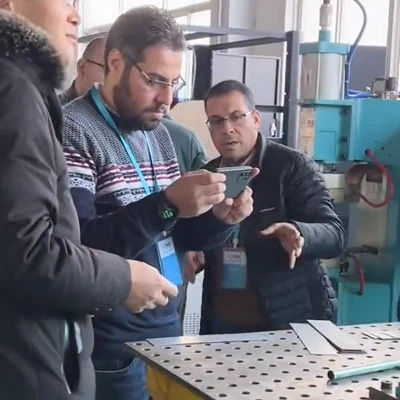
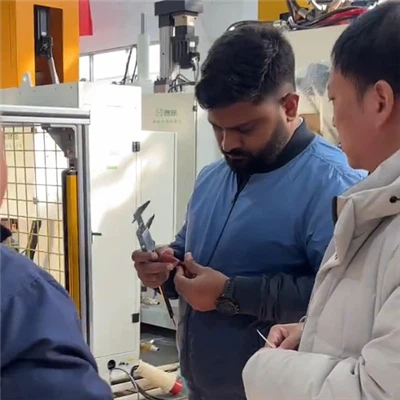
Haifei Customer Site
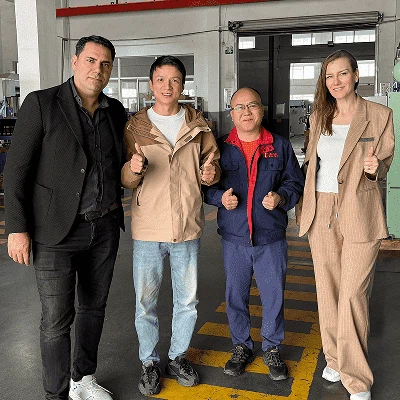


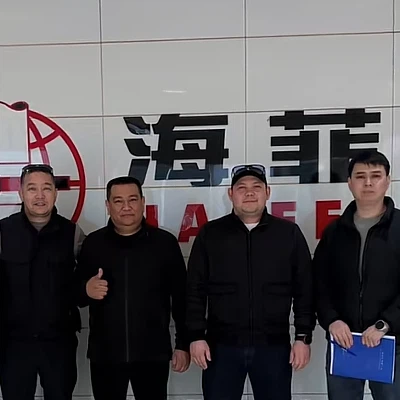
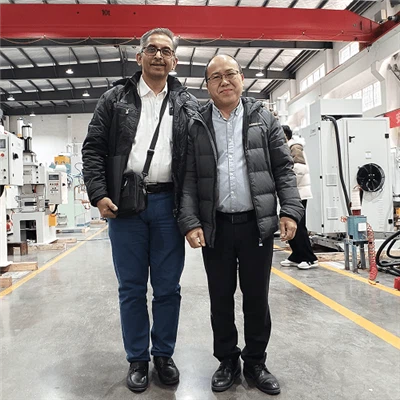



FAQ
Q: How do I know if my part needs continuous seam welding or spot welding?
A: If the joint needs sealing or a long continuous weld path, seam welding is usually more suitable. If only several fixed connection points are needed, spot welding may be enough.
Q: What causes leakage after seam welding?
A: Leakage is often related to insufficient weld overlap, unstable current, wrong wheel pressure, poor surface contact, or unsuitable welding speed. Sample testing is recommended before production.
Q: Can one seam welding machine handle different product sizes?
A: Yes, but it depends on the fixture, electrode wheel position, and machine throat depth. For multiple sizes, replaceable fixtures or adjustable structures may be needed.
Q: Why is electrode wheel cooling important?
A: During continuous welding, the electrode wheel heats up quickly. Proper cooling helps reduce electrode wear, maintain current stability, and keep the weld seam more consistent.
Q: What information affects the choice of electrode wheel?
A: Material type, sheet thickness, seam position, product shape, welding current, and surface requirement all affect electrode wheel size, material, and profile design.
Q: Can seam welding reduce visible weld marks?
A: It can help produce a more uniform weld line, but surface marks still depend on electrode pressure, current, material thickness, wheel profile, and surface coating.
Wuxi Haifei Intelligent Equipment Co., Limited is one of the leading manufacturers and suppliers of resistance seam welding machine in China. With abundant experience, we warmly welcome you to buy advanced resistance seam welding machine for sale here from our factory. Quality products and reasonable price are available.
Hot Tags: resistance seam welding machine, China resistance seam welding machine manufacturers, suppliers, factory


