


Hey there! As a supplier of MFDC Spot Welders, I've been getting a lot of questions lately about the international standards for these nifty machines. So, I thought I'd sit down and write a blog post to clear things up.
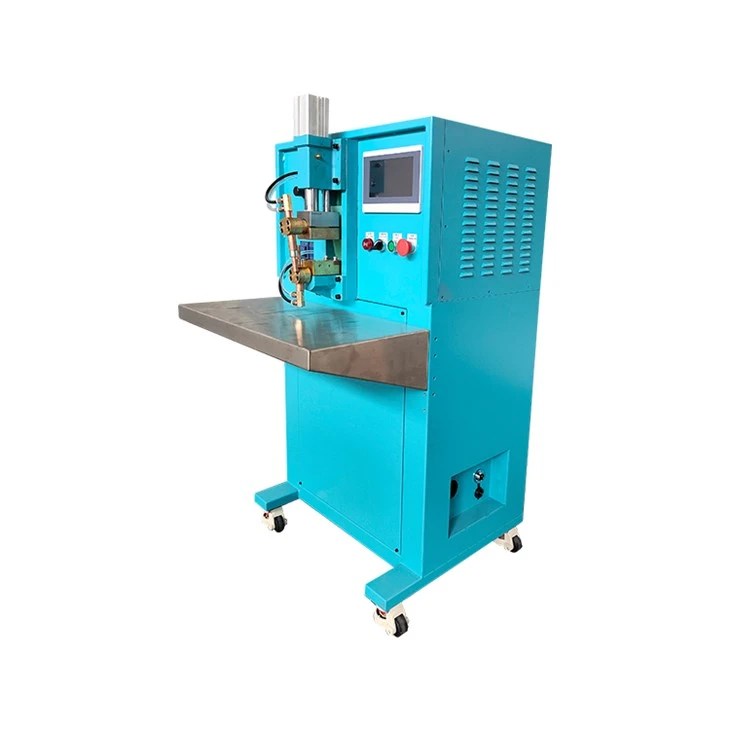

First off, let's talk about what an MFDC Spot Welder is. It stands for Medium Frequency Direct Current Spot Welder. These welders are used in a variety of industries, from automotive to electronics, to join two or more metal parts together by applying pressure and heat at specific points. They're known for their precision, efficiency, and ability to handle different types of metals.
Now, onto the international standards. There are several key standards that MFDC Spot Welders need to meet, and these are set by different organizations around the world. One of the most well - known is the International Electrotechnical Commission (IEC). The IEC has developed a series of standards related to electrical safety, performance, and testing for welding equipment.
IEC 60974 is a major standard series for arc welding equipment, and while MFDC Spot Welders aren't exactly arc welders, some of the general safety and performance requirements in these standards can still be relevant. For example, IEC 60974 - 1 covers general requirements and safety for all types of welding equipment. This includes things like protection against electric shock, over - current protection, and proper grounding.
Another important aspect is the performance of the welder. The IEC standards also specify requirements for things like the accuracy of the welding current and time control. In an MFDC Spot Welder, precise control of the current and the duration of the weld is crucial to ensure a strong and consistent weld. If the current is too high or the time is too long, it can cause excessive heat, which might damage the metal parts or lead to a poor - quality weld. On the other hand, if the current is too low or the time is too short, the weld might not be strong enough.
The American National Standards Institute (ANSI) also has relevant standards in the United States. ANSI/AWS D17.2 is a standard for resistance welding in the aerospace industry. Although it's specific to aerospace, it gives a good idea of the high - level requirements for resistance welding, which includes spot welding. This standard focuses on things like weld quality control, inspection methods, and operator training.
In Europe, the European Committee for Electrotechnical Standardization (CENELEC) has standards that are harmonized with the IEC standards. For example, EN 60974 is the European equivalent of the IEC 60974 series. These standards are used to ensure that welding equipment sold in the European Union meets certain safety and performance criteria.
Now, let's talk about why these standards are so important. For us as a supplier, meeting these international standards is not just a legal requirement; it's also a way to ensure the quality and reliability of our products. When our customers buy an MFDC Spot Welder, they expect it to work properly and safely. By adhering to these standards, we can guarantee that our welders are built to last and can provide consistent results.
For our customers, using a welder that meets international standards means peace of mind. They know that the welder has been tested and verified to work safely and effectively. This is especially important in industries where the quality of the weld can have a significant impact on the safety and performance of the final product, like in the automotive or aerospace industries.
Let's take a look at some of the features of our MFDC Spot Welders that help us meet these standards. Our welders are equipped with advanced control systems that allow for precise adjustment of the welding current and time. This helps us ensure that the welds are of high quality and consistent. We also use high - quality components in our welders, which not only improves their performance but also their safety.
We offer different types of MFDC Spot Welders to meet the diverse needs of our customers. For example, our Bench Spot Welder is a great option for small - scale operations or for use in a workshop setting. It's compact, easy to use, and still packs a punch when it comes to welding performance.
If you need to weld multiple spots simultaneously, our Dual Head Spot Welder is the way to go. This welder can increase productivity by allowing you to make two welds at the same time, which is perfect for high - volume production.
When it comes to maintenance and support, we also follow international best practices. We provide detailed user manuals and training materials to help our customers operate and maintain their welders properly. Our customer support team is always on hand to answer any questions and provide technical assistance.
In conclusion, international standards for MFDC Spot Welders play a crucial role in ensuring the safety, quality, and performance of these machines. As a supplier, we're committed to meeting these standards and providing our customers with the best - in - class products. Whether you're a small workshop or a large - scale manufacturing plant, we have an MFDC Spot Welder that can meet your needs.
If you're interested in learning more about our MFDC Spot Welders or are thinking about making a purchase, don't hesitate to get in touch. We'd love to have a chat with you about your specific requirements and how our welders can help you achieve your welding goals.
References:
- International Electrotechnical Commission (IEC) standards, including IEC 60974 series.
- American National Standards Institute (ANSI) and American Welding Society (AWS) standards, such as ANSI/AWS D17.2.
- European Committee for Electrotechnical Standardization (CENELEC) standards, like EN 60974.


