


Hey there! As a welding electrode supplier, I've been in the thick of the welding industry for quite some time. And let me tell you, understanding the standards for welding electrodes is super crucial. It's not just about making a sale; it's about making sure our customers get the best products for their welding jobs. So, let's dive right in and explore what these standards are all about.
Chemical Composition
First off, the chemical composition of a welding electrode is a big deal. Different elements play different roles in the welding process. For example, carbon is a key element. A little bit of carbon can increase the strength of the weld, but too much can make the weld brittle. That's why we have to get the balance just right.
Manganese is another important element. It helps to deoxidize the weld metal and also improves its toughness. Silicon is used for the same purpose, to deoxidize and improve the fluidity of the molten metal during welding.
When it comes to our Welding Electrode, we make sure that the chemical composition meets strict industry standards. We use high - quality raw materials and advanced manufacturing processes to ensure that each electrode has the right amount of these elements. This way, our customers can be confident that they'll get a strong, durable weld every time.
Mechanical Properties
The mechanical properties of a welding electrode are also essential. We're talking about things like tensile strength, yield strength, and elongation. Tensile strength is the maximum amount of stress that a material can withstand before it breaks. Yield strength is the stress at which a material begins to deform plastically. And elongation measures how much a material can stretch before it breaks.
For example, in a structural welding job, you need an electrode that can produce a weld with high tensile and yield strength. This ensures that the structure can withstand the loads it's designed for. Our electrodes are tested rigorously to ensure that they meet the mechanical property requirements of different welding applications. Whether it's a heavy - duty construction project or a small DIY job, our Welding Electrode is up to the task.
Coating Quality
The coating on a welding electrode is not just for show. It serves several important functions. First of all, it helps to protect the weld pool from atmospheric contamination. When you're welding, the molten metal is very reactive, and it can easily react with oxygen, nitrogen, and other gases in the air. This can lead to defects in the weld, such as porosity and cracking.
The coating also provides a shielding gas that surrounds the weld pool and protects it. Additionally, it can add alloying elements to the weld, which can improve its properties.
We pay close attention to the quality of the coating on our electrodes. It has to be evenly applied and have the right thickness. If the coating is too thin, it won't provide adequate protection. If it's too thick, it can cause problems during welding, like spatter and poor arc stability. Our Welding Electrode is coated using state - of - the - art technology to ensure consistent quality.
Arc Stability
Arc stability is a measure of how smoothly the arc burns during welding. A stable arc is essential for producing a good - quality weld. If the arc is unstable, it can lead to problems like uneven bead formation, spatter, and poor penetration.
There are several factors that can affect arc stability, such as the chemical composition of the electrode, the type of coating, and the welding current. At our company, we've done a lot of research and development to improve the arc stability of our electrodes. We use special additives in the coating and optimize the manufacturing process to ensure that the arc burns steadily throughout the welding process.
Diameter and Length
The diameter and length of a welding electrode are also important standards. The diameter of the electrode determines the amount of current that can be used during welding. A larger diameter electrode can carry more current and is suitable for thicker materials. On the other hand, a smaller diameter electrode is better for thinner materials and more precise welding jobs.

The length of the electrode affects how long you can weld continuously without having to change the electrode. We offer a variety of diameters and lengths for our Welding Electrode to meet the different needs of our customers. Whether you're doing a quick repair or a long - term welding project, we've got the right size for you.
Specialized Electrodes
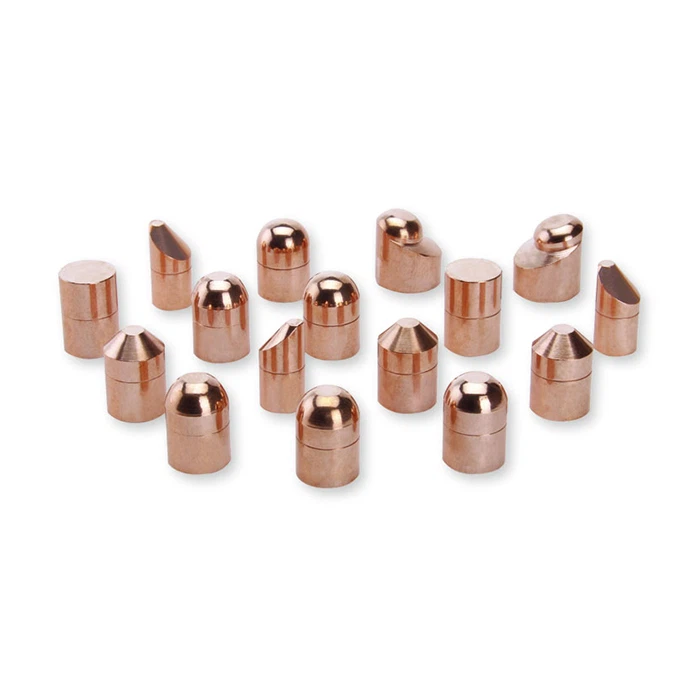
In addition to the general - purpose welding electrodes, we also offer specialized electrodes for specific applications. For example, our Spot Welding Curved Electrode is designed for spot welding applications where a curved shape is required. This type of electrode is commonly used in the automotive industry for welding body panels.
Our Resistance Welding Nut Electrodes are used for resistance welding of nuts. They are made from high - quality materials and are designed to provide a strong and reliable weld. These specialized electrodes also have to meet strict standards in terms of their shape, size, and performance.
Quality Control
At our company, quality control is at the heart of everything we do. We have a comprehensive quality control system in place to ensure that every welding electrode we produce meets the highest standards. From the raw material inspection to the final product testing, every step of the manufacturing process is carefully monitored.
We use advanced testing equipment to check the chemical composition, mechanical properties, and other characteristics of our electrodes. We also conduct real - world welding tests to make sure that the electrodes perform well in actual welding conditions.
Why Choose Our Welding Electrodes
So, why should you choose our welding electrodes? Well, first of all, we have a long - standing reputation for quality. We've been in the business for years, and our customers trust us to provide them with reliable products.
Secondly, we offer a wide range of welding electrodes to meet different needs. Whether you're a professional welder or a DIY enthusiast, we have the right electrode for your job.
Finally, we provide excellent customer service. Our team of experts is always ready to answer your questions and help you choose the right electrode for your application.
If you're in the market for high - quality welding electrodes, I encourage you to get in touch with us. We'd love to discuss your specific requirements and see how we can help you with your welding projects. Whether you need a small quantity for a home project or a large order for an industrial application, we're here to serve you.
References
- AWS A5.1/A5.1M: Specification for Carbon Steel Covered Electrodes for Shielded Metal Arc Welding
- ISO 2560: Covered electrodes for manual metal arc welding of non - alloy and fine - grain steels


