


Hey there! As a supplier of aluminium diffusion welders, I'm super stoked to share with you all about the control system of these amazing machines.
First off, let's talk about what an aluminium diffusion welder actually does. It's a piece of equipment that joins aluminium parts together through a process called diffusion welding. In this process, the parts are pressed together under high pressure and heated to a specific temperature. At this elevated temperature, the atoms of the two aluminium pieces start to diffuse into each other, creating a strong and permanent bond.
Now, the control system of an aluminium diffusion welder is like the brain of the whole operation. It's responsible for making sure that every single parameter of the welding process is just right. This includes things like temperature, pressure, and time.
Let's start with temperature control. The control system uses a bunch of sensors to constantly monitor the temperature inside the welding chamber. These sensors are usually thermocouples, which are really accurate at measuring temperature. Once the sensors pick up the temperature, they send this information back to the control system.
The control system then compares the actual temperature with the set temperature that we've programmed in. If the actual temperature is lower than the set temperature, the control system will send a signal to the heating elements to increase the heat. On the other hand, if the temperature is too high, it'll tell the heating elements to dial it back. This way, we can keep the temperature within a very narrow range, which is crucial for a successful diffusion weld.
For example, if the temperature is too low, the atoms won't diffuse enough, and the bond between the aluminium parts won't be strong. But if it's too high, the aluminium might start to melt or develop other defects. So, precise temperature control is a must.
Next up is pressure control. Just like temperature, pressure is also a key factor in diffusion welding. The control system manages the pressure applied to the aluminium parts during the welding process. It uses hydraulic or pneumatic systems to generate and regulate the pressure.
There are pressure sensors in the system that constantly measure the pressure being applied. The control system takes this data and adjusts the pressure as needed. We can set different pressure levels for different stages of the welding process. For instance, we might start with a lower pressure to pre - align the parts and then increase it to the final welding pressure.
The control system also has a time - control function. Diffusion welding isn't an instant process; it takes a certain amount of time for the atoms to diffuse properly. We can program the control system to run the welding process for a specific duration. Once the set time is up, the system will automatically stop the heating and release the pressure.
Now, let's talk about the user interface of the control system. It's designed to be really user - friendly. Most modern aluminium diffusion welders come with a touch - screen interface. This allows operators to easily set the parameters like temperature, pressure, and time. They can also view real - time data about the welding process, such as the current temperature and pressure readings.
The control system also has a memory function. We can save different welding programs for different types of aluminium parts or welding jobs. So, if we have a job that we do frequently, we don't have to set all the parameters every time. We can just select the pre - saved program, and the control system will run the process according to those settings.
In addition to basic parameter control, the control system also has safety features. It can detect abnormal conditions, such as over - temperature or over - pressure. If it senses something wrong, it'll immediately shut down the machine to prevent any damage or accidents.
Another cool thing about the control system is its ability to communicate with other devices. It can be connected to a computer or a network, which allows us to remotely monitor and control the welding process. We can also collect data from multiple welders and analyze it to improve the overall efficiency and quality of our welding operations.
If you're in the market for an aluminium diffusion welder, you'll want to check out our Diffusion Welder for Aluminum. Our control systems are state - of the - art, offering precise control, user - friendly interfaces, and top - notch safety features.

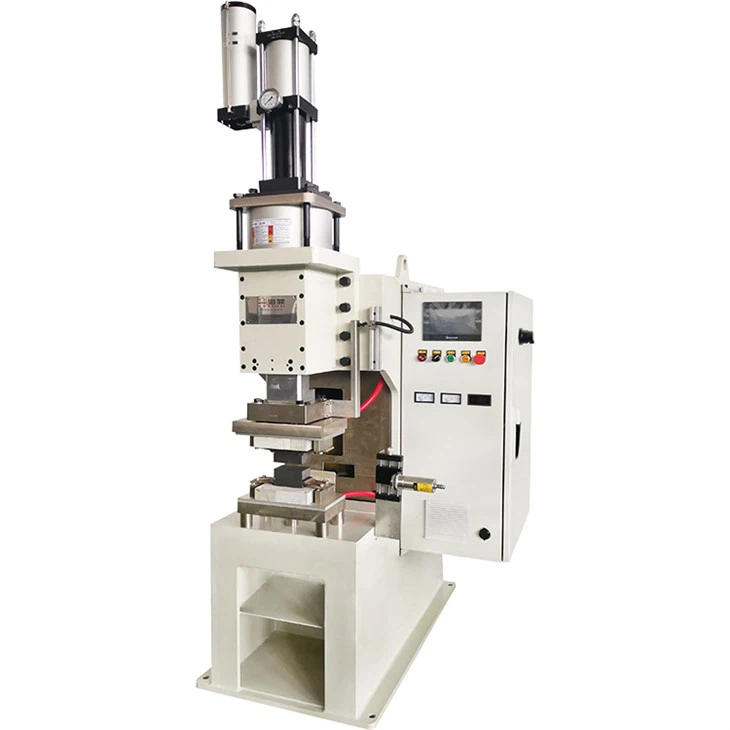
Whether you're a small - scale manufacturer or a large industrial company, our aluminium diffusion welders can meet your needs. We're always here to help you choose the right machine and provide support throughout the entire process.
If you're interested in learning more or discussing a potential purchase, don't hesitate to reach out. We're eager to talk with you and find the perfect solution for your welding requirements.
References
- Welding Handbook: Volume 2 - Fusion Welding, American Welding Society
- Diffusion Bonding: Principles and Applications, Butterworth - Heinemann


