


Hey there! As a supplier of spot welding electrodes, I often get asked about the differences between copper and tungsten spot welding electrodes. It's a topic that's super important for anyone in the welding game, whether you're a professional welder or just someone looking to understand the ins and outs of spot welding. So, let's dive right in and break down the key differences between these two types of electrodes.
Material Properties
First off, let's talk about the materials themselves. Copper is a well - known metal. It's highly conductive, both electrically and thermally. This means that when you're using a copper spot welding electrode, it can transfer electricity efficiently to the workpiece, creating a strong weld. Copper also has good malleability, which allows it to be easily shaped into different electrode designs.
On the other hand, tungsten is a heavyweight in the high - temperature department. It has an extremely high melting point, much higher than copper. Tungsten can withstand temperatures that would quickly melt copper. This makes it ideal for applications where there's a lot of heat generated during the welding process. However, tungsten is much more brittle compared to copper, which can be a drawback in some situations.
Electrical Conductivity
When it comes to electrical conductivity, copper takes the lead. Copper has one of the highest electrical conductivities among metals. This is crucial in spot welding because the electrode needs to transfer electrical current to the workpiece to create the weld. With copper electrodes, you can achieve a more consistent and efficient transfer of electricity, resulting in better - quality welds.
Tungsten, while still a conductor, has a lower electrical conductivity than copper. This means that more energy might be lost as heat within the electrode itself during the welding process. But don't count tungsten out just yet. In some specialized applications where high - temperature resistance is more important than maximum electrical conductivity, tungsten can still be the go - to choice.
Thermal Conductivity
Thermal conductivity is another important factor. Copper's high thermal conductivity allows it to dissipate heat quickly. During spot welding, a lot of heat is generated at the weld point. A copper electrode can transfer this heat away from the weld area, preventing overheating of the workpiece and the electrode itself. This helps in maintaining the integrity of the weld and prolonging the life of the electrode.
Tungsten, with its lower thermal conductivity, retains heat more effectively. In applications where you need to keep the heat concentrated at the weld point, tungsten electrodes can be beneficial. For example, when welding materials that require a high - energy, focused heat source, tungsten can provide the necessary heat retention.
Wear Resistance
Wear resistance is a big deal when it comes to spot welding electrodes. Copper electrodes are generally more prone to wear. The high - pressure and high - temperature environment of spot welding can cause the copper to erode over time. However, the wear rate can be managed by proper electrode design and maintenance.
Tungsten, due to its hardness, has better wear resistance compared to copper. It can withstand the abrasive forces during welding for a longer period. This means that tungsten electrodes may need to be replaced less frequently, which can save time and money in the long run.
Applications
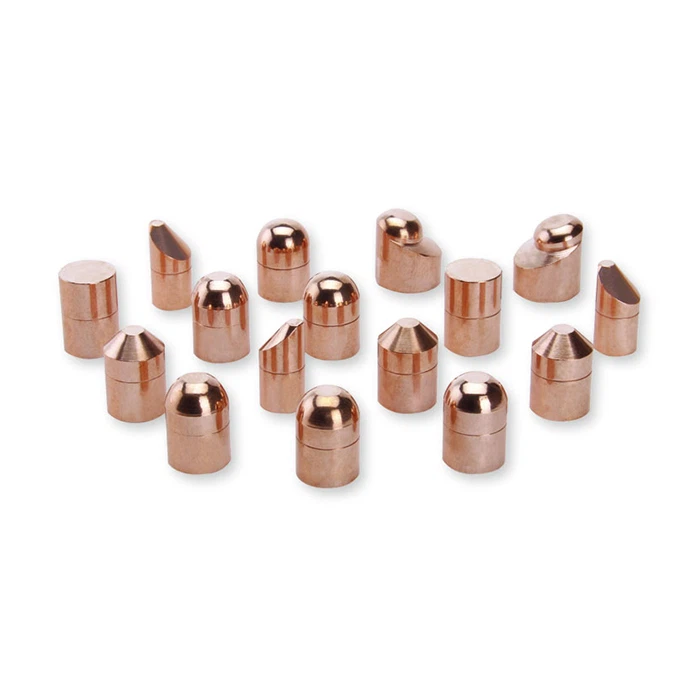
The differences in properties between copper and tungsten electrodes lead to different applications. Copper electrodes are widely used in general - purpose spot welding. They are great for welding thin sheets of metal, such as those used in the automotive and electronics industries. You can find copper electrodes in various shapes and sizes, like the Spot Welding Curved Electrode, which are designed to fit specific welding requirements.
Tungsten electrodes are more commonly used in high - temperature applications. For example, in the aerospace industry, where welding materials like titanium and high - strength alloys is required, tungsten electrodes are often the choice. They are also used in resistance welding applications where a high - energy, concentrated heat source is needed, such as in the production of Resistance Welding Nut Electrodes.
Cost
Cost is always a consideration. Copper is generally more affordable than tungsten. The raw material cost of copper is lower, and it's easier to manufacture copper electrodes. This makes copper electrodes a cost - effective choice for many welding applications, especially those with high - volume production requirements.
Tungsten, being a more expensive raw material and more difficult to machine, comes with a higher price tag. However, when you factor in the longer lifespan and better performance in certain applications, the cost may be justified.
Maintenance
Maintenance of the electrodes is also different. Copper electrodes may require more frequent cleaning and dressing to remove any built - up oxides or contaminants. This is because copper can oxidize relatively easily, which can affect its electrical and thermal conductivity.
Tungsten electrodes, on the other hand, are more resistant to oxidation. But they still need to be inspected regularly for any signs of cracking or chipping due to their brittleness.

Conclusion
In conclusion, both copper and tungsten spot welding electrodes have their own unique advantages and disadvantages. Copper electrodes are great for general - purpose, high - conductivity applications, and they are more cost - effective. Tungsten electrodes shine in high - temperature, high - wear applications where their superior heat resistance and wear resistance are needed.
If you're in the market for spot welding electrodes, it's important to carefully consider your specific welding requirements. Whether you need a Spot Welding Curved Electrode for a particular job or a Graphite Electrode for a specialized application, we can help you find the right solution.
If you have any questions or are interested in purchasing spot welding electrodes, feel free to reach out. We're here to assist you in making the best choice for your welding needs. Let's start a conversation and see how we can work together to improve your welding processes.
References
- "Welding Handbook", American Welding Society
- "Materials Science and Engineering: An Introduction", William D. Callister Jr. and David G. Rethwisch


