


Hey there! As a supplier of servo-motorized welders, I'm super excited to share with you all about how these nifty machines work. Servo-motorized welders have become a game-changer in the welding industry, offering precision, efficiency, and reliability like never before. So, let's dive right in and explore the working principle of a servo-motorized welder.
What is a Servo-Motorized Welder?
Before we get into the nitty-gritty of how it works, let's quickly define what a servo-motorized welder is. Simply put, it's a type of welding machine that uses a servo motor to control the movement and force applied during the welding process. This allows for greater precision and control compared to traditional welders, which often rely on pneumatic or hydraulic systems.
The Basics of Welding
To understand how a servo-motorized welder works, it's important to have a basic understanding of the welding process. Welding is the process of joining two or more pieces of metal together by heating them to a high temperature and applying pressure. There are several different types of welding processes, including arc welding, gas welding, and resistance welding. Servo-motorized welders are commonly used in resistance welding applications, which involve passing an electric current through the metal pieces to generate heat and create a weld.

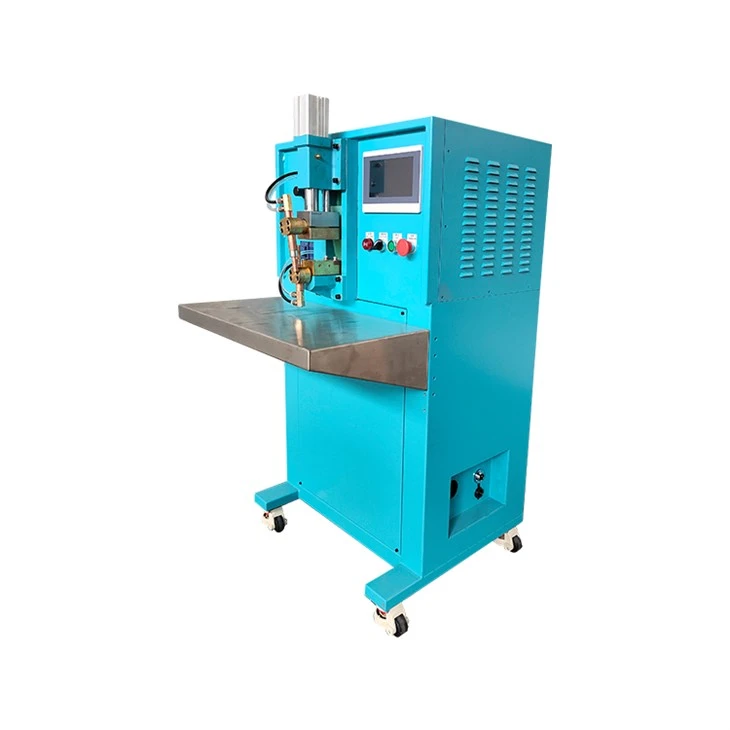
The Working Principle of a Servo-Motorized Welder
Now, let's take a closer look at the working principle of a servo-motorized welder. The main components of a servo-motorized welder include the servo motor, the controller, the welding electrodes, and the power supply.
1. Servo Motor
The servo motor is the heart of the servo-motorized welder. It is responsible for controlling the movement and force applied during the welding process. The servo motor is connected to the welding electrodes and can move them up and down, as well as apply a precise amount of force to the metal pieces being welded. This allows for greater control over the welding process and ensures that the weld is consistent and of high quality.
2. Controller
The controller is the brain of the servo-motorized welder. It is responsible for sending signals to the servo motor to control its movement and force. The controller can be programmed to perform a variety of welding operations, including spot welding, projection welding, and seam welding. It can also be used to adjust the welding parameters, such as the welding current, voltage, and time, to ensure that the weld is consistent and of high quality.
3. Welding Electrodes
The welding electrodes are the parts of the servo-motorized welder that come into contact with the metal pieces being welded. They are made of a conductive material, such as copper or tungsten, and are designed to transfer the electric current from the power supply to the metal pieces. The shape and size of the welding electrodes can vary depending on the type of welding operation being performed.
4. Power Supply
The power supply is responsible for providing the electric current needed to generate the heat required for welding. The power supply can be either a DC or AC power source, depending on the type of welding operation being performed. The power supply can also be adjusted to control the welding current, voltage, and time, to ensure that the weld is consistent and of high quality.
How It All Works Together
Now that we've looked at the main components of a servo-motorized welder, let's see how they all work together to create a weld.
Step 1: Preparation
Before the welding process can begin, the metal pieces being welded must be cleaned and prepared. This involves removing any dirt, grease, or oxide from the surface of the metal pieces to ensure that the weld is strong and of high quality.
Step 2: Positioning
The metal pieces are then positioned between the welding electrodes. The servo motor is used to move the electrodes into the correct position and apply a precise amount of force to the metal pieces.
Step 3: Welding
Once the metal pieces are in position, the power supply is turned on, and an electric current is passed through the metal pieces. The electric current generates heat, which causes the metal pieces to melt and fuse together. The servo motor continues to apply a precise amount of force to the metal pieces during the welding process to ensure that the weld is consistent and of high quality.
Step 4: Cooling
After the welding process is complete, the power supply is turned off, and the metal pieces are allowed to cool. The cooling process is important because it allows the weld to solidify and become strong.
Advantages of Servo-Motorized Welders
Servo-motorized welders offer several advantages over traditional welders, including:
1. Precision
Servo-motorized welders offer greater precision and control over the welding process compared to traditional welders. This allows for more consistent and high-quality welds.
2. Efficiency
Servo-motorized welders are more efficient than traditional welders because they can perform welding operations faster and with less energy.
3. Flexibility
Servo-motorized welders can be programmed to perform a variety of welding operations, including spot welding, projection welding, and seam welding. This makes them more versatile than traditional welders.
4. Reliability
Servo-motorized welders are more reliable than traditional welders because they have fewer moving parts and are less prone to breakdowns.
Applications of Servo-Motorized Welders
Servo-motorized welders are used in a variety of industries, including automotive, aerospace, electronics, and manufacturing. Some common applications of servo-motorized welders include:
1. Automotive Industry
Servo-motorized welders are used in the automotive industry to weld car body parts, engine components, and other automotive parts. They are used to create strong and reliable welds that can withstand the rigors of daily use.
2. Aerospace Industry
Servo-motorized welders are used in the aerospace industry to weld aircraft parts, such as wings, fuselages, and engine components. They are used to create high-quality welds that are essential for the safety and performance of aircraft.
3. Electronics Industry
Servo-motorized welders are used in the electronics industry to weld electronic components, such as circuit boards and connectors. They are used to create precise and reliable welds that are essential for the proper functioning of electronic devices.
4. Manufacturing Industry
Servo-motorized welders are used in the manufacturing industry to weld a variety of metal parts, such as machinery components, furniture, and appliances. They are used to create strong and durable welds that can withstand the demands of industrial use.
Our Product Range
As a supplier of servo-motorized welders, we offer a wide range of products to meet the needs of our customers. Some of our popular products include the Dual Head Spot Welder, the Nuts Studs Welder and Conveyor, and the Bench Spot Welder. These products are designed to provide high-quality welding solutions for a variety of applications.
Conclusion
In conclusion, servo-motorized welders are a powerful and versatile tool that offers precision, efficiency, and reliability in the welding process. By understanding the working principle of a servo-motorized welder, you can make an informed decision when choosing a welding machine for your needs. If you're interested in learning more about our servo-motorized welders or have any questions, please don't hesitate to contact us. We're here to help you find the perfect welding solution for your business.
References
- "Welding Handbook," American Welding Society
- "Resistance Welding: Principles and Applications," L. E. Samuels


