


Spot welding is one of the most widely used joining technologies in automotive manufacturing, battery production, electronics, electrical components, and metal fabrication. Due to its high efficiency and suitability for mass production, resistance spot welding remains an important process for connecting metal parts.
However, achieving stable and consistent spot weld quality is not always easy. Manufacturers often face challenges such as inconsistent weld strength, excessive spatter, electrode wear, poor weld nugget formation, and difficulty welding highly conductive materials like copper and aluminum.
These spot welding problems can lead to increased scrap rates, production delays, and reliability issues in finished products. For industries with strict quality requirements, such as EV batteries and electrical components, even small variations in welding performance can affect product safety and service life.
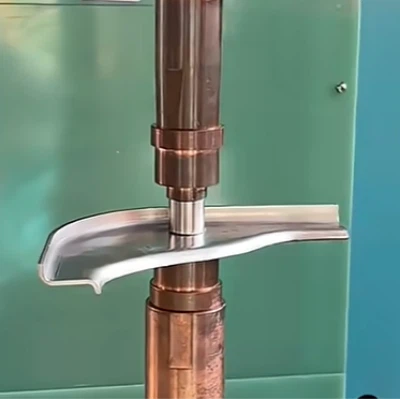
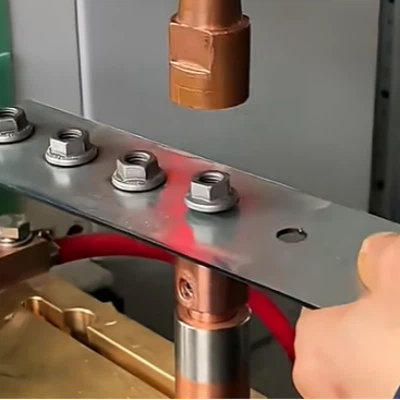

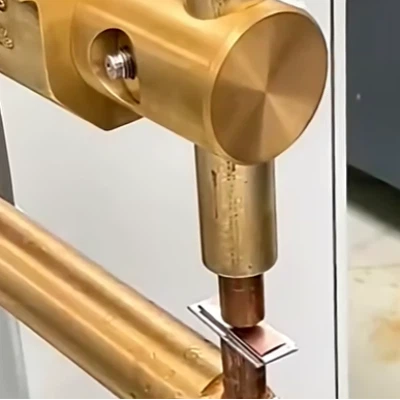
This article explains the most common spot welding challenges, their causes, and practical solutions to help manufacturers improve welding quality and select the right resistance welding equipment.
1. Heat Distribution Imbalance and the "Shunting Effect": The Primary Challenge to Weld Quality
The fundamental challenge in welding materials of unequal thickness lies in the severe imbalance of heat distribution.
Core Difficulty: Heat Concentration and Shunting Effect
According to Joule's Law ($Q = I^2Rt$), welding heat is directly proportional to the square of the current, resistance, and time. In unequal thickness combinations:
- 1.Heat Concentration: The thinner sheet has relatively lower resistance, but due to its smaller heat capacity, heat accumulates more easily, quickly reaching the melting point, leading to burn-through or severe indentation.
- 2.Shunting Effect: When multiple spots are welded or there is an overlap at the edge of the workpiece, the current will choose the path of least resistance. In materials of unequal thickness, the current may bypass the intended welding area, shunting through already formed welds or well-contacted areas, resulting in insufficient current in the actual welding zone, which causes inadequate nugget size or insufficient fusion.
Modern Solutions: Multi-Pulse and Slope Control
Modern spot welders address this challenge through precise current control:
- 1.Multi-Pulse Welding: The welding process is divided into multiple stages such as preheating, melting, and forging. This technique uses a smaller current pulse for preheating, followed by a larger current pulse for melting, and finally a small tempering current for cooling control. This effectively balances the heat accumulation in the thin sheet and the heat penetration in the thick sheet.
- 2.Current Slope Control: Instead of applying the maximum current instantly, the current is gradually increased (upslope) and decreased (downslope) over a set time. This effectively reduces spatter and provides a longer heat penetration time for the thicker material, achieving a more uniform temperature field.
2. Nugget Shift and Structural Integrity: The Risk of Asymmetrical Strength
The weld nugget is the core of spot weld joint strength. In materials of unequal thickness, the nugget formation tends to favor the thinner material side, resulting in asymmetrical joint strength.
Core Difficulty: Nugget Size and Penetration Rate Control
In unequal thickness welding, because the thin sheet reaches the melting temperature more easily, the nugget shifts towards the thin sheet, leading to:
- Excessive Thin Sheet Penetration: A penetration rate exceeding 80% severely weakens the thin sheet's strength, potentially causing burn-through.
- Insufficient Thick Sheet Penetration: A penetration rate below 20% indicates incomplete fusion, resulting in substandard joint strength.
Modern Solutions: Optimized Pressure and Time
- Electrode Force Optimization: Appropriately increasing the electrode force (pressure) can enhance the stability of the contact resistance and help concentrate the current at the interface. Optimized pressure also better controls the deformation of the thin sheet.
- Precise Welding Time Control: Extending the welding time helps increase the melt depth in the thick sheet, but it must be strictly controlled to prevent the heat-affected zone (HAZ) from expanding and excessive spatter. For instance, when welding 0.8mm and 1.4mm steel sheets, a longer welding time is typically employed to ensure sufficient melt depth in the 1.4mm sheet.
3. Accelerated Electrode Wear and Maintenance Costs: The Hidden Operational Burden
Spot welding electrodes are consumables, and their wear rate significantly accelerates when welding materials of unequal thickness.
Core Difficulty: High Stress and Non-Uniform Thermal Cycling
- High Current Density: To compensate for the lack of heat in the thick sheet, higher welding currents are often required, which directly subjects the electrode tip to higher thermal loads and current density.
- Non-Uniform Thermal Cycling: The heat transfer rates of the thin and thick sheets differ, causing non-uniform thermal cycling on both sides of the electrode tip, accelerating the softening and oxidation of the electrode material.
Electrode wear leads to an increased contact area and decreased current density, which in turn affects nugget quality, creating a vicious cycle.
Modern Solutions: Advanced Materials and Automated Dressing
- Electrode Material Upgrade: Widespread use of high-strength, high-conductivity materials like Chromium Zirconium Copper (CuCrZr) to improve the electrode's wear resistance and anti-softening temperature.
- Automated Electrode Dressing: The introduction of automatic electrode dressers allows for precise trimming of the electrode tip based on set weld counts or quality monitoring results. This ensures the stability of the electrode contact area, maintaining constant current density, and significantly reducing long-term operating costs.
4. Complex Parameter Optimization Requirements: The Shift from Experience to Intelligence
For materials of unequal thickness, the traditional "trial-and-error" method for parameter optimization becomes inefficient and costly.
Core Difficulty: Multi-Variable Coupling and Narrow Process Window
Spot welding involves three core parameters (current, time, pressure) along with multiple variables such as material thickness ratio and surface condition. Unequal thickness makes the coupling relationship between these variables more complex, leading to a very narrow Process Window-the range of parameters that yield an acceptable weld.
| Parameter | Thinner Material (e.g., 0.8mm) | Thicker Material (e.g., 1.4mm) | Unequal Thickness Combination (0.8mm+1.4mm) | Optimization Strategy |
| Welding Current | Lower | Higher | Needs balance, usually slightly higher than required for the thin sheet | Use Multi-Pulse or Slope Control |
| Welding Time | Shorter | Longer | Needs extension to ensure thick sheet penetration | Precise control down to milliseconds |
| Electrode Force | Moderate | Moderate | Slightly increased to stabilize contact resistance | Ensure tight contact between the two sheets |
Ensure tight contact between the two sheets
- Adaptive Control Systems: Modern spot welders are equipped with real-time monitoring systems that track signals such as voltage, current, and electrode displacement during the welding process. Algorithms dynamically adjust the welding current to ensure the preset energy input is achieved for every weld, thereby overcoming minor fluctuations in material thickness or surface condition.
- Parameter Database: Establishing a material-specific, validated standardized parameter database for common thickness combinations (e.g., 1.0mm+2.0mm) allows operators to directly call settings, shifting the optimization process from on-site tuning to data management.
5. Increased Risk of Welding Distortion: The Challenge of Thermal and Residual Stress
Non-uniform thermal stress distribution is the main cause of workpiece deformation (warpage).
Core Difficulty: Local Overheating and Stress Concentration
In unequal thickness welding, local overheating in the thin sheet area is more severe, and the cooling rate is also faster, leading to:
- Non-Uniform Thermal Stress: Rapid cooling generates greater shrinkage stress in the thin sheet area.
- Residual Stress Concentration: This non-uniform shrinkage stress concentrates residual stress around the weld spot. When the stress exceeds the material's yield strength, it causes macroscopic deformation of the workpiece.
Modern Solutions: Welding Sequence and Fixture Design
- Optimized Welding Sequence: Employing a staggered welding pattern or skip welding avoids continuous heating of adjacent spots, allowing the workpiece sufficient time to dissipate heat. Prioritizing the welding of thicker or structurally stable sections helps control overall deformation.
- Precision Fixtures and Locating: Using high-rigidity, high-precision fixtures to reliably locate and constrain the workpiece. Fixtures should have good heat dissipation properties to assist in controlling heat diffusion, minimizing displacement and deformation during the welding process.
FAQ About Spot Welding Challenges
Q: What are the most common spot welding problems?
A: The most common spot welding problems include weak welds, excessive spatter, inconsistent weld quality, electrode wear, and difficulty welding conductive materials.
Q: Why are my spot welds inconsistent?
A: Inconsistent welds may be caused by unstable current, incorrect electrode pressure, worn electrodes, material contamination, or equipment limitations.
Q: How can I improve spot welding quality?
A: You can improve welding quality by optimizing parameters, maintaining electrodes, preparing materials properly, and using equipment with accurate control systems.
Q: Why is copper difficult to spot weld?
A: Copper has high electrical conductivity and thermal conductivity, making it difficult to generate concentrated welding heat. Precise current control and suitable welding technology are required.
Q: When should I upgrade my spot welding machine?
A: If defects continue after parameter optimization, upgrading to a more precise MFDC spot welder, capacitor discharge welder, or automated resistance welding system may be necessary.
Conclusion: From Challenge to Reliable Connection
Spot welding challenges are usually caused by a combination of material properties, welding parameters, operator practices, and equipment performance. Solving these problems requires a complete understanding of the welding process rather than simply increasing welding power.
For manufacturers producing battery components, copper connectors, aluminum busbars, automotive parts, and precision metal assemblies, stable welding performance is essential for improving product reliability and reducing production costs.
If you are experiencing unstable weld quality, excessive spatter, electrode problems, or difficulty welding copper and aluminum materials, provide your material specifications, thickness, production requirements, and current welding issues. Our engineers can help analyze the root cause and recommend a suitable resistance welding solution.


