

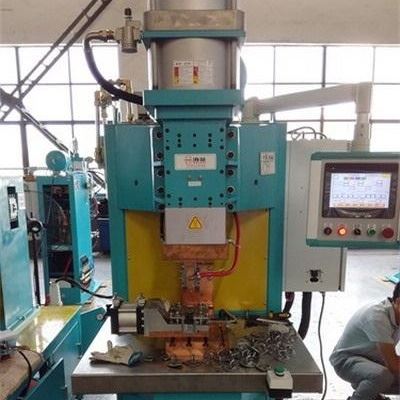
Product Introduction
Car Door Resistance Heat Riveting Machine are ideal for attaching nuts or studs, offering key technical and practical benefits. This process enables strong welds between different steel grades and ensures precision alignment for accurate assembly. It creates a high-strength metallurgical bond capable of withstanding both daily cyclic stress and collision forces. As the weld forms internally, it leaves the exterior mark-free, preserving aesthetics. Furthermore, the design of the nuts allows for multiple strong welds to be made simultaneously in one efficient operation.
Why Use Projection Welding?
For The Lock Catch Cover Plate, Projection Welding Is The Ideal Choice Because:
Automotive door lock welding machines, also known as automotive door lock hot riveting welding machines, achieve excellent door lock welding results due to their use of medium-frequency inverter hot riveting welding technology. Currently, automotive door lock welding machines have undergone three generations of technological updates.
These machines employ a direct pressure mechanism, offering excellent follow-up performance and high welding speed. The guide section of this particular machine uses a special low-friction material, and the electromagnetic valve is directly connected to the cylinder, accelerating the action response speed, increasing welding speed, and reducing airflow losses.
Enables Dissimilar Metal Joining
It can weld the cover plate (typically low-carbon steel) to nuts/studs (also often steel, but potentially of a different grade).
01
Precise Positioning
The projections themselves provide accurate alignment, ensuring the threaded hole is in the exact correct location, which is critical for lock catch assembly.
02
High Strength and Reliability
It creates a solid metallic fusion nugget, resulting in a high-strength joint capable of withstanding the cyclic loads from frequent lock operation and impact forces during a collision.
03
Clean Appearance
After welding, the weld points are located between the mating surfaces, leaving no visible weld marks on the exposed surface of the cover plate, preserving aesthetics.
04
Capable of Multiple Simultaneous Welds
A single nut can have multiple projections, allowing all points to be welded in one stroke, making the process highly efficient.
05
How to Automate the Process: Upgrading to an Automated Workstation
All automated welding equipment adopts intermediate frequency inverter resistance welding technology, which distinguishes it from other welding machines with longer service life, low operating noise, energy efficiency and environmental friendliness.
HAIFEI is fully committed to the R&D and production of various intermediate frequency spot welding machines such as automotive door latch welding machines, and has contributed numerous resistance welding machine R&D and manufacturing cases to the auto parts industry, home appliance hardware industry, low-voltage electrical industry, as well as the aerospace and shipbuilding industries.
1
The automotive door latch welding machine is equipped with a pressure speed adjustment function, allowing arbitrary adjustment of the ascending and descending speeds of the pressure head, which mitigates the impact when pressing the workpiece. It also features an ascending buffer adjustment function to freely regulate the ascending buffer speed, reducing mechanical impact to extend the cylinder service life and lower noise levels.
2
It is currently the suitable for automotive door lock projection welding applications for automotive door latches. With wide application, the welding transformer is compact in size yet high in output energy. By increasing the frequency of the welding transformer from the current mains frequency of 50/60HZ to 1000HZ, the weight of the iron core material is greatly reduced.
3
The rectifier diodes in the secondary circuit of the transformer convert electrical energy into DC power for the welding machine, which significantly improves the inductance coefficient of the secondary circuit and energy consumption may be lower than some conventional AC welding systems, depending on welding cycle and production load.
4
All automotive door latch welding machines of the company are controlled digitally through a human-machine interface touch screen, making operation simple and easy to understand. The performance of the welding machine can be expanded through personal computer programming. Different fixtures can be designed and matched according to customer requirements to meet the welding needs of various workpieces, and automated special machines can be customized for customers to improve production efficiency.
Upgrading the projection welding process for automotive lock catch cover plates to automation is a classic project of building an Automated Welding Workstation. The core objectives are to achieve unmanned or labor-light production, ensure consistent quality, improve efficiency, and reduce long-term costs.
The following outlines the key steps, essential equipment, and critical considerations for this upgrade.

1. The Core Automated Solution: Building a Workstation
The solution centers on creating an integrated, closed-loop system that replaces manual handling, operation, and judgment. The diagram below illustrates the typical structure and workflow of such an automated projection welding workstation.
2. Detailed Breakdown & Key Technologies
a. Automated Feeding & Positioning System
- Cover Plate Feeding: Typically done by an industrial robot equipped with vacuum grippers or custom mechanical claws to pick plates from racks or conveyors.
- Nut Feeding: Utilizes vibratory bowl feeders or servo-driven feeders to orient and deliver nuts to a precise pre-set location.
- Key Positioning Technology: The final welding station must employ high-precision fixtures (with hydraulic/pneumatic locating pins) to secure the cover plate. For ultra-high precision requirements, integrate a machine vision system to perform a secondary visual alignment of the nut position before welding, helps improve positioning accuracy when fixtures and sensors are properly matched.
b. Automated Projection Welding Machine
CNC Projection Welder: The heart of the workstation. It should feature:
- Programmable Controller: Stores and manages welding parameters (current, time, pressure) for different part numbers.
- Servo Press System: Provides precise, repeatable electrode force with programmable pressure profiles.
- Automatic Electrode Dresser: Periodically dresses the electrodes after a set number of welds to ensure consistent weld quality and extend electrode life.
c. In-Process Monitoring & Quality Assurance
- Weld Process Monitoring (WPM): The weld controller monitors current, voltage, resistance, and energy for every weld in real-time, comparing them against preset acceptable windows. Any deviation triggers an "NG" (No Good) flag, alarm, or marking.
- Post-Weld In-line Inspection:
- Vision Inspection: Industrial cameras check for nut position, spatter, or surface defects.
- Torque Sampling: An integrated servo-electric screwdriver performs a go/no-go gauge test or a pre-set torque test on nuts according to a programmed schedule, providing the most reliable strength verification.
d. Automated Unloading & Sorting&Central Control System
- A robot or automated mechanism removes the welded assembly.
- Based on QA results, it places passed parts onto a finished goods rack or conveyor and failed parts into a quarantine bin.
- PLC (Programmable Logic Controller): Acts as the "brain," coordinating the sequence and safety interlocks of all components (robot, welder, vision, conveyors).
- HMI (Human-Machine Interface): A touchscreen panel for operators to call programs, monitor status, and view alarms.
- Data Traceability: Connects to the factory MES (Manufacturing Execution System), recording welding parameters, quality data, and timestamps for each part, enabling full traceability.
In summary
The essence of automation is: replacing human hands with high-precision robots and fixtures, replacing human experience and judgment with programmable CNC welders and sensors, and replacing human coordination with a central control system. The ultimate goal is the production of lock catch cover plates with enhanced quality, efficiency, consistency, and traceability.
Compared To Ordinary Ac Resistance Welding, Automotive Door Lock Welding Machines Have The Following Characteristics:
High welding stability, shorter welding time, improving work efficiency and welding quality
Energy savings of over 30%, low operating costs, Lower welding current and electrode pressure
Balanced three-phase power input with a power factor up to 95%
Wider welding range, with better welding results for low-carbon steel, stainless steel, copper, aluminum, and galvanized sheets.
Almost no induced energy loss in the secondary circuit
Electrode lifespan more than doubled, reducing electrode regrinding time
Significantly reduced installation costs for electrical wiring and auxiliary facilities such as water and gas
More accurate, faster, and more comprehensive control and analysis of welding parameters
Why Choose HAIFEI Machine ?
Certifications
40+ Patents and 2 National Software Copyrights, 10,000㎡ Factory with 100+ skilled employees.


Our Partners
We have served over 3,300 customers worldwide, and our long-term partners include Tesla, BYD, and Siemens.Over 40+ Fortune 500 companies.


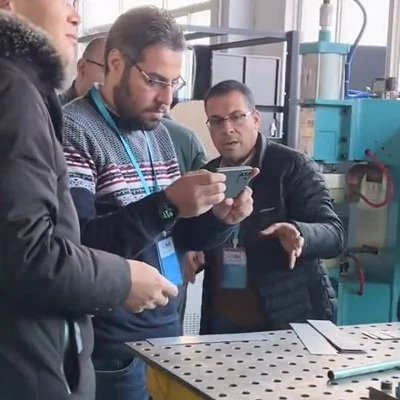
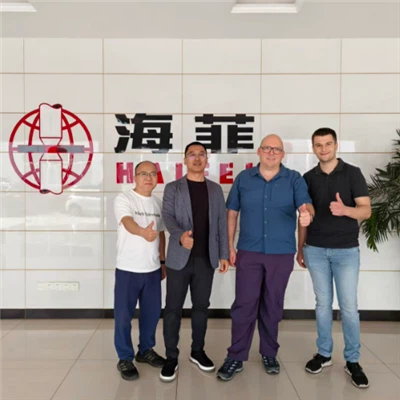
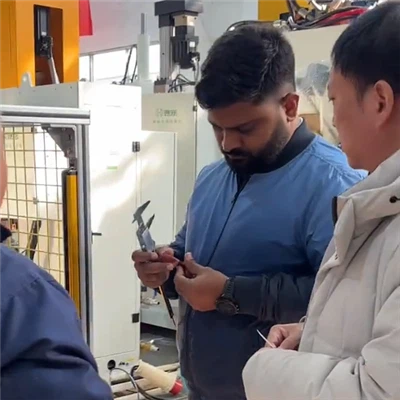
Haifei Customer Site




FAQ
Q: What parts can this projection welding machine process?
A: It is mainly used for car door lock catch plates, latch brackets, cover plates, nut plates, threaded inserts, studs, and stamped steel parts used in automotive door lock assemblies.
Q: Why is projection welding used for door lock catch plates?
A: Projection welding uses the projections on the nut or stud to locate the weld area and form multiple weld points in one stroke. It helps improve positioning accuracy and joint strength.
Q: Can the machine detect missing or misaligned nuts?
A: Yes. Nut presence detection, position sensors, or vision inspection can be added to check whether the nut is correctly placed before or after welding.
Q: What strength tests are used for welded nuts?
A: Common tests include torque testing, pull-out testing, peel testing, or customer-defined destructive testing. The test method should be confirmed before machine design.
Q: Can this machine be built as a fully automated workstation?
A: Yes. It can be integrated with nut feeding, cover plate loading, robot handling, projection welding, vision inspection, NG sorting, and welding data recording.
Q: What information should I provide before quotation?
A: Please provide the part drawing, material, thickness, nut or stud specification, weld point layout, strength requirement, production capacity, and automation requirement.
Wuxi Haifei Intelligent Equipment Co., Limited is one of the leading manufacturers and suppliers of car door resistance heat riveting machine in China. With abundant experience, we warmly welcome you to buy advanced car door resistance heat riveting machine for sale here from our factory. Quality products and reasonable price are available.
Hot Tags: car door resistance heat riveting machine, China car door resistance heat riveting machine manufacturers, suppliers, factory, 12v diy portable spot welding machine, spotter welder, inverter spot welder for sale, battery welding machine, accurate spot welding machine, table top spot welder


