


As a trusted supplier of graphite electrodes, I've witnessed firsthand the importance of understanding how their electrical conductivity changes with temperature. This knowledge is crucial for industries relying on graphite electrodes, such as steelmaking, aluminum smelting, and electrical discharge machining. In this blog, I'll delve into the science behind this phenomenon, explore its practical implications, and discuss how it impacts our products and services.
The Basics of Graphite Electrodes and Electrical Conductivity
Graphite electrodes are made from high - purity graphite, a form of carbon with a unique crystalline structure. This structure consists of layers of carbon atoms arranged in a hexagonal lattice. The delocalized electrons within these layers are what give graphite its excellent electrical conductivity.
Electrical conductivity is a measure of a material's ability to conduct an electric current. It is the reciprocal of electrical resistivity. For graphite electrodes, high electrical conductivity is desirable as it allows for efficient transfer of electrical energy, which is essential in applications like electric arc furnaces where large amounts of power are required to melt metals.
How Temperature Affects Electrical Conductivity
The relationship between temperature and the electrical conductivity of graphite electrodes is complex. Generally, the electrical conductivity of graphite electrodes changes in a non - linear way as the temperature varies.
Low to Moderate Temperatures
At low to moderate temperatures (typically up to around 500 - 600°C), the electrical conductivity of graphite electrodes increases with temperature. This is because as the temperature rises, the thermal energy causes the delocalized electrons in the graphite lattice to move more freely. The increased kinetic energy of the electrons allows them to overcome some of the lattice imperfections and scattering centers more easily, leading to an increase in the flow of electric current and thus an increase in conductivity.
High Temperatures
However, as the temperature continues to rise beyond a certain point (usually above 1000 - 1200°C), the electrical conductivity of graphite electrodes starts to decrease. At these high temperatures, the thermal vibrations of the carbon atoms in the graphite lattice become more intense. These vibrations can disrupt the movement of the delocalized electrons, causing them to scatter more frequently. This scattering reduces the mobility of the electrons, and as a result, the electrical conductivity of the graphite electrode decreases.
Practical Implications in Industrial Applications
Steelmaking
In electric arc furnaces used for steelmaking, graphite electrodes are subjected to extremely high temperatures. The change in electrical conductivity with temperature has a significant impact on the efficiency of the melting process. At the initial stages of melting, when the temperature is relatively low, the increasing conductivity helps in establishing a stable arc and efficient power transfer. As the temperature rises during the melting process, the decrease in conductivity at high temperatures needs to be carefully managed. If the conductivity drops too much, it can lead to an increase in power consumption and a decrease in the overall efficiency of the furnace.
Aluminum Smelting
In the aluminum smelting industry, graphite electrodes are used in the electrolysis process. The temperature in the electrolytic cells is carefully controlled to optimize the electrical conductivity of the electrodes. Maintaining the right temperature range ensures efficient transfer of electrical energy, which is essential for the reduction of alumina to aluminum.
Our Products and the Temperature - Conductivity Relationship
As a graphite electrode supplier, we understand the critical role that the temperature - conductivity relationship plays in our customers' operations. We offer a range of graphite electrodes designed to perform optimally under different temperature conditions.
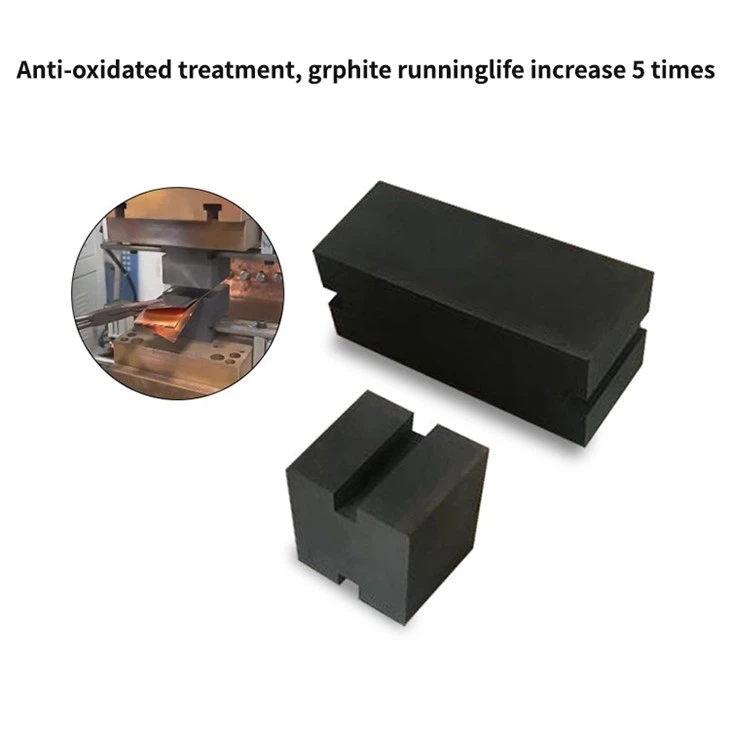
Our electrodes are manufactured using advanced processes to ensure high purity and a well - ordered graphite structure. This helps to enhance their electrical conductivity and thermal stability. For applications where high temperatures are involved, we have developed electrodes with improved resistance to the decrease in conductivity at elevated temperatures.

Related Products
If you are interested in other related welding products, we also offer Resistance Welding Electrode Arm and Spot Welding Electrode. These products, like our Graphite Electrode, are designed to meet the high - quality standards required in various industrial applications.
Contact for Purchase and Discussion
If you are in the market for graphite electrodes or have any questions about how the temperature - conductivity relationship affects your specific application, we invite you to reach out to us. Our team of experts is ready to assist you in selecting the right product for your needs and to discuss any technical aspects related to graphite electrodes.
References
- Z. J. Wang, “Graphite: Structure, Properties, and Applications,” Elsevier, 2015.
- K. S. Novoselov et al., “Electric Field Effect in Atomically Thin Carbon Films,” Science, vol. 306, no. 5696, pp. 666 - 669, 2004.
- R. E. Hummel, “Understanding Materials Science: History, Properties, Applications,” Springer, 2004.


