


As a trusted supplier of ultrasonic welding machines, I understand the significance of efficiency in industrial production. An efficient ultrasonic welding machine not only enhances productivity but also reduces costs and improves the quality of the final products. In this blog, I will share some practical tips on how to improve the efficiency of an ultrasonic welding machine.
1. Regular Maintenance and Inspection
Regular maintenance is the cornerstone of ensuring the efficient operation of an ultrasonic welding machine. Just like any other mechanical equipment, ultrasonic welding machines require routine checks and servicing to keep them in optimal condition.

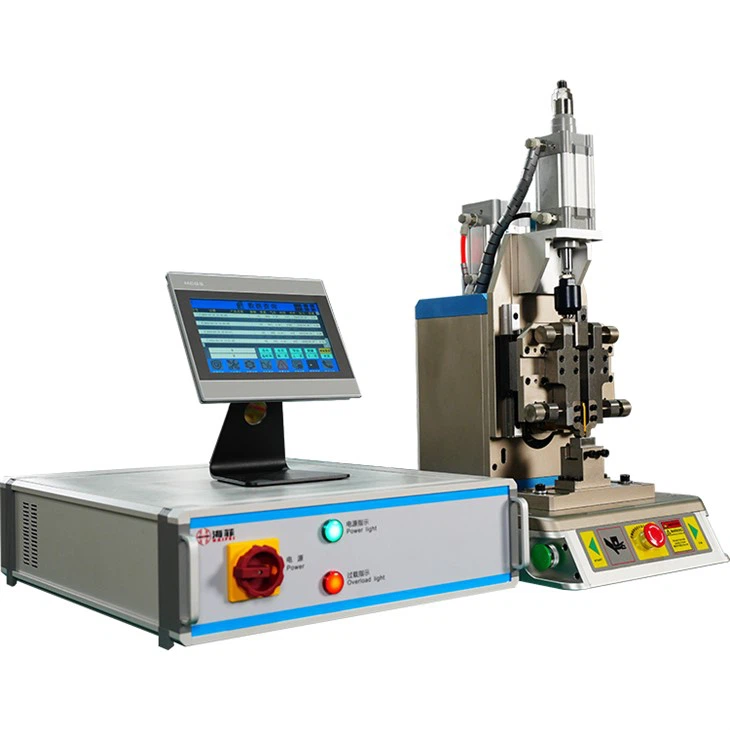
- Cleaning: Dust, debris, and welding residues can accumulate on the machine's components over time, which may affect its performance. Regularly clean the welding head, transducer, and other critical parts using a soft brush and appropriate cleaning agents. Make sure to follow the manufacturer's instructions to avoid damaging the equipment.
- Lubrication: Some moving parts of the ultrasonic welding machine, such as the linear guides and bearings, need proper lubrication to reduce friction and wear. Check the lubrication levels regularly and replenish them as needed. Using high - quality lubricants can significantly extend the lifespan of these components and improve the overall efficiency of the machine.
- Inspection of Electrical Components: Electrical problems can lead to unstable operation or even breakdowns of the ultrasonic welding machine. Periodically inspect the power cables, connectors, and circuit boards for signs of damage, loose connections, or overheating. Replace any faulty components immediately to prevent further damage.
2. Optimal Parameter Setting
Proper parameter setting is crucial for achieving high - efficiency welding. Different materials and welding requirements demand specific parameter adjustments.
- Amplitude: The amplitude of the ultrasonic vibration determines the energy input during the welding process. For softer materials, a lower amplitude may be sufficient, while harder materials usually require a higher amplitude. Experiment with different amplitude settings to find the optimal value for each specific welding task. This can improve the welding quality and reduce the welding time.
- Welding Time: The welding time is another important parameter. Setting the welding time too short may result in incomplete welding, while setting it too long can cause over - welding and damage to the materials. Conduct tests with different welding times to determine the shortest time that can achieve a strong and reliable weld.
- Pressure: Applying the right pressure during the welding process is essential. Insufficient pressure may lead to poor contact between the welding parts, while excessive pressure can deform the materials. Adjust the pressure according to the thickness and properties of the materials being welded to ensure a consistent and efficient welding process.
3. Use of High - Quality Welding Tools
Investing in high - quality welding tools can have a significant impact on the efficiency of an ultrasonic welding machine.
- Welding Horns: The welding horn is a critical component that transfers the ultrasonic energy to the welding parts. High - quality welding horns are made of materials with good acoustic properties and are precisely machined to ensure uniform energy distribution. They can reduce energy loss during the welding process and improve the welding speed and quality.
- Anvils: The anvil provides support for the welding parts and helps to shape the weld. Using anvils that are specifically designed for the materials and welding patterns can improve the contact between the parts and the welding horn, resulting in more efficient welding.
4. Operator Training
Well - trained operators are key to maximizing the efficiency of an ultrasonic welding machine.
- Technical Training: Provide comprehensive technical training to operators on the working principle, operation procedures, and parameter settings of the ultrasonic welding machine. Operators should understand how to adjust the parameters according to different materials and welding requirements and be able to troubleshoot common problems.
- Safety Training: Safety is of utmost importance in the operation of ultrasonic welding machines. Train operators on safety regulations, such as wearing appropriate protective equipment and following correct operating procedures. A safe working environment can prevent accidents and ensure the continuous operation of the machine.
5. Automation and Integration
Automation and integration can greatly improve the efficiency of ultrasonic welding operations.
- Automated Feeding and Unloading Systems: Implementing automated feeding and unloading systems can reduce the manual handling time and increase the production speed. These systems can accurately position the welding parts, ensuring consistent welding quality.
- Integration with Production Lines: Integrating the ultrasonic welding machine with other production equipment, such as conveyors and robotic arms, can create a seamless production process. This allows for continuous and efficient production, reducing the overall production cycle time.
6. Material Preparation
Proper material preparation can contribute to more efficient welding.
- Cleaning of Materials: Before welding, clean the surfaces of the materials to remove any contaminants, such as oil, dust, or oxides. Clean surfaces ensure better contact between the materials and the welding horn, improving the welding efficiency.
- Cutting and Shaping: Cut and shape the materials to the appropriate size and shape before welding. This can reduce the need for excessive trimming and adjustment during the welding process, saving time and improving the overall efficiency.
7. Upgrading the Machine
As technology advances, upgrading your ultrasonic welding machine can be a wise investment.
- Software Upgrades: Manufacturers often release software updates that can improve the functionality and performance of the ultrasonic welding machine. These updates may include new welding algorithms, better parameter control, and enhanced diagnostic capabilities. Keeping the machine's software up - to - date can optimize its operation and improve efficiency.
- Hardware Upgrades: In some cases, upgrading certain hardware components, such as the transducer or the power supply, can significantly enhance the machine's performance. Newer hardware may offer higher power output, more stable operation, and better energy conversion efficiency.
Conclusion
Improving the efficiency of an ultrasonic welding machine requires a comprehensive approach that includes regular maintenance, optimal parameter setting, the use of high - quality tools, operator training, automation, proper material preparation, and machine upgrading. By implementing these strategies, you can not only increase the productivity of your welding operations but also improve the quality of your products.
If you are interested in our Ultrasonic Spot Welder, Ultrasonic Wire Harness Splicing Welder, or Ultrasonic Seam Welder, or if you have any questions about improving the efficiency of ultrasonic welding machines, we welcome you to contact us for further discussion and potential procurement opportunities.
References
- ASM Handbook Committee. ASM Handbook, Volume 6: Welding, Brazing, and Soldering. ASM International, 1993.
- Miles, M. G. Ultrasonic Welding: Science and Technology. Woodhead Publishing, 2013.
- Sonics and Materials Inc. Ultrasonic Welding Manual. Sonics and Materials Inc., 2020.


