


Welding is a fundamental process in manufacturing, used to join materials together by causing coalescence. There are numerous welding methods available today, each with its own set of advantages, limitations, and ideal applications. As a leading supplier of ultrasonic welding machines, I am often asked about the differences between ultrasonic welding and other welding methods. In this blog post, I will delve into the unique characteristics of ultrasonic welding and compare it with some of the more common welding techniques.
Understanding Ultrasonic Welding
Ultrasonic welding is a solid - state welding process that uses high - frequency ultrasonic vibrations to create a weld between two or more workpieces. The process involves applying pressure to the parts to be joined while simultaneously transmitting ultrasonic energy through them. This energy causes the molecules at the interface of the parts to vibrate rapidly, generating heat through friction. The heat softens the materials, allowing them to flow and bond together.
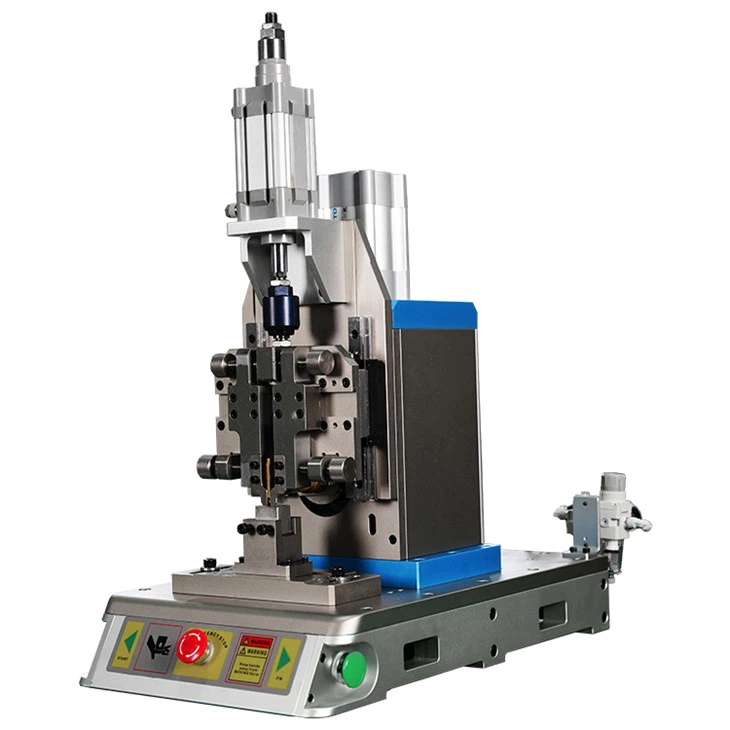
One of the key components of an ultrasonic welding system is the ultrasonic generator, which converts electrical energy into high - frequency electrical signals. These signals are then transmitted to a transducer, which converts the electrical energy into mechanical vibrations. The vibrations are further amplified by a booster and transferred to a welding horn, which applies the energy directly to the workpieces.
We offer a variety of ultrasonic welding machines, such as the Ultrasonic Spot Welder, Ultrasonic Wire Harness Terminal Welder, and Ultrasonic Seam Welder. Each of these machines is designed to meet specific welding requirements in different industries.
Comparing with Other Welding Methods
Resistance Welding
Resistance welding is a group of welding processes that use the heat generated by the electrical resistance of the workpieces to create a weld. In resistance welding, an electric current is passed through the parts to be joined, and the resistance at the interface between the parts causes the temperature to rise. Pressure is then applied to forge the parts together.
- Speed: Ultrasonic welding is generally faster than resistance welding. Ultrasonic welding can complete a weld in a matter of milliseconds to a few seconds, depending on the materials and the size of the joint. In contrast, resistance welding may take several seconds to minutes, especially for larger or thicker workpieces.
- Energy Consumption: Ultrasonic welding consumes less energy compared to resistance welding. Since ultrasonic welding relies on mechanical vibrations rather than high - current electrical flow, it requires less power input. This not only reduces operating costs but also makes it more environmentally friendly.
- Material Compatibility: Resistance welding is commonly used for welding metals, especially ferrous and non - ferrous metals. Ultrasonic welding, on the other hand, can be used to weld a wider range of materials, including plastics, metals, and even some dissimilar material combinations. For example, ultrasonic welding can effectively join plastics to metals in certain applications.
Arc Welding
Arc welding is a welding process that uses an electric arc to create heat for melting the workpieces and the filler material (if used). The arc is established between an electrode and the workpiece, and the heat generated by the arc melts the materials, which then solidify to form a weld.
- Heat Affected Zone (HAZ): One of the significant differences between ultrasonic welding and arc welding is the size of the heat - affected zone. In arc welding, the high - temperature arc causes a relatively large HAZ, which can lead to changes in the material properties such as hardness, strength, and ductility in the surrounding area of the weld. Ultrasonic welding, being a low - heat process, has a minimal HAZ, which helps to preserve the original properties of the materials.
- Joint Quality: Ultrasonic welding can produce high - quality, hermetic seals, especially for plastic parts. The welds are often stronger and more consistent compared to arc - welded joints, which may be prone to porosity, cracks, and other defects.
- Safety: Arc welding involves high - voltage electricity, intense light, and high - temperature arcs, which pose significant safety risks to the operators. Ultrasonic welding is a safer process as it operates at lower voltages and does not produce harmful radiation or intense heat.
Laser Welding
Laser welding uses a highly focused laser beam to melt and join the workpieces. The laser beam provides a concentrated source of energy, allowing for precise control of the welding process.

- Precision: Both ultrasonic welding and laser welding offer high precision. However, laser welding can achieve even finer welds, especially for micro - welding applications. Ultrasonic welding is more suitable for larger - scale joints and applications where a certain amount of surface contact is required.
- Cost: Laser welding equipment is generally more expensive than ultrasonic welding machines. The cost of purchasing and maintaining a laser welding system, including the laser source, optics, and control systems, can be prohibitively high for many small and medium - sized enterprises. Ultrasonic welding machines offer a more cost - effective solution for a wide range of welding applications.
- Material Thickness: Laser welding is well - suited for welding thin materials, as the laser beam can be precisely focused to melt only a small area. Ultrasonic welding can handle a wider range of material thicknesses, from very thin foils to relatively thick plates, depending on the power and design of the welding machine.
Advantages of Ultrasonic Welding in Different Industries
Automotive Industry
In the automotive industry, ultrasonic welding is used for joining plastic components such as dashboards, door panels, and engine covers. The fast welding speed and high - quality joints make it ideal for mass production. Ultrasonic welding also helps to reduce the weight of the vehicles by eliminating the need for additional fasteners or adhesives.
Electronics Industry
The electronics industry benefits from the precision and low - heat nature of ultrasonic welding. It is used for welding wires, terminals, and other small components. The minimal HAZ ensures that the sensitive electronic components are not damaged during the welding process. Our Ultrasonic Wire Harness Terminal Welder is specifically designed for these types of applications.
Medical Industry
In the medical industry, ultrasonic welding is used to manufacture medical devices such as syringes, catheters, and surgical instruments. The ability to create hermetic seals and the clean - welding process make it suitable for applications where sterility and reliability are crucial.
Why Choose Our Ultrasonic Welding Machines
As a supplier of ultrasonic welding machines, we are committed to providing high - quality products and excellent customer service. Our machines are designed with the latest technology and are built to last. We offer a wide range of models to meet the diverse needs of our customers, from small - scale workshops to large - scale manufacturing plants.
Our team of experts can provide technical support and guidance throughout the entire process, from machine selection to installation and maintenance. We also offer customized solutions to meet specific welding requirements. Whether you need to weld plastics, metals, or dissimilar materials, we have the right machine for you.
If you are interested in learning more about our ultrasonic welding machines or would like to discuss your specific welding needs, please feel free to contact us. We look forward to working with you to find the best welding solution for your business.
References
- "Welding Handbook", American Welding Society
- "Ultrasonic Welding: Principles and Applications", Industrial Press Inc.
- Technical papers on welding technologies from leading research institutions and industry associations.


