


Diffusion welding machines are used when a welded joint needs high strength, stable conductivity, low deformation, and long-term reliability. Instead of melting the base material or adding filler metal, diffusion welding uses controlled temperature, pressure, and holding time to form a solid-state bond between metal surfaces.
For copper busbars, aluminum conductors, laminated copper foils, flexible connectors, battery conductive parts, and power electronics components, the quality of the welded area directly affects contact resistance, temperature rise, mechanical strength, and production consistency. This is why diffusion welding is widely used in EV batteries, energy storage systems, low-voltage electrical products, power transmission, and precision conductive components.
This guide explains how a diffusion welding machine works, what systems are involved, where it is commonly used, and what buyers should check before choosing diffusion welding equipment.

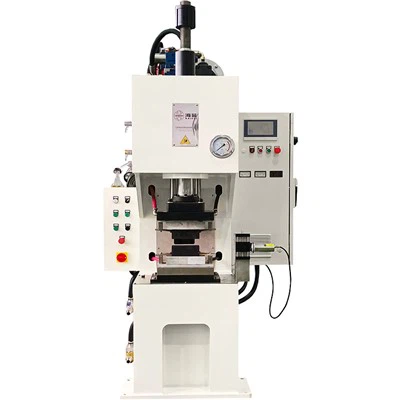
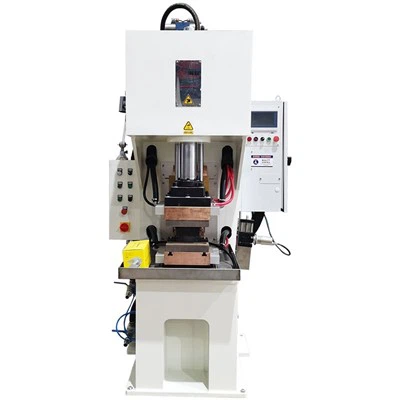
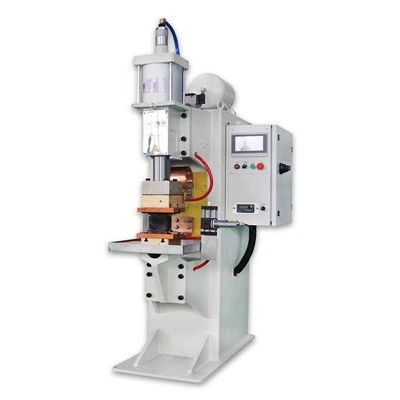
What Is Diffusion Welding?
Definition of Diffusion Welding
Diffusion welding is a solid-state welding process in which two metal surfaces are joined by holding them together under elevated temperature and pressure for a controlled period of time. The temperature used is below the melting point of the base materials, meaning no molten pool is formed during the process.
Instead of melting and solidification, bonding occurs through atomic diffusion across the contact interface. As a result, diffusion-welded joints typically exhibit mechanical and electrical properties very close to those of the base material.
Key characteristics of diffusion welding include the absence of filler metals, minimal distortion, and excellent joint consistency.
How Diffusion Welding Differs from Conventional Welding
Traditional welding methods such as resistance welding, laser welding, or brazing rely on melting or filler alloys to create a joint. While effective for many applications, these methods can introduce defects such as porosity, cracks, residual stresses, or increased electrical resistance.
Diffusion welding avoids these issues by maintaining the materials in a solid state. This makes diffusion welding particularly suitable for high-performance components where joint integrity and long-term reliability are critical.
Principles of Diffusion Welding
Atomic Diffusion Mechanism
At a microscopic level, metal surfaces are never perfectly smooth. When two parts are brought into contact, only a small fraction of the surface area actually touches. In diffusion welding, elevated temperature increases atomic mobility, while applied pressure promotes plastic deformation at surface asperities.
As the contact area increases, atoms begin to migrate across the interface. Over time, the original boundary becomes indistinguishable, forming a continuous metallurgical bond without melting.
Key Process Parameters
-
Temperature
The welding temperature typically ranges from 50% to 80% of the material's melting point. Higher temperatures accelerate atomic diffusion, but excessive heat may lead to grain growth or dimensional instability. Selecting the correct temperature window is critical for consistent results.
-
Pressure
Pressure ensures intimate contact between surfaces, disrupts oxide layers, and supports diffusion. Uniform pressure distribution is especially important when welding large-area or multilayer components, such as laminated copper connectors.
-
Time
Diffusion welding is a time-dependent process. Welding cycles can range from several minutes to several hours depending on material type, thickness, and joint configuration. Optimizing cycle time is essential to balance joint quality and production efficiency.
- Controlled Atmosphere Requirements
At elevated temperatures, most metals oxidize rapidly when exposed to air. Oxide layers severely inhibit atomic diffusion and compromise joint quality. For this reason, diffusion welding is typically performed in a vacuum environment or under inert gas protection.
A diffusion welding machine integrates vacuum systems or gas control units to maintain a clean welding environment, ensuring repeatable and high-quality joints.
Materials Suitable for Diffusion Welding
Copper and Copper Alloys
Copper is one of the most commonly diffusion-welded materials due to its high electrical conductivity and sensitivity to joint resistance. Diffusion welding machines are widely used for manufacturing copper flexible connectors, laminated busbars, and high-current conductors.
Stainless Steel and Titanium Alloys
These materials are frequently used in aerospace, heat exchangers, and vacuum systems. Diffusion welding provides strong, leak-tight joints without introducing filler metals or altering material properties.
Dissimilar Metal Combinations
With appropriate process control, diffusion welding can join dissimilar metals such as copper to stainless steel or copper to aluminum, enabling innovative product designs that are difficult to achieve with conventional welding.
Industrial Applications of Diffusion Welding Machines
Copper Flexible Connectors and Electrical Joints
In energy storage systems, power distribution equipment, and industrial electronics, copper flexible connectors must carry high current while accommodating thermal expansion and vibration. Diffusion welding offers low contact resistance, excellent thermal stability, and high consistency across production batches.
Energy Storage and Electric Vehicle Systems
Battery modules and energy storage cabinets require highly reliable electrical connections. Diffusion welding machines enable the bonding of multilayer copper components with repeatable quality, supporting large-scale production.
Aerospace and High-End Manufacturing
Diffusion welding is widely used for complex internal structures, vacuum components, and high-strength assemblies in aerospace and advanced industrial applications where joint reliability is non-negotiable.
Why Specialized Diffusion Welding Machines Are Essential
Diffusion welding demands precise control of temperature, pressure, and atmosphere. General-purpose equipment cannot consistently meet these requirements.
Temperature Control Systems
Modern diffusion welding machines employ high-accuracy temperature control, often maintaining stability within ±1°C. This ensures consistent diffusion conditions across production cycles.
Pressure Loading Systems
Servo or hydraulic pressure systems provide controlled, uniform force throughout the welding cycle, which is critical for large-area joints and multilayer components.
Vacuum and Atmosphere Control
Integrated vacuum pumps and gas control systems maintain a clean welding environment, minimizing oxidation and improving joint repeatability.
Practical Considerations for Manufacturers
When evaluating diffusion welding technology, manufacturers should assess both product requirements and production goals. Diffusion welding is particularly suitable for applications where performance and reliability outweigh cycle time considerations.
Key evaluation factors include equipment capability, process support, automation potential, and long-term service availability.
FAQ About Diffusion Welding Machines
Q: What materials can be welded by a diffusion welding machine?
A: Diffusion welding machines can be used for copper, aluminum, copper-aluminum structures, stainless steel, titanium alloys, nickel alloys, and other materials depending on the machine configuration and process conditions. For conductive parts, copper and aluminum are common application materials.
Q: Is diffusion welding suitable for copper busbars?
A: Yes. Diffusion welding is suitable for copper busbars because it can create strong conductive joints without filler metal. The final result should be verified by contact resistance testing, temperature rise testing, and mechanical strength testing.
Q: What is the difference between diffusion welding and brazing?
A: Brazing uses filler metal to join parts, while diffusion welding forms a solid-state bond between material surfaces under controlled temperature and pressure. Diffusion welding is often preferred when low resistance, strong bonding, and long-term stability are required.
Q: Does every diffusion welding machine need a vacuum system?
A: Not always. The need for vacuum or protective atmosphere depends on the material, temperature, holding time, oxidation sensitivity, and quality requirement. Some applications require higher vacuum, while others may use protective gas or a different atmosphere control method.
Conclusion: Choose a Diffusion Welding Machine Based on the Application
A diffusion welding machine is not just a heating and pressing device. Its welding performance depends on how the heating system, pressure system, vacuum or atmosphere system, fixture structure, and control system work together.
For copper busbars, aluminum conductors, laminated copper foils, flexible connectors, cooling plates, and battery conductive parts, the right machine should provide stable heating, uniform pressure, suitable atmosphere control, accurate positioning, and process monitoring.
Before choosing equipment, buyers should prepare material details, part drawings, bonding area, thickness, layer count, quality requirements, and production capacity. Sample welding and process validation are recommended before final machine selection.
Looking for a diffusion welding machine for copper, aluminum, busbars, foils, or flexible connectors? Contact Haifei for sample welding, fixture design, process testing, and customized equipment configuration.


