


In the manufacturing of new energy vehicles and heavy-duty machinery, the joining quality of chassis components plays a critical role in overall vehicle safety and long-term durability. As industry requirements for welding efficiency and consistency continue to increase, traditional single-head welding methods have gradually shown limitations, particularly in dual-nut welding applications where productivity constraints become more evident.
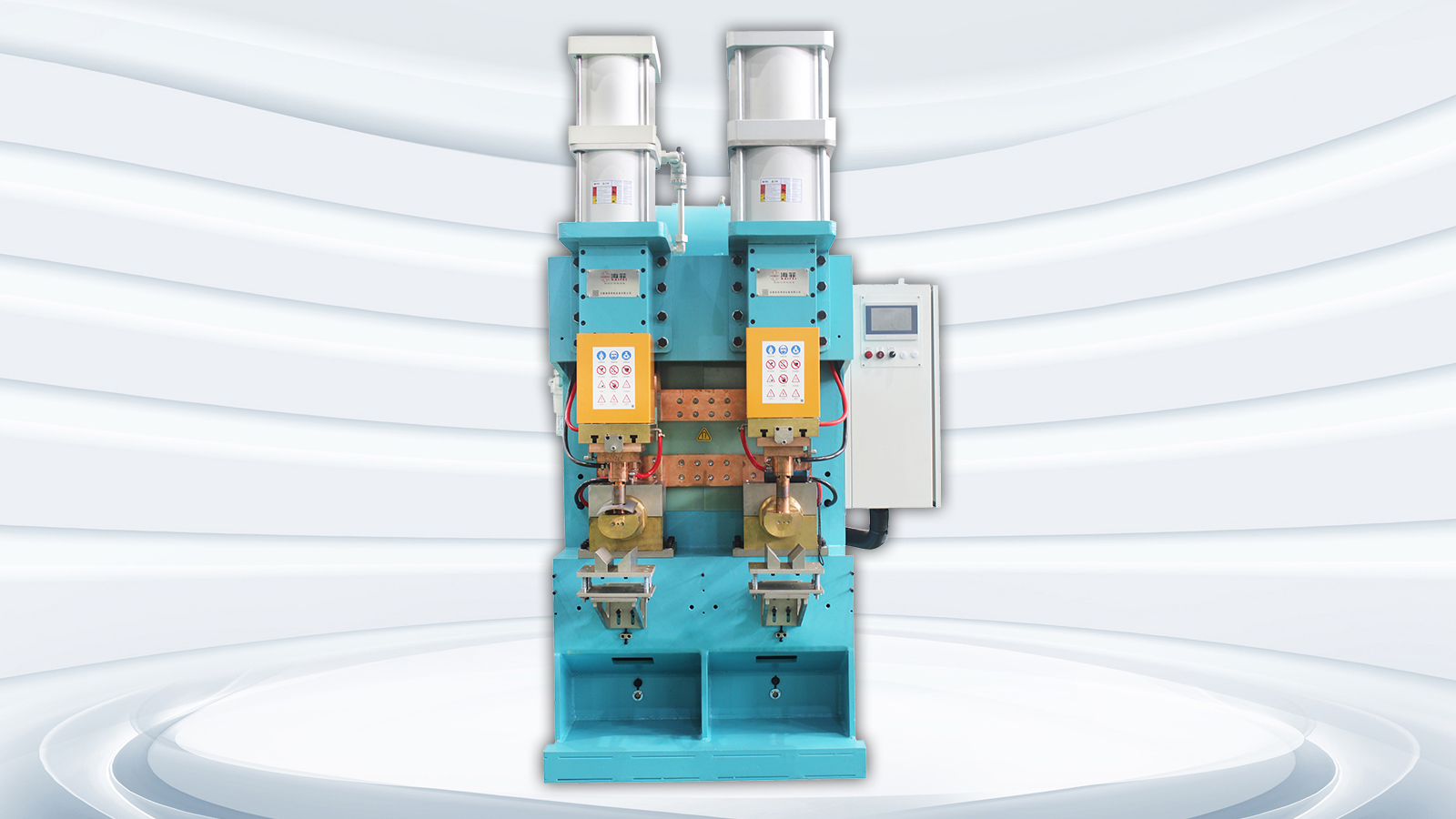
To address these challenges, Wuxi Haifei Intelligent Equipment Co., Ltd. developed a customized dual-head nut capacitor discharge projection welding machine solution for a leading manufacturer of electric vehicle chassis components. The project focused on improving production efficiency, stabilizing weld quality, and enabling full welding data traceability. Through systematic process validation and structural optimization, the solution achieved synchronized positioning and simultaneous welding of dual nuts, significantly enhancing the overall production performance of the customer's manufacturing line.
This article presents a comprehensive overview of the project, covering the customer background, technical challenges, solution design, and implementation outcomes. It provides practical insights that can serve as a valuable reference for manufacturers evaluating dual-head nut capacitor discharge welding equipment.
Customer Background and Project Initiation
1. Industry Background and Product Characteristics
The customer involved in this project is a manufacturer specializing in critical structural components for electric vehicle chassis systems. Their primary products include cross members, control arms, and subframes-components that carry substantial structural loads and therefore require exceptionally reliable welding performance.
Driven by the rapid growth of the electric vehicle market, the customer's production demand has steadily increased. The company currently operates at an annual production capacity of approximately 500,000 sets of chassis structural components, with plans for further expansion.
Under these production conditions, the existing welding equipment gradually became insufficient to support required cycle times. In particular, the dual-nut welding process presented operational challenges. Traditional single-head welding required two sequential welding operations per workpiece, increasing handling time and making consistent weld quality more difficult to maintain.
2. Key Limitations of the Existing Production Method
During the initial site evaluation phase, the engineering team conducted a detailed assessment of the customer's production line. Several operational constraints were identified, all of which became more pronounced under high-volume manufacturing conditions.
-
Insufficient Welding Efficiency Creating Production Bottlenecks
The customer's existing production process relied on single-head capacitor discharge projection welders to complete dual-nut welding. Each nut required an independent welding cycle, resulting in total cycle times typically ranging between 9 and 11 seconds per workpiece.
As production volumes increased, simply adding more equipment was not a sustainable solution. Additional machines increased capital investment, consumed more floor space, and required more operators, ultimately raising operating costs without proportionally improving throughput.
When welding cycle times became misaligned with upstream and downstream processes, waiting times increased, reducing the overall efficiency of the production line.
-
Inconsistent Welding Quality Leading to Potential Risks
Sequential welding operations inherently introduce variability due to time delays between welds and cumulative positioning deviations. Additionally, electrode wear and parameter drift further contributed to weld inconsistencies.
Typical quality concerns included:
- Variations in weld nugget size
- Occasional incomplete fusion
- Projection collapse during welding
- Thread deformation affecting assembly accuracy
Given that chassis components are structural safety parts, any weld inconsistency represents a potential reliability concern, making weld uniformity a critical requirement.
-
High Electrode Wear and Frequent Maintenance
Under high-cycle production conditions, electrode wear occurred rapidly. Frequent electrode dressing and replacement increased downtime and reduced overall machine utilization.
In addition to productivity losses, electrode consumption costs continued to rise, placing pressure on cost control efforts.
-
Complex Operation and High Dependence on Skilled Operators
The existing equipment required multiple manual adjustments when switching between different nut sizes. This process relied heavily on operator experience and introduced variability into the production process.
New operators typically required one to two weeks of training before reaching acceptable proficiency levels, creating operational challenges in environments with workforce turnover.
-
Lack of Welding Data Traceability
Modern automotive manufacturing requires comprehensive production traceability for each welded joint. However, the existing equipment lacked the capability to capture and store welding data, making it difficult to meet quality documentation and audit requirements.
Customer Requirements and Project Objectives
After identifying operational challenges, the customer and engineering team jointly established a series of technical objectives covering productivity, quality, reliability, and long-term operating costs.
1.Achieving True Dual-Head Synchronous Welding
The customer required simultaneous positioning and welding of two nuts within a single cycle. The target was to reduce the total welding cycle time per workpiece to less than 5 seconds, representing an efficiency improvement of more than 60% compared with the existing process.
Additionally, the equipment needed to maintain high operational stability to support a working model in which one operator could manage two to three machines simultaneously, thereby reducing labor requirements.
2.Ensuring Stable Welding Quality
Strict quality standards were established to eliminate typical welding defects. The customer emphasized that the solution must prevent:
- Incomplete welds
- Projection collapse
- Thread damage
- Variations in weld nugget formation
These requirements are considered fundamental quality criteria in structural component welding.
3.Reducing Maintenance Frequency and Improving Reliability
The customer requested improvements in electrode system durability to extend electrode service life and reduce maintenance downtime. In addition, the equipment needed to support remote diagnostic capabilities to enable rapid troubleshooting and minimize unplanned production interruptions.
4.Simplifying Operation and Supporting Multi-Size Production
Given the diversity of product specifications, the equipment was required to support multiple nut sizes ranging from M8 to M12, while enabling fast parameter recall through preset programs.
Quick fixture change capability was also necessary to reduce changeover time and maintain production flexibility.
5.Enabling Full Welding Process Traceability
The customer required real-time monitoring and recording of critical welding parameters, including:
- Welding energy
- Discharge time
- Positioning accuracy
All collected data needed to be stored and made available for traceability and quality management purposes.
Customized Solution Design and Implementation
Following the definition of project requirements, the engineering team developed a structured solution based on capacitor discharge welding technology and validated performance through multiple experimental stages.
1.Process Validation Phase: Establishing Stable Welding Parameters
Before equipment fabrication began, extensive process validation testing was conducted. Various parameter combinations were evaluated to determine optimal welding conditions for the customer's material and structural requirements.
Key test parameters included:
- Charging voltage ranges
- Discharge time optimization
- Electrode force calibration
- Multi-size nut welding trials
Through repeated testing and metallurgical evaluation of weld nuggets, a stable parameter window was established. This validation phase significantly reduced commissioning risks and shortened the overall project timeline.
2.Equipment Structural Design: Development of Dual-Head Synchronous System
After completing process validation, the engineering team developed a dedicated dual-head welding structure capable of synchronized operation.
The system incorporated synchronized force control and simultaneous energy discharge mechanisms, ensuring that both welds were formed under identical conditions.
Compared with sequential welding systems, this design minimized repetitive motion and reduced positioning deviation, resulting in significantly improved weld consistency.
3.Fixture System Development: Modular Composite Fixture Design
Considering the complex geometry of chassis components, a modular composite fixture system was designed to accommodate multiple welding orientations and product configurations.
The fixture system provided:
- Compatibility with both horizontal and vertical welding positions
- Accurate positioning capability
- Modular quick-change architecture
In practical operation, fixture changeover time was controlled within 8 minutes, greatly improving production flexibility.
Equipment Performance and Project Outcomes
After fabrication and system integration, the customer conducted a comprehensive acceptance test to verify performance under production conditions.
1.Continuous Operation Test Results
During a 24-hour continuous operation test, the equipment demonstrated stable and reliable performance across all evaluation criteria.
Key performance indicators included:
| Performance Item | Result |
|---|---|
| Cycle Time per Workpiece | 4.2 seconds |
| Efficiency Improvement | Approximately 65% |
| Welding Pass Rate | 99.8% |
| Average Failure Rate | Less than 0.5% |
These results confirmed the system's ability to maintain stable performance in high-volume manufacturing environments.
2.On-Site Installation and Production Launch
Following delivery, the engineering team completed installation and commissioning at the customer site. A structured training program was conducted covering operational procedures, parameter management, and routine maintenance practices.
After training completion, the equipment was fully integrated into the production line and officially placed into operation within three days.
3.Customer Feedback and Operational Evaluation
After a period of stable operation, the customer conducted an internal performance review and reported significant improvements in several areas.
Notable outcomes included:
- Substantial increase in production efficiency
- Improved welding quality consistency
- Simplified machine operation
- Reduced maintenance workload
These improvements not only enhanced daily production performance but also strengthened the customer's ability to scale production capacity in the future.
Project Insights: Key Factors When Selecting Dual-Head Nut Projection Welding Equipment
Based on the experience gained from this project, several critical selection criteria can be identified for manufacturers planning to invest in dual-head nut welding systems.
1.Verification of True Synchronous Welding Capability
When evaluating equipment options, manufacturers should confirm whether the system supports genuine synchronous welding rather than alternating dual-head operation. True synchronization directly affects weld consistency and productivity.
2.Availability of Proven Process Validation Capability
Reliable equipment suppliers typically maintain structured validation procedures capable of identifying stable welding parameters before equipment delivery. This capability significantly reduces commissioning time and increases project success rates.
3.Support for Data Traceability and System Integration
As manufacturing becomes increasingly digitalized, welding equipment must function as part of a connected production ecosystem. Systems capable of real-time data collection and MES integration provide long-term advantages in quality management and operational transparency.
Conclusion: Customized Welding Solutions Enable Sustainable Manufacturing Efficiency
In modern manufacturing environments, standardized equipment alone is often insufficient to meet the demands of complex structural welding applications. Through customized engineering design and systematic process optimization, manufacturers can significantly improve both production efficiency and welding consistency.
The successful implementation of this project demonstrates that dual-head nut capacitor discharge projection welding systems not only resolve traditional productivity limitations but also establish a more reliable, efficient, and traceable welding process. For manufacturers planning equipment upgrades or new production lines, this case study provides meaningful technical and operational insights that can support informed decision-making.


