


In modern automotive manufacturing, Body-in-White (BIW) welding quality directly determines the structural strength of the vehicle and reflects the stability of the production line. A typical passenger vehicle contains 4,000 to 6,000 spot welds, while electric vehicles and high-strength steel structures may exceed 7,000 weld points. With such a large number of welds, even a small percentage of unstable joints can quickly develop into serious quality risks during final inspection. For this reason, automotive manufacturers typically require first-pass weld acceptance rates above 99.5%, with critical structural zones approaching 99.9% consistency.
In daily production, spatter and weak welds remain the two most common factors affecting weld consistency. Spatter not only contaminates the workpiece surface and increases post-weld grinding time, but more importantly, it can mask internal weld defects, making weak welds difficult to detect. When weak welds pass undetected into downstream assembly processes, they often result in large-scale rework or rejected components, which can disrupt production schedules and increase manufacturing costs significantly.
Traditional AC resistance spot welding systems typically achieve first-pass rates in the range of 96% to 98%, largely due to limited control over heat input stability. While this performance level was acceptable in earlier vehicle designs using mild steel, modern vehicle bodies rely heavily on high-strength steels, galvanized sheets, and multi-layer structures. These materials require tighter process control, and simply increasing welding current is no longer sufficient. Instead, the key to improving weld consistency lies in precise control of welding waveforms, ensuring that each energy input remains stable and repeatable.
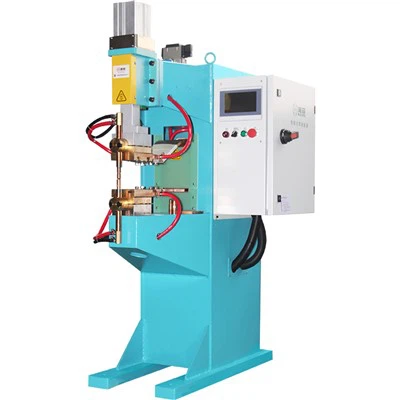
Why Do Spatter and Weak Welds Keep Occurring?
In many manufacturing environments, spatter and weak welds are often attributed to inconsistent materials or operator factors. However, from an engineering standpoint, these defects are usually linked to unstable heat input conditions. When welding current rises too quickly or when contact resistance fluctuates, localized metal can melt rapidly and be expelled from the weld zone due to electromagnetic forces, creating visible spatter around the weld.
Weak welds, on the other hand, occur when insufficient heat input prevents the formation of a fully developed weld nugget. These defects are often difficult to detect visually but can significantly reduce weld strength and fatigue life. In structural automotive components, weak welds may create hidden failure points that compromise vehicle safety during long-term operation or crash events.
To better understand the most common welding defects and their production impact, the following table summarizes typical conditions:
Common Spot Welding Defects and Their Impact
| Defect Type | Typical Appearance | Root Cause | Production Impact |
|---|---|---|---|
| Spatter | Metal particles around weld | Rapid current rise or unstable contact | Increased grinding and electrode wear |
| Weak Weld | Undersized weld nugget | Insufficient heat input | Reduced joint strength |
| Shrinkage Void | Internal cavity formation | Unstable cooling conditions | Reduced weld density |
| Burn-Through | Material perforation | Excessive current or low pressure | Workpiece rejection |
Production data from automotive welding lines shows that spatter-related issues can increase finishing workload by 30% to 50%, while rework caused by weak welds can cost three to five times more than standard welding operations. In high-volume automotive facilities, an hour of unexpected downtime may result in losses ranging from several thousand to tens of thousands of dollars, making weld stability both a quality and financial priority.
MFDC Welding: From Rough Heating to Precision Heat Control
Traditional AC spot welding systems operate at 50 Hz, producing alternating current that crosses zero during each cycle. This repeated interruption of current causes the weld zone to experience continuous cycles of cooling and reheating. Such thermal fluctuations often result in unstable nugget formation and significantly increase the likelihood of spatter.
Medium Frequency Direct Current (MFDC) welding systems, by contrast, convert incoming power into high-frequency current above 1,000 Hz, which is then rectified into stable direct current. Because the current remains continuous, the heat input becomes more consistent, allowing the weld nugget to develop evenly. This advantage becomes especially important when welding high-strength steels or galvanized materials.
AC vs MFDC Spot Welding Performance Comparison
| Parameter | AC Welding | MFDC Welding | Practical Impact |
|---|---|---|---|
| Output Frequency | 50 Hz | 1,000–4,000 Hz | Higher frequency improves stability |
| Current Type | Alternating | Direct Current | Eliminates current interruption |
| Heat Stability | Moderate | High | More uniform nugget formation |
| Spatter Rate | Higher | Reduced by 60–70% | Less surface contamination |
| Control Accuracy | ±8–10% | Within ±2% | Improved weld consistency |
| Energy Efficiency | Lower | 15–25% higher | Reduced energy consumption |
In real production environments, MFDC welding systems have demonstrated consistent improvements in weld quality. Many automotive manufacturers report that upgrading to MFDC technology can increase first-pass weld acceptance from approximately 97% to above 99.5%, significantly reducing rework and improving production throughput.
Multi-Stage Waveform Control: Delivering Energy Where It Matters
As automotive materials become more complex, including multi-layer stacks and mixed materials such as galvanized steel and high-strength steel, the welding window becomes increasingly narrow. If the current rises too aggressively, excessive spatter may occur. If the current is insufficient, nugget formation may be incomplete. To address these challenges, modern MFDC welding systems rely on multi-stage waveform control, allowing energy to be delivered gradually and strategically throughout the welding cycle.
Typical Three-Stage Welding Waveform Structure
| Stage | Primary Function | Current Ratio | Quality Benefit |
|---|---|---|---|
| Preheat Stage | Break surface coatings | 20–40% | Reduces initial spatter |
| Main Weld Stage | Form weld nugget | 100% | Ensures weld strength |
| Forge Stage | Compress nugget | 40–60% | Improves density |
In practice, properly configured multi-stage waveforms significantly improve weld stability. For example, in galvanized steel welding, the preheat stage helps break surface coatings and stabilize contact resistance, while the main stage ensures sufficient heat for nugget formation. The final forge stage applies controlled compression to improve nugget density and minimize internal defects.
Engineering data shows that optimized waveform strategies can reduce shrinkage defects by over 80% while maintaining weld strength variation within ±3 N, resulting in highly repeatable welding performance.
Closed-Loop Feedback Control Ensures Long-Term Stability
Welding conditions are never static. Over time, electrodes wear, sheet thickness varies slightly, and coating conditions may change. Without real-time compensation, these variables gradually degrade weld quality.
Modern MFDC systems use closed-loop feedback control, continuously monitoring welding current, voltage, and dynamic resistance. By analyzing these signals in real time, the system automatically adjusts subsequent current output to maintain consistent weld conditions.
In advanced automotive welding lines, closed-loop control typically enables:
- Energy repeatability within ±2%
- Weld strength variation reduced by 30–40%
- First-pass acceptance rates stabilized at 99.9%
For high-volume automotive plants, this level of process stability significantly reduces downtime, improves production consistency, and lowers overall manufacturing risk.
Selecting the Right MFDC Spot Welding System
Choosing the correct MFDC welding equipment involves more than comparing rated current capacity. A well-selected system must support long-term process stability and accommodate varying material combinations.
First, waveform flexibility should be carefully evaluated. Automotive structures involve diverse material stacks, and the ability to program multiple waveform stages allows operators to fine-tune energy delivery for each application. Systems lacking waveform flexibility often struggle to maintain stable performance across different welding conditions.
Second, feedback precision should be considered. High-accuracy feedback systems can automatically compensate for electrode wear or material variation, reducing the need for manual parameter adjustments and improving production efficiency.
Finally, data management capability has become increasingly important. Automotive quality systems now require full traceability of welding parameters. Systems that record current curves, welding time, and process data allow engineers to review production history and respond quickly to quality audits or field issues.
Real-World Case Study: Improving First-Pass Yield from 97% to 99.9%
In one automotive body welding project, the manufacturer initially relied on traditional AC welding systems. Over time, engineers observed frequent spatter, shortened electrode life, and persistent rework issues. After conducting a detailed process evaluation, the facility upgraded to MFDC welding systems and implemented optimized waveform programming.
The results were significant:
Welding Performance Before and After Upgrade
| Metric | Before Upgrade | After Upgrade |
|---|---|---|
| First-Pass Yield | 97.2% | 99.9% |
| Spatter Rate | 28% | 8% |
| Electrode Life | 2,500 welds | 4,500 welds |
| Grinding Time | Baseline | Reduced by 40% |
This case demonstrates that waveform optimization delivers measurable financial benefits. By reducing spatter and minimizing rework, production efficiency improved while operating costs decreased substantially.
Conclusion
As automotive manufacturing continues to evolve toward high-strength materials, multi-layer structures, and automated production systems, welding quality control has transitioned from manual adjustments to data-driven precision engineering. MFDC spot welding technology, combined with multi-stage waveform control and closed-loop feedback, provides the level of stability required for modern vehicle production.
Spatter and weak welds are not unavoidable defects. In most cases, they result from insufficient control of heat input rather than unavoidable material limitations. When welding systems are capable of managing energy delivery with precision and adjusting dynamically to process variations, weld quality becomes predictable and repeatable.
For manufacturers planning new production lines or upgrading existing systems, investing in MFDC technology with advanced waveform control is not simply a technical upgrade. It represents a long-term strategy to improve weld consistency, reduce operational costs, and maintain competitiveness in an increasingly demanding manufacturing environment.


