


As modern manufacturing continues to evolve toward higher precision, consistency, and automation, the seam welding machine has gradually shifted from being a "high-end option" to becoming standard equipment in many industrial sectors. Compared with traditional power-frequency welding systems, seam welding machines based on medium-frequency inverter technology offer superior control stability, weld consistency, energy efficiency, and automation compatibility, making them especially suitable for continuous, high-quality metal joining applications.
In real industrial environments, the value of a seam welding machine is not defined only by welding speed. Its true significance lies in its ability to ensure long-term product reliability, sealing performance, and production stability. For manufacturers, adopting this technology is not simply an equipment upgrade-it represents a systematic improvement in the overall manufacturing process. Understanding its typical application fields and technical suitability is therefore essential for correct selection and rational investment.
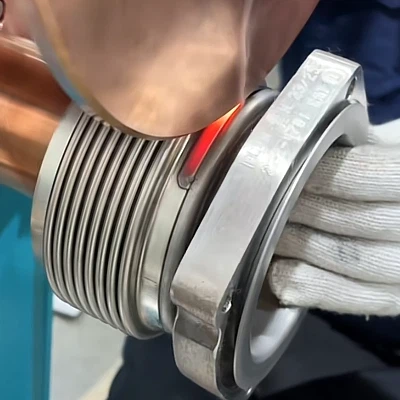
Detailed welding diagram of roll welding machine


Automotive Manufacturing: Continuous Welding Driven by Sealing Performance and Structural Stability
The automotive industry is one of the most mature application areas for seam welding machines, particularly in components where weld continuity and sealing integrity are critical. Typical applications include fuel tanks, new energy battery housings, body sealing structures, exhaust systems, and various thin-sheet continuous seam structures.
Traditional power-frequency welding processes often struggle with thin materials due to unstable heat input, deformation, spatter, and inconsistent weld formation. Seam welding machines overcome these limitations through stable inverter current output combined with dynamic pressure control systems. This allows heat input to be precisely concentrated and controlled, significantly improving weld density, surface quality, and structural uniformity.
In the new energy vehicle sector, these advantages are even more pronounced. Battery enclosures must meet strict sealing standards such as IP67 or IP68, which place extremely high demands on weld consistency and leak resistance. Through pulsed current control and precise pressure regulation, seam welding machines achieve stable control of weld penetration depth and seam width, ensuring consistent quality across mass production. This high level of repeatability is essential for automated production lines and large-scale manufacturing environments, where process stability directly impacts yield rates and lifecycle costs.
Aerospace Industry: High-Reliability Welding for Lightweight Structures
In aerospace manufacturing, welding quality is directly linked to system safety and operational reliability. Components such as fuel tanks, hydraulic pipelines, sealed compartments, and structural enclosures require welds that combine high mechanical strength with long-term sealing performance.
Seam welding machines demonstrate strong advantages in welding lightweight alloys, including aluminum alloys, aluminum-magnesium alloys, and titanium alloys. These materials are highly sensitive to heat input fluctuations, making stable current output essential. The medium-frequency inverter system, combined with copper alloy roller electrodes and dynamic pressure compensation, ensures controlled heat distribution and minimizes risks such as burn-through, incomplete fusion, and microstructural defects.
Through real-time monitoring of welding current and pressure parameters, seam welding systems maintain a stable process window, resulting in highly repeatable weld quality. This consistency is critical in aerospace applications, where long-term reliability, fatigue resistance, and safety margins are fundamental engineering requirements rather than optional quality targets.
Home Appliance Manufacturing: Efficiency and Consistency for Mass Production
In the home appliance industry, the seam welding machine plays a key role in supporting high-volume, standardized production. Typical applications include air conditioner condensers, evaporators, refrigerator sealing pipelines, heat exchangers, and structural shell components.
Conventional spot welding requires repetitive operations and complex positioning, often limiting production efficiency and long-term consistency. Seam welding machines replace discrete weld points with continuous weld seams, enabling stable production rhythms and significantly improving throughput.
With multi-stage current programming systems, seam welding machines can adapt to different material combinations and thickness variations without frequent manual adjustments. This reduces operator dependency and minimizes quality fluctuations caused by human intervention. As a result, manufacturers achieve both higher productivity and more consistent product quality, making seam welding machines an essential part of modern automated appliance production lines rather than just an isolated welding unit.
Energy Equipment and Chemical Industry: Long-Term Reliability as the Core Objective
In energy and chemical industries, welding quality directly affects long-term operational safety. Applications such as photovoltaic frames, energy storage enclosures, wind power structures, chemical storage tanks, and pressure vessels require welds that maintain mechanical integrity and corrosion resistance over long service lifetimes.
Seam welding machines optimize current waveforms and electrode pressure distribution, producing dense weld structures with reduced oxidation layers. This significantly improves corrosion resistance in welded areas. In chemical equipment manufacturing, when combined with airtightness testing and leak detection systems, seam welding machines become part of a closed-loop quality control system that ensures long-term operational safety.
From a manufacturing system perspective, seam welding machines in these industries function not merely as welding tools, but as reliability assurance components within the overall production architecture. Their value lies in lifecycle cost reduction, safety risk control, and system-level quality stability.
Application-Driven Selection Logic: How to Choose the Right Seam Welding Machine
Selecting a seam welding machine should not be based solely on equipment specifications. The decision should be driven by product structure and production model. If a company's products involve continuous weld seams, high sealing requirements, consistent batch production, or automation integration, seam welding technology offers clear process advantages.
Key selection factors should include power supply stability, control system precision, electrode system quality, pressure regulation method, and automation interface capability-rather than focusing only on nominal power ratings or price levels. High-value seam welding machines are defined by long-term operational stability and weld consistency, not short-term performance metrics.
Conclusion
The adoption of seam welding machines represents more than an equipment upgrade-it reflects a transformation in manufacturing logic. It marks the shift from experience-driven processes to system-controlled production, and from manual dependence to data-driven quality management.
For industries such as automotive, new energy, home appliances, aerospace, and energy equipment manufacturing, seam welding machines are no longer optional technologies. They are becoming foundational elements of high-quality manufacturing systems. Their real value lies not only in the weld itself, but in the stability, consistency, and reliability they bring to the entire production process.
From a manufacturing upgrade perspective, the seam welding machine is not just a welding solution-it is a structural component of modern industrial quality systems.


