


In the industrial manufacturing landscape, the choice of welding equipment is crucial, especially when dealing with challenging environments. As a supplier of Ultrasonic Spot Welders, I often encounter inquiries about the suitability of our equipment for welding in corrosive environments. This blog aims to explore this question in detail, providing insights based on scientific principles and practical experience.
Understanding Ultrasonic Spot Welding
Before delving into the compatibility of ultrasonic spot welders with corrosive environments, it's essential to understand how these machines work. Ultrasonic spot welding is a solid-state welding process that uses high-frequency ultrasonic vibrations to join two or more materials. During the process, the ultrasonic energy is applied to the workpieces through a sonotrode (welding tip), causing the materials to rub against each other at the molecular level. This friction generates heat, which softens the materials and allows them to bond together without melting.
One of the key advantages of ultrasonic spot welding is its ability to create strong, reliable joints without the need for additional filler materials or fluxes. This makes it an ideal choice for a wide range of applications, including electronics, automotive, and medical device manufacturing.
Characteristics of Corrosive Environments
Corrosive environments are characterized by the presence of chemicals, moisture, or other substances that can cause the degradation of materials over time. These environments can be found in various industries, such as chemical processing, marine, and food processing. Common corrosive agents include acids, alkalis, salts, and oxidizing agents.
The effects of corrosion on welded joints can be significant. Corrosion can weaken the joint, reduce its strength and durability, and even lead to joint failure. In addition, corrosion can also affect the appearance of the welded parts, causing discoloration, pitting, and other surface defects.
Can an Ultrasonic Spot Welder be Used for Welding in Corrosive Environments?
The answer to this question depends on several factors, including the type of corrosive environment, the materials being welded, and the design and construction of the ultrasonic spot welder.
Type of Corrosive Environment
The severity of the corrosive environment plays a crucial role in determining the suitability of ultrasonic spot welding. In mild corrosive environments, where the concentration of corrosive agents is relatively low, ultrasonic spot welders can often be used effectively. However, in highly corrosive environments, such as those containing strong acids or alkalis, special precautions may be required to protect the welding equipment and the welded joints.
Materials Being Welded
The choice of materials being welded is another important factor to consider. Some materials, such as stainless steel and aluminum, are more resistant to corrosion than others. When welding these materials in corrosive environments, ultrasonic spot welding can provide a reliable and durable joint. However, for materials that are more susceptible to corrosion, such as carbon steel, additional protective measures may be necessary.
Design and Construction of the Ultrasonic Spot Welder
The design and construction of the ultrasonic spot welder can also affect its performance in corrosive environments. Welders that are designed with corrosion-resistant materials and coatings can provide better protection against the effects of corrosion. In addition, proper maintenance and cleaning of the welding equipment can also help to extend its lifespan and ensure its reliable operation in corrosive environments.

Advantages of Using an Ultrasonic Spot Welder in Corrosive Environments
Despite the challenges posed by corrosive environments, there are several advantages to using an ultrasonic spot welder in these conditions.
Strong and Reliable Joints
Ultrasonic spot welding can create strong and reliable joints that are resistant to corrosion. The solid-state nature of the welding process ensures that the joint is formed without melting the materials, which helps to preserve the integrity of the welded parts.
No Additional Filler Materials or Fluxes
Unlike traditional welding processes, ultrasonic spot welding does not require the use of additional filler materials or fluxes. This eliminates the risk of introducing contaminants into the welded joint, which can cause corrosion and other problems.
High Precision and Control
Ultrasonic spot welding offers high precision and control, allowing for the creation of consistent and accurate welds. This is particularly important in applications where the quality and reliability of the welded joints are critical.
Precautions for Using an Ultrasonic Spot Welder in Corrosive Environments
To ensure the successful use of an ultrasonic spot welder in corrosive environments, the following precautions should be taken:
Select the Right Materials
Choose materials that are resistant to corrosion for both the workpieces and the welding equipment. Stainless steel, aluminum, and titanium are examples of materials that are commonly used in corrosive environments.
Use Corrosion-Resistant Coatings
Apply corrosion-resistant coatings to the welding equipment and the welded joints to provide an additional layer of protection against corrosion. These coatings can include paints, polymers, and metal platings.
Proper Maintenance and Cleaning
Regularly clean and maintain the ultrasonic spot welder to remove any corrosive agents or contaminants that may have accumulated on the equipment. This can help to prevent the corrosion of the welding components and ensure the reliable operation of the machine.
Monitor the Welding Process
Monitor the welding process closely to ensure that the welds are being formed correctly and that there are no signs of corrosion or other problems. This can include visual inspection of the welded joints, as well as non-destructive testing methods, such as ultrasonic testing and X-ray inspection.
Our Ultrasonic Spot Welders for Corrosive Environments
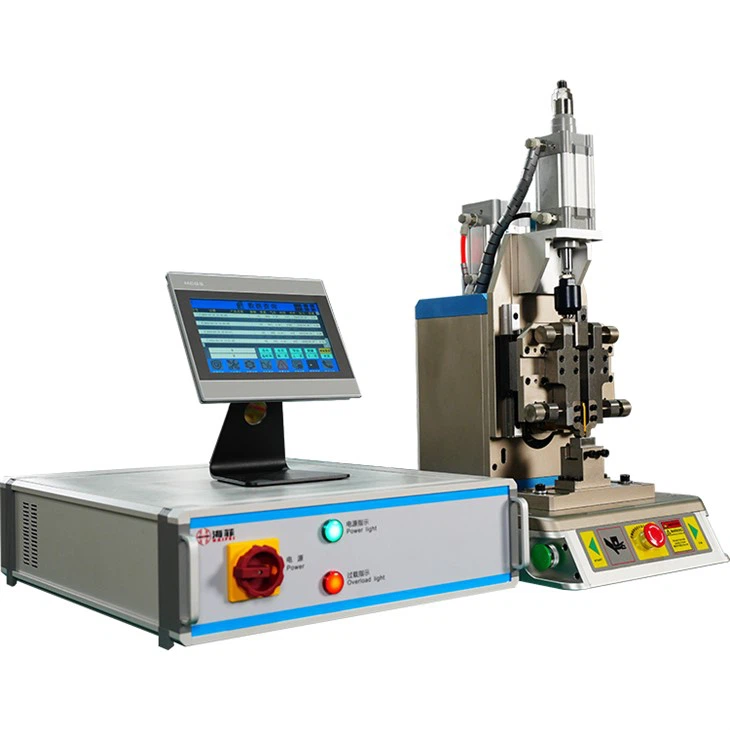
As a leading supplier of ultrasonic spot welders, we offer a range of products that are designed to meet the needs of customers in corrosive environments. Our Ultrasonic Spot Welder is constructed with high-quality, corrosion-resistant materials and features advanced technology to ensure reliable and efficient operation.
In addition to our standard ultrasonic spot welders, we also offer customized solutions to meet the specific requirements of our customers. Our team of experienced engineers can work with you to design and develop a welding system that is tailored to your application and environment.
Other Related Products
In addition to our ultrasonic spot welders, we also offer a range of other ultrasonic welding machines, including Ultrasonic Wire Harness Terminal Welder and Ultrasonic Seam Welder. These machines are also suitable for use in a variety of applications, including those in corrosive environments.
Conclusion
In conclusion, while the use of an ultrasonic spot welder in corrosive environments presents some challenges, it is possible to achieve successful welding results with the right equipment, materials, and precautions. By understanding the characteristics of corrosive environments, selecting the appropriate materials, and taking proper maintenance and protective measures, ultrasonic spot welding can be a reliable and effective solution for joining materials in these conditions.
If you are interested in learning more about our ultrasonic spot welders or other ultrasonic welding machines, please contact us to discuss your specific requirements. Our team of experts is ready to assist you in finding the best welding solution for your application.
References
-ASM Handbook, Volume 6: Welding, Brazing, and Soldering. ASM International, 1993.
-Peterson, R. E., & Savage, W. F. (1984). Principles of Welding. Prentice-Hall.
-Schwartz, M. M. (1997). Welding Metallurgy. ASM International.


