


What is the certification requirement for a diffusion welder for copper?
As a supplier of diffusion welders for copper, I often receive inquiries about the certification requirements for these specialized machines. Diffusion welding, a solid-state joining process, is widely used in various industries to bond copper components with high precision and strength. Understanding the certification requirements is crucial for both manufacturers and users of copper diffusion welders to ensure the quality, safety, and compliance of the equipment.
Importance of Certification
Certification serves as a quality assurance mechanism, indicating that a diffusion welder for copper meets specific standards and requirements. It is not only a legal necessity in many regions but also a competitive advantage in the market. For manufacturers, having certified equipment demonstrates their commitment to quality and adherence to industry best practices. For users, certified welders provide peace of mind, knowing that the equipment has been tested and verified to perform as intended.
Key Certification Standards
Several international and national standards govern the certification of diffusion welders for copper. These standards cover various aspects of the equipment, including safety, performance, and quality.
ISO Standards
The International Organization for Standardization (ISO) has developed a series of standards related to welding and joining processes. ISO 9001, for example, is a general quality management system standard that can be applied to the manufacturing of diffusion welders. Complying with ISO 9001 ensures that the company has a robust quality management system in place, from design and development to production and after-sales service.
ISO 15614 is another important standard that specifies the qualification requirements for welding procedures and welders. Although it is more focused on fusion welding processes, some of its principles can be applied to diffusion welding as well. This standard helps to ensure that the welding procedures used in the diffusion welder are well-defined, controlled, and capable of producing high-quality welds.
CE Marking
In the European Union (EU), the CE marking is a mandatory certification for many types of equipment, including diffusion welders. The CE marking indicates that the product complies with all relevant EU directives, such as the Machinery Directive and the Low Voltage Directive. These directives set out the safety and health requirements for machinery placed on the EU market.
To obtain the CE marking, manufacturers need to conduct a conformity assessment, which may include product testing, documentation review, and quality management system evaluation. Once the product is deemed compliant, the manufacturer can affix the CE marking to the equipment and issue a Declaration of Conformity.
UL Certification
In the United States, the Underwriters Laboratories (UL) certification is widely recognized as a mark of safety and quality. UL develops and maintains safety standards for a wide range of products, including electrical equipment. A UL-certified diffusion welder for copper has been tested to meet the relevant UL safety standards, such as UL 508 for industrial control panels and UL 61010 for electrical equipment for measurement, control, and laboratory use.
UL certification is not mandatory, but it is often required by customers, especially in industries with strict safety requirements. Having UL certification can enhance the marketability of the equipment in the US market.
Specific Requirements for Copper Diffusion Welders
In addition to the general certification standards, there are some specific requirements for copper diffusion welders.
Welding Performance
The welding performance of the diffusion welder is a key factor in certification. This includes parameters such as welding temperature, pressure, time, and the quality of the resulting welds. The welder should be able to achieve consistent and reliable welding results, with minimal defects such as porosity, cracks, or incomplete bonding.
Manufacturers may need to provide test reports and data to demonstrate the welding performance of their equipment. These tests may include destructive and non-destructive testing methods, such as metallographic analysis, ultrasonic testing, and tensile strength testing.
Material Compatibility
Copper diffusion welding involves the bonding of copper components, so the welder must be compatible with the specific type of copper being used. Different grades of copper may have different physical and chemical properties, which can affect the welding process.
The manufacturer should ensure that the welder can handle the specific copper alloy and thickness requirements of the customer. They may need to conduct material compatibility tests to verify the performance of the welder with different copper materials.
Safety Features
Safety is of utmost importance in any welding equipment. Copper diffusion welders should be equipped with appropriate safety features to protect the operator and prevent accidents. These features may include emergency stop buttons, safety interlocks, overheat protection, and electrical insulation.
The safety features of the welder should comply with the relevant safety standards, such as the Machinery Directive and UL safety standards. The manufacturer should provide detailed instructions and documentation on the proper use and maintenance of the safety features.
Our Certification Commitment
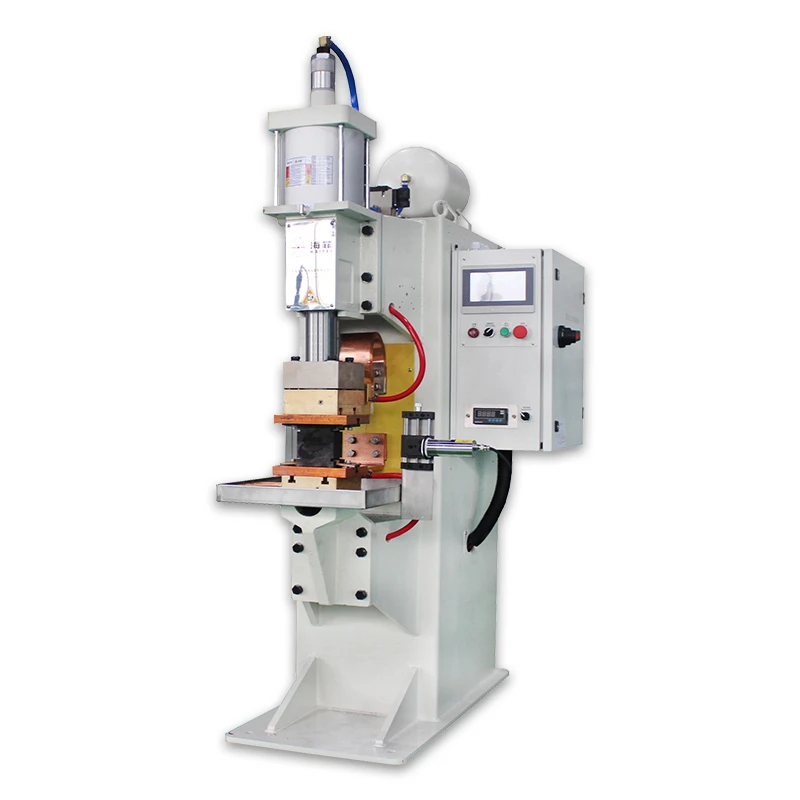
As a leading supplier of Diffusion Bonding Equipment, we are committed to meeting the highest certification requirements. Our products, such as the HFTD - 100 - Q Copper Diffusion Welding Machine and the Pneumatic Cooper Diffusion Welder, have undergone rigorous testing and certification processes to ensure their quality, safety, and performance.
We adhere to international standards such as ISO 9001 and have obtained the CE marking for our equipment sold in the EU market. Our products are also designed to meet the requirements of UL certification, providing customers with a high - level of confidence in our products.
When you choose our diffusion welders for copper, you can be assured that you are getting a certified and reliable product. Our team of experts is always available to provide technical support and assistance to help you select the right equipment for your specific needs.
Contact Us for Purchase and Consultation
If you are interested in purchasing a diffusion welder for copper or have any questions about the certification requirements, please do not hesitate to contact us. We are eager to discuss your requirements and provide you with a customized solution.

References
- International Organization for Standardization (ISO). ISO 9001:2015 Quality management systems — Requirements.
- International Organization for Standardization (ISO). ISO 15614 - 1:2017 Welding procedures specification and qualification — Welding procedure test — Part 1: Arc and gas welding of steels and arc welding of nickel and nickel alloys.
- European Commission. Directive 2006/42/EC on machinery and amending Directive 95/16/EC.
- Underwriters Laboratories (UL). UL 508 Industrial Control Panels.
- Underwriters Laboratories (UL). UL 61010 - 1 Safety requirements for electrical equipment for measurement, control, and laboratory use — Part 1: General requirements.


