


When it comes to spot welding, one crucial factor that often gets overlooked is the shape of the spot welding electrode. As a spot welding electrode supplier, I've seen firsthand how the right electrode shape can make or break a welding job. Different applications have different requirements, and choosing the optimal electrode shape is key to achieving high-quality, efficient spot welds. In this blog post, I'll share some insights into what makes an electrode shape ideal for various applications.
1. Flat - Faced Electrodes
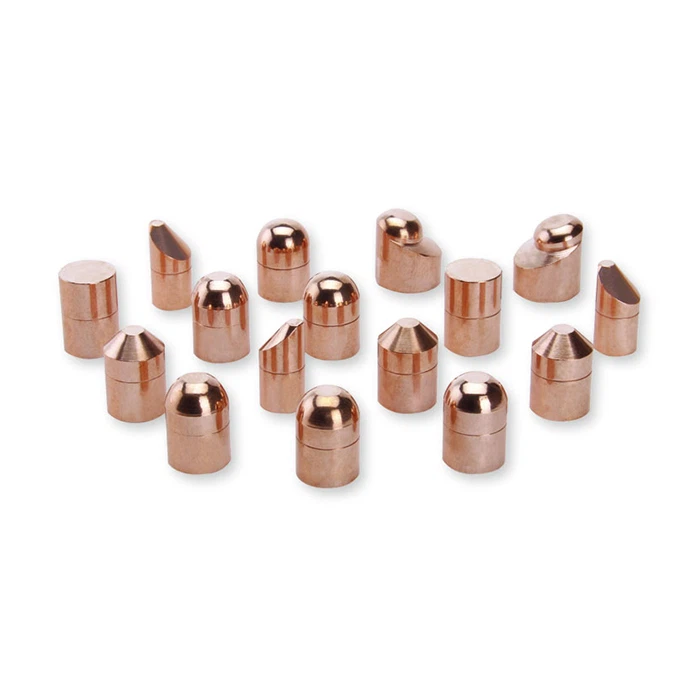
Flat - faced electrodes are probably the most common type out there. They have a simple, straightforward design, with a flat end surface that makes contact with the workpiece. These electrodes are great for applications where you need a large contact area. For instance, when welding thick metal sheets, a flat - faced electrode distributes the welding current evenly over a wider surface. This helps to prevent excessive heat concentration in one spot, which could lead to issues like burn - through or uneven weld quality.
Let's say you're working on an automotive manufacturing line, welding thick steel panels for the car body. Flat - faced electrodes can handle the high current and pressure required to create strong, consistent welds. The wide contact area ensures that the heat is distributed properly, resulting in a weld that has good strength and appearance. You can find high - quality flat - faced Spot Welding Electrode on our website that are designed to meet these industrial - scale needs.
2. Dome - Shaped Electrodes
Dome - shaped electrodes have a rounded end surface. This shape is ideal for applications where you need to focus the welding energy on a smaller area. When you're welding thin metal sheets, using a flat - faced electrode might spread the heat too much, causing distortion. But a dome - shaped electrode can concentrate the current and heat right at the point of contact, creating a precise and clean weld.
In the electronics industry, for example, miniature components are often made from thin metals. Dome - shaped electrodes are perfect for spot welding these delicate parts together. They can achieve a high - quality weld without damaging the surrounding material. The rounded shape also helps to reduce the risk of electrode sticking to the workpiece, which is a common problem in spot welding.
3. Conical Electrodes
Conical electrodes come to a point at the end. This sharp shape allows for an extremely focused application of welding energy. They're typically used in applications where precision is of the essence, such as in jewelry making or in the production of small, high - tech components.
In jewelry manufacturing, conical electrodes can create tiny, almost invisible welds on precious metals. The focused heat ensures that the surrounding metal doesn't get over - heated, which could change its color or texture. The pointed end of the electrode can also reach into tight spaces that other electrode shapes can't access, making it a versatile choice for intricate designs.
4. Curved Electrodes
Spot Welding Curved Electrode are designed to conform to the shape of the workpiece. This is especially useful when welding curved or irregularly shaped parts. Instead of trying to force a flat or straight electrode onto a curved surface, a curved electrode can make full and even contact with the workpiece.
In the aerospace industry, many components have complex curved shapes. Using a curved electrode ensures that the welds are strong and uniform across the entire curved surface. It also reduces the amount of force needed to hold the electrode in place, which can improve the overall efficiency of the welding process.
5. Electrode Grip Considerations
The shape of the electrode isn't the only thing to consider. The Electrode Grip also plays a vital role in the spot welding process. A good electrode grip should securely hold the electrode in place while allowing for easy adjustment. It should also be able to conduct electricity efficiently to ensure a consistent welding current.
When choosing an electrode grip, you need to consider the shape and size of the electrode you'll be using. For example, a conical electrode might require a different type of grip than a flat - faced one. The right combination of electrode and grip is essential for achieving optimal welding results.
Deciding on the Right Shape for Your Application
So, how do you decide which electrode shape is best for your specific application? Well, it all boils down to a few key factors. First, consider the thickness of the materials you're welding. Thicker metals usually require electrodes with a larger contact area, like flat - faced electrodes, while thinner metals need more focused heat, which dome - shaped or conical electrodes can provide.
Next, think about the shape of the workpiece. If it's curved or has an irregular shape, a curved electrode will be your best bet. And if you need to access tight spaces or create very precise welds, a conical electrode is likely the way to go.
Also, consider the production volume. If you're doing a high - volume production run, you'll want an electrode shape that can provide consistent results over long periods. And don't forget about cost. Some electrode shapes might be more expensive to manufacture or replace, so you'll need to weigh the cost against the benefits.

Why Choose Us as Your Spot Welding Electrode Supplier
As a spot welding electrode supplier, we understand the importance of having the right electrode shape for your application. We offer a wide range of electrode shapes, from flat - faced to conical, all made from high - quality materials. Our electrodes are designed to provide excellent conductivity, durability, and performance.
We also have a team of experts who can help you choose the right electrode shape for your specific needs. Whether you're a small - scale workshop or a large - scale industrial manufacturer, we can provide you with the solutions you need to achieve the best spot welding results.
If you're interested in learning more about our spot welding electrodes or need help choosing the right shape for your application, don't hesitate to reach out. We're here to assist you with all your spot welding electrode needs. Contact us today to start discussing your requirements and find the perfect electrode solution for your business.
References
- "Principles of Resistance Welding", Welding Handbook Committee, American Welding Society
- "Advanced Welding Processes", John C. Lippold, David K. Matlock


