


In the context of the rapid development of industries with high reliability requirements, such as New Energy, Electric Power, and Photovoltaic (PV) Energy Storage, the quality of critical electrical connections directly determines the performance, safety, and service life of the entire system. Traditional welding processes, such as brazing or fusion welding, often face challenges like solder residue, large heat-affected zones (HAZ), and susceptibility to corrosion at the connection point, making them inadequate for the demands of new-generation high-power, high-density electrical equipment.
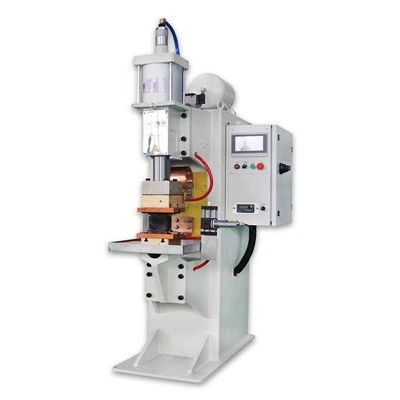


The Diffusion Welding Machine (specifically, the Polymer Diffusion Welding Machine, or PDWM) is an advanced solid-state bonding technology that is rapidly becoming the core equipment for solving these industry pain points. By achieving high-strength, seamless, molecular-level connections below the material's melting point, it offers a revolutionary solution for manufacturing critical components like power busbars, battery modules, and insulation assemblies.
I. Core Technology Analysis of Diffusion Welding: The Secret of Solid-State Bonding
The technology employed by the Diffusion Welding Machine is solid-state bonding based on the Principle of Molecular Diffusion. Unlike traditional welding, which relies on melting and re-solidification, the core of PDWM involves using a polymer material as an interlayer. Under precisely controlled temperature and pressure, this process promotes the mutual penetration and entanglement of molecular chains at the interface of the materials to be joined (typically metals like copper or aluminum), ultimately forming a robust metallurgical bond.
1. Operating Principle: Molecular-Level "Seamless" Connection
The PDWM bonding process occurs below the recrystallization temperature of the materials. This effectively prevents changes in the metal microstructure, grain coarsening, and performance degradation that result from high-temperature melting.
- Core Mechanism: The equipment uses a precision heating system to heat the workpieces and the polymer interlayer to a specific "diffusion activation temperature range" (typically below the metal's melting point but above the polymer's glass transition temperature). Simultaneously, uniform pressure is applied, causing atomic or molecular-scale mutual diffusion and movement at the two contact interfaces in the solid state. This results in the formation of a dense connection layer that is pore-free and defect-free.
2. Equipment Composition and Key Technical Parameters
An advanced PDWM is an integrated system of precision control, and its performance directly determines the welding quality.
| Key System | Function Description | Core Control Index | |
| 1 | Precision Heating System | Achieves fast, uniform, and precise temperature control, ensuring the material reaches the diffusion activation temperature. | Temperature Control Accuracy: Must be maintained within ±2℃. |
| 2 | Pressure Control System | Applies and maintains uniform, constant pressure to ensure tight interfacial contact and accelerate molecular diffusion. | Pressure Fluctuation: Must not exceed 5% of the set value; Typical pressure range: 0.5-5MPa. |
| 3 | Intelligent Operating Interface | Enables multi-segment temperature programming, real-time pressure feedback, and storage/traceability of process parameters. | Automation Level: Supports multi-station operation and self-adaptive optimization of process parameters. |
For copper foil flexible connectors commonly used in New Energy Vehicles, PDWM can complete high-quality bonding within 90-180 seconds under a temperature range of 160℃-200℃ and a pressure of 1.5-3.0MPa, achieving a joint strength of over 90% of the base material's strength.
II. Detailed Workflow and Process Control Essentials
The complete process of diffusion welding involves three critical and interconnected stages, where precise control at each step is essential for ensuring welding quality.
1. Pre-treatment Stage: Foundation for Success
The cleanliness and flatness of the surfaces to be welded are prerequisites for successful diffusion. Any oil, dust, or oxide layer will severely impede molecular contact and diffusion.
- Surface Cleaning: Chemical cleaning or mechanical polishing must be used to thoroughly remove contaminants.
- Roughness Control: Studies show that precisely controlling the surface roughness (Ra value) within the range of 1.6-3.2μm maximizes the effective contact area and achieves the best diffusion effect .
- Surface Activation: For certain materials that are difficult to diffuse, plasma or chemical activation treatment may be required to enhance their surface molecular activity.
2. Thermo-Compression Diffusion Stage: The Core of the Process
This is the key step for achieving molecular bonding. The equipment heats the workpiece to the preset diffusion activation temperature and applies uniform pressure.
- Temperature Profile: Multi-segment programmed heating is used to avoid excessive thermal stress within the material. The temperature must be stable within the diffusion activation range, ensuring that the polymer chain segments gain sufficient mobility to begin mutual penetration across the interface.
- Pressure Uniformity: Pressure must be uniformly distributed across the entire welding interface to ensure consistent contact tightness at every point. Excessive or uneven pressure fluctuation can lead to insufficient local diffusion or material deformation.
3. Cooling and Setting Stage: Stabilizing Structure and Relieving Internal Stress
While maintaining pressure, controlled cooling is performed to fix the diffused molecular chains in their new equilibrium positions, forming a stable connection structure.
- Cooling Rate: The cooling rate significantly affects the internal stress and mechanical properties of the final joint. Rapid cooling can lead to thermal stress concentration, reducing the joint's fatigue life. Therefore, segmented cooling or slow cooling methods are usually recommended to optimize the joint's microstructure and mechanical performance.
III. Comparative Advantages Over Traditional Welding Technologies
Due to its unique solid-state bonding characteristics, the Diffusion Welding Machine offers distinct advantages over traditional techniques like fusion welding, brazing, and ultrasonic welding, particularly in the field of high-reliability electrical connections.
| Comparison Metric | Diffusion Welding (PDWM) | Traditional Fusion/Brazing | Traditional Ultrasonic Welding |
| Bonding Principle | Molecular Diffusion, Solid-State Bonding | Melting and Re-solidification, Liquid-State Bonding | High-Frequency Vibration, Frictional Heat, Solid-State Bonding |
| Contact Resistance | Extremely Low (can be below 0.1mΩ), stable performance | Higher, easily affected by solder and oxide layers | Lower, but susceptible to wear of the welding tip |
| Joint Strength | Close to base material strength (>90%) | High fluctuation, prone to pores and inclusions | Strength depends on amplitude and pressure, prone to fatigue cracks |
| Heat-Affected Zone (HAZ) | Minimal, no thermal deformation | Large, easily leads to microstructural changes and performance degradation | Smaller, but with localized stress concentration |
| Production Efficiency | High, supports multi-station simultaneous operation, efficiency increase of >40% | Lower, requires complex steps like preheating, melting, and cooling | Higher, but limited by workpiece size and thickness |
|
Environmental Impact |
No solder, no flux, no smoke, no harmful gas emissions | Requires solder and flux, posing environmental risks | No pollution, but generates noise |
Actual test data shows that for polyethylene material connections, the tensile strength retention rate of PDWM joints can reach over 92%, significantly higher than the 75%-85% achieved by traditional hot-melt welding . Furthermore, because no solder or flux is consumed, the overall production cost of PDWM can be reduced by 15%-25%, while energy consumption is approximately 30% lower than traditional welding .
IV. Specific Applications and Data in the New Energy and Power Industries
The Flexible Foil Busbar Solidification & Fusion Welding Machine is a key technology for achieving "high efficiency and high reliability" in New Energy power systems, with applications spanning New Energy Vehicles, PV Energy Storage, and power transmission/distribution.
1. New Energy Vehicle Electrical Systems: Solving High-Voltage Connection Issues
PDWM application is crucial in the power battery packs and High-Voltage Distribution Units (PDU) of electric vehicles.
- Battery Flexible Connectors (Busbars): PDWM is widely used for copper/aluminum foil flexible connectors within battery modules. Connectors using diffusion welding technology have a contact resistance stably controlled below 0.1mΩ, which is about 20% lower than traditional laser welding . This extremely low contact resistance significantly reduces Joule heating loss during current transmission, thereby improving the overall efficiency and range of the battery pack.
- Dissimilar Material Joining: PDWM can achieve integrated bonding of copper-aluminum composite plates with polymer insulation layers, effectively solving the problem of connection failure caused by thermal expansion coefficient mismatch between different materials. Leading battery manufacturers report that using this technology has reduced the failure rate of battery packs in rigorous vibration tests by over 60% .
2. PV Energy Storage System Applications: Enhancing System Stability
In PV inverters, Power Conversion Systems (PCS), and Battery Energy Storage Modules (ESS), PDWM is used for critical busbar connections and collector plate assembly.
- Low Thermal Loss Operation: Power industry tests indicate that conductive connectors joined by diffusion welding perform excellently in temperature rise tests, with long-term operating temperatures 8-12℃ lower than traditional glued or bolted joints . This greatly enhances system safety and service life, especially in high-temperature environments, and effectively prevents insulation material aging.
- High Reliability: PDWM ensures the long-term stability and seismic resistance of internal connections within the energy storage system, meeting the 20+ year service life requirement for grid-scale energy storage systems.
3. Power Transmission and Distribution: The Ideal Choice for Busbar Expansion Joints
In switchgear, transformers, and busway systems, PDWM is used to manufacture busbar expansion joints and flexible conductive strips. These components must withstand thermal expansion/contraction and vibration during power system operation. The seamless, high-strength connection provided by diffusion welding ensures the electrical conductivity and mechanical integrity of the expansion joints under long-term dynamic stress.
V. Professional Advice on Equipment Selection and Maintenance
Selecting and maintaining a Diffusion Welding Machine is key to ensuring long-term, efficient production.
1. Equipment Selection Considerations
| Selection Factor | Detailed Explanation and Recommendation |
| Technical Parameter Matching | Based on the type and thickness range of the main welding materials (copper, aluminum, composites), select a model with an appropriate temperature control range (usually needs to cover room temperature to 400℃) and adjustable pressure (0.5-5MPa). |
| Worktable Design | Consider the maximum workpiece size and choose equipment with a sufficient and uniformly heated working area. For large busbar welding, prioritize models with multi-zone independent temperature control to ensure temperature uniformity. |
| Automation and Intelligence | For mass production scenarios, prioritize intelligent models equipped with automatic loading/unloading mechanisms, visual positioning systems, and process parameter storage capabilities. New-generation equipment should feature real-time monitoring and fault pre-warning functions. |
| Energy Efficiency | Focus on the heating efficiency and insulation performance of the equipment. High-efficiency equipment can reduce operating energy consumption by approximately 25% and shorten the welding cycle. |
2. Usage and Maintenance Essentials
- Process Database Establishment: Create a complete process parameter database for different materials and thicknesses, recording the optimal temperature, pressure, and time curves for "one-click recall."
- Regular Calibration: Temperature sensors and pressure gauges are core components; professional calibration is recommended quarterly to ensure control accuracy remains within the required range.
- Mold and Worktable Maintenance: Keep the worktable and pressure head molds clean and flat, avoiding scratches or oxide residue that could affect welding quality.
- Preventive Maintenance: Establish a preventive maintenance plan, including regular checks of heating element resistance, the sealing of hydraulic or pneumatic systems, and the tightness of electrical connections.
VI. Industry Trends and Future Outlook
Diffusion welding technology is in a phase of rapid development, with future trends focusing on intelligence, precision, and new material adaptability.
1. Intelligence and Industry 4.0 Integration
New-generation PDWM equipment is integrating the Internet of Things (IoT) technology and Artificial Intelligence (AI) algorithms.
- Real-Time Quality Monitoring: Integration of sensors like acoustic emission and infrared thermal imaging enables real-time quality monitoring and data acquisition during the welding process.
- Self-Adaptive Process Optimization: AI algorithms can automatically fine-tune welding parameters based on material batch variations and ambient temperature changes, achieving self-adaptive optimization of process parameters and minimizing the scrap rate. Market analysis indicates that by 2025, over 40% of new equipment will possess these intelligent features .
2. New Materials and Application Field Expansion
- Composite Material Welding: Dedicated diffusion welding processes are being developed for new-generation composite materials like Carbon Fiber Reinforced Polymers (CFRP) and nano-enhanced polymers, meeting the demand for lightweight and high-performance connections in high-end fields such as aerospace and rail transit.
- Market Growth: With the explosive growth of the New Energy Vehicle and energy storage markets, the demand for PDWM will continue to surge. Grand View Research forecasts that the global Diffusion Welding Machine market size will reach $3.87 billion by 2027, with a Compound Annual Growth Rate (CAGR) of approximately 8.2% .
Conclusion
The Diffusion Welding Machine, with its unique solid-state bonding advantages, has become an indispensable key manufacturing tool in the New Energy and power industries. It not only resolves the limitations of traditional connection technologies but also creates significant competitive advantages for enterprises by enhancing product reliability, reducing operating costs, and improving environmental performance.
For companies committed to technological innovation and quality upgrading, deeply understanding and applying PDWM technology will be a crucial strategic choice for seizing industry opportunities and boosting core competitiveness.


