

The operating efficiency of a spot welding system is one of the most critical factors affecting manufacturing productivity. In industries such as automotive manufacturing, new energy battery production, home appliances, and metal fabrication, efficient and stable spot welding operations directly determine product quality and production throughput. Many manufacturers prioritize welding current or machine power during equipment upgrades, yet overlook the systematic factors that truly define long-term efficiency. This oversight is often the reason why production efficiency plateaus despite equipment investment.
In real-world production environments, spot welding efficiency depends not only on machine capability but also on electrode condition, parameter optimization, and preventive maintenance practices. Systematically optimizing these key factors can significantly increase output per shift, reduce rework rates, extend electrode life, and lower total operating costs over time.
This technical guide focuses on three fundamental factors that most strongly influence spot welding efficiency. Drawing from widely adopted industry practices, it provides actionable recommendations that can help manufacturers improve productivity while supporting informed decision-making when selecting a spot welding machine.
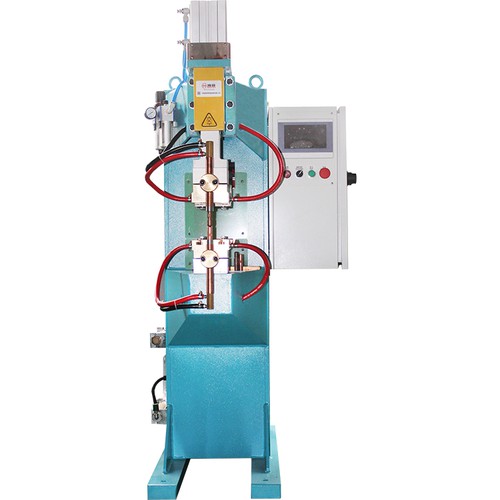
Electrode Condition Management: The Foundation of High Spot Welding Efficiency
Among all efficiency-related variables, electrode condition is often underestimated, yet it has one of the most immediate and measurable effects on welding quality and process stability. Electrodes are responsible not only for electrical conduction but also for heat distribution and nugget formation consistency.
How Electrode Wear Impacts Welding Efficiency
During continuous production, electrode tips gradually wear due to repeated exposure to high temperature, pressure, and metal transfer. This wear alters contact resistance and current density distribution, directly affecting weld consistency.
Industry testing shows that when the electrode tip diameter increases by approximately 20%, current density may decrease by 15%–25%, resulting in insufficient nugget formation or reduced weld strength.
Typical consequences include:
- Inconsistent weld strength
- Increased spatter formation
- Higher energy consumption
- Reduced electrode service life
- Increased rework rates
In high-volume manufacturing environments, even a 2%–3% variation in weld quality can accumulate into significant productivity losses and quality risks over time.
Establishing a Standardized Electrode Maintenance Program
To maintain consistent welding performance, it is strongly recommended to implement a structured electrode management program rather than relying on operator judgment alone.
Recommended electrode maintenance practices:
| Maintenance Task | Recommended Interval | Purpose |
|---|---|---|
| Electrode dressing | Every 500–2000 welds | Maintain stable tip geometry |
| Electrode replacement | Every 20,000–50,000 welds | Prevent performance degradation |
| Cooling inspection | Every shift | Prevent overheating damage |
| Pressure verification | Weekly | Ensure stable electrode contact |
Modern spot welding machines often include:
- Electrode wear monitoring systems
- Automatic electrode dressing units
- Electrode life tracking modules
These features can extend electrode life by 30%–50%, while improving process consistency and reducing manual intervention.
What to Evaluate in Electrode Systems When Purchasing a Spot Welding Machine
During equipment selection, manufacturers should carefully evaluate the design and capability of the electrode system.
Key factors include:
- Availability of automatic electrode dressing
- Closed-loop electrode force control capability
- Cooling channel design efficiency
- Compatibility with various electrode materials
For applications involving copper, galvanized steel, or stainless steel, a stable and well-designed electrode system becomes particularly important due to the sensitivity of these materials to electrode conditions.
Welding Parameter Optimization: The Core of Efficiency and Quality Control
The efficiency of a spot welding machine is heavily dependent on proper parameter configuration. The relationship among welding current, weld time, and electrode force determines nugget formation quality and production cycle time.
Improper parameter settings can prevent even advanced machines from delivering optimal performance.
Key Welding Parameters That Affect Efficiency
Typical spot welding parameters include:
- Welding current
- Weld time
- Electrode force
- Hold time
These parameters must be calibrated according to material properties and thickness.
Typical parameter reference ranges:
| Material Thickness | Current Range | Weld Time | Electrode Force |
|---|---|---|---|
| 0.8 mm mild steel | 7–9 kA | 8–12 cycles | 2.0–2.5 kN |
| 1.2 mm mild steel | 9–12 kA | 10–14 cycles | 2.5–3.5 kN |
| 1.5 mm galvanized steel | 10–14 kA | 12–16 cycles | 3.0–4.0 kN |
Proper parameter optimization can:
- Increase first-pass weld success rates to over 98%
- Reduce rework rates by 20%–40%
- Shorten production cycle time by 5%–15%
Using Adaptive Welding Technology to Improve Efficiency
Modern spot welding controllers increasingly incorporate adaptive welding technology, which has become a major contributor to efficiency improvement.
This technology continuously monitors:
- Contact resistance changes
- Current feedback signals
- Nugget formation behavior
Based on real-time feedback, the system automatically adjusts energy output to maintain stable weld quality, even when material surfaces vary due to coating thickness or contamination.
Adaptive welding is particularly valuable in:
- Multi-material welding applications
- High-speed automated production lines
- Battery tab and automotive structural welding
Building a Standardized Welding Parameter Database
For commonly used materials and joint types, it is highly recommended to develop an internal parameter database.
Typical database entries include:
- Material type
- Material thickness
- Recommended welding current
- Weld time
- Electrode type
- Verified weld strength results
Such databases significantly reduce setup time during product changeovers.
In mature manufacturing environments, standardized parameter libraries can reduce setup time by 30%–60%.
Preventive Maintenance Systems: Ensuring Long-Term Equipment Reliability
Many production lines achieve strong performance during initial operation but gradually lose efficiency due to inadequate maintenance strategies.
Spot welding machines operate under high thermal and mechanical stress, making preventive maintenance essential for sustained productivity.
Critical System Maintenance Areas
The following subsystems have the most direct impact on operational efficiency.
1.Pneumatic System
The pneumatic system controls electrode force, making pressure stability essential for weld consistency.
Recommended inspection points:
- Air pressure stability
- Cylinder response speed
- Seal integrity
Pressure fluctuations greater than ±5% can significantly increase weld variability.
2.Welding Transformer and Power Supply System
The welding transformer is responsible for energy delivery efficiency.
Recommended maintenance tasks include:
- Insulation integrity checks
- Coil temperature monitoring
- Terminal tightening verification
High-efficiency transformers typically achieve:
- 85%–92% energy conversion efficiency
- More stable current output profiles
3.Cooling System
Cooling system performance is essential to prevent thermal overload.
If cooling water temperature exceeds 30°C–35°C, potential risks include:
- Electrode overheating
- Transformer overload
- Unplanned machine shutdown
Recommended practices:
- Maintain stable water flow
- Clean cooling channels regularly
- Monitor water quality
Implementing Preventive Maintenance Strategies
Modern spot welding machines often integrate built-in diagnostic systems capable of identifying potential failures before they disrupt production.
Key preventive maintenance principles include:
- Scheduling maintenance based on usage data
- Performing maintenance during planned downtime
- Recording component life-cycle data
Effective preventive maintenance can:
- Reduce equipment failure rates by 30%–50%
- Increase machine availability to above 95%
Integrated Process Management: Achieving Continuous Efficiency Improvement
In modern manufacturing environments, maximizing spot welding efficiency requires coordinated optimization rather than isolated adjustments.
Electrode condition, welding parameters, and maintenance practices interact with one another, forming a system-level relationship that determines overall productivity.
Implementing Data-Driven Performance Monitoring
Manufacturers are encouraged to establish Key Performance Indicators (KPIs) such as:
- Welds per hour
- First-pass weld success rate
- Electrode replacement intervals
- Machine downtime duration
- Energy consumption per weld
Analyzing these metrics allows early identification of performance decline and enables proactive corrective action.
The Role of Automation in Efficiency Enhancement
Automation has become standard in high-volume production environments.
Key advantages include:
- Stable production cycles
- Reduced dependence on manual labor
- Improved weld consistency
- Increased overall throughput
In optimized automated production systems, spot welding efficiency typically improves by 20%–40%.
How to Choose a High-Efficiency Spot Welding Machine
For manufacturers planning to invest in new equipment, proper machine selection plays a decisive role in long-term efficiency.
The wrong machine choice can lead to ongoing production limitations, regardless of operational optimization efforts.
Key Specifications to Evaluate
Important selection criteria include:
- Output current stability
- Controller accuracy
- Electrode force control method
- Cooling system capacity
- Automation integration capability
Stable current output is especially critical when welding copper, galvanized steel, or multi-layer materials.
Recommended Machine Types for Different Applications
Different industries require different machine configurations.
| Industry | Recommended Machine Type |
|---|---|
| Automotive manufacturing | Medium Frequency DC (MFDC) spot welding machine |
| Battery manufacturing | Capacitor Discharge (CD) spot welding machine |
| Home appliance production | AC resistance spot welding machine |
| Precision electronics | Micro spot welding machine |
Selecting the appropriate machine type significantly reduces setup time and improves long-term operational stability.
Conclusion
Maximizing the efficiency of a spot welding machine requires a structured operational framework that integrates electrode management, welding parameter optimization, and preventive maintenance practices. Addressing these interconnected factors systematically enables manufacturers to significantly improve productivity, maintain consistent weld quality, and reduce overall operating costs.
For companies planning equipment upgrades or building new production lines, selecting a spot welding machine with stable output, intelligent control features, and reliable maintenance support is equally important. By establishing standardized workflows and adopting data-driven optimization strategies, efficiency improvements can evolve from short-term adjustments into long-term operational advantages that strengthen manufacturing competitiveness.


