

Energy storage welding machines are cornerstones of the electronics, automotive, and hardware industries, prized for their efficiency and minimal impact on the power grid. However, a persistent challenge plagues many operations: insufficient weld strength. This issue not only compromises product quality but can also introduce serious safety risks.
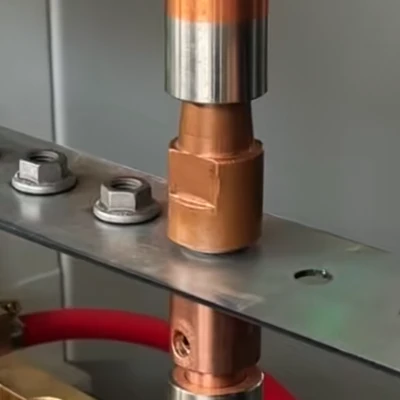
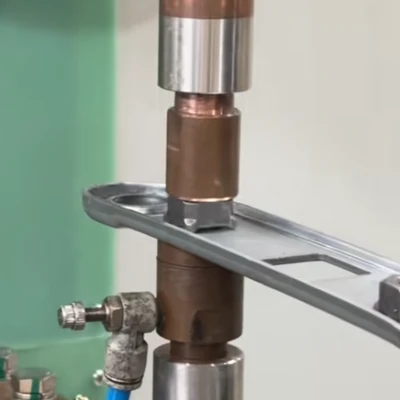

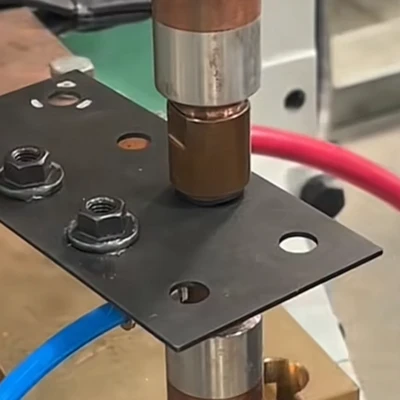
The good news is that this problem is entirely solvable. Weak welds are rarely caused by a single factor but rather a combination of issues. This guide will systematically break down the four primary causes and provide a comprehensive set of solutions-complete with actionable data and practical advice-to help you eliminate weak and failed joints and unlock your welder's full potential.
Incorrect Welding Parameters: The "Golden Triangle" is Out of Balance
The essence of energy storage welding lies in the instantaneous release of immense energy to form a high-quality weld nugget. The success of this process hinges on the precise balance of three critical factors: welding current, time, and electrode pressure.
Mismatched Current and Time
- Common Symptoms: You see blackened or brittle spots, or joints that appear connected but pull apart with minimal force (a "cold weld").
- Root Cause: Think of it like baking bread-not enough heat or time leaves the center doughy. If the current is set too low or the discharge time is too short (often under 8 ms), the total energy delivered is insufficient. The metal never reaches its ideal molten state, preventing a dense, fully-formed nugget. Conversely, too much current or time can cause spatter and even burn through the workpiece.
- Professional Solution:
- Data-Driven Adjustments: Fine-tune your settings based on your welder's capacitor rating (e.g., 2000J, 4000J) and the material you're welding (e.g., nickel-plated steel, aluminum). For instance, when welding 0.15mm nickel-plated steel strips, the discharge time is typically optimized within the 10-20 millisecond range.
- Optimization Process: Start with a conservative setting and create test samples. Perform a pull test to measure the joint strength. Gradually increase the current or extend the time, observing the changes in nugget diameter and pull force until you identify the "sweet spot" that yields maximum strength.
Inadequate Electrode Pressure
- Common Symptoms: The welded joint is loose and easily separates under slight vibration or stress.
- Root Cause: Sufficient pressure is crucial for ensuring intimate contact between the workpieces. This lowers the contact resistance, forcing the current to flow through a concentrated point and generate focused heat. Inadequate pressure creates a "roadblock" for the current, causing heat to dissipate instead of melting the metal effectively.
- Professional Solution:
- Data-Driven Pressure: The required force varies significantly by application. For example, delicate electronics may only need 300-800N, while welding busbars for power batteries could require 1000-2500N of force.
- Maintenance Protocol: Regularly calibrate the machine's pneumatic or hydraulic system with a pressure gauge to ensure the actual output matches the set value. Verify that the air supply pressure is stable, typically between 0.5-0.8 MPa (70-115 PSI).
Equipment Condition: Is Your Workhorse Fatigued?
A well-maintained machine is the foundation of consistent production. Worn-out components or deteriorating systems will directly compromise its welding capability.
Electrode Wear and Contamination
- Common Symptoms: Weld nuggets are irregularly shaped, inconsistent in size, and their strength has noticeably decreased.
- Root Cause: The electrode tip does more than just conduct electricity; it applies force and transfers heat. When the tip becomes oxidized, coated with debris, or physically deformed, it disrupts the uniform distribution of current. This causes the heat to be applied unevenly, making a perfect nugget impossible.
- Professional Solution:
- Routine Dressing: Implement a strict electrode maintenance schedule. After every 500-1000 welds, dress the tips using a specialized tool or fine-grit sandpaper to restore their original shape and clean surface.
- Scheduled Replacement: Once an electrode tip has worn down by 20-30% of its original diameter, replace it. The cost of a new tip is insignificant compared to the cost of a failed production batch.
Cooling System Failure
- Common Symptoms: During continuous operation, the electrodes overheat, the welding energy fluctuates, and weld quality degrades over time.
- Root Cause: Although the discharge is brief, the immense current generates a staggering amount of heat. An efficient cooling system is vital for maintaining thermal stability. Insufficient water flow, clogged lines, or poor water quality leading to scale buildup will cripple the system's heat-dissipating capacity.
- Professional Solution:
- Parameter Monitoring: Ensure the cooling water pressure is maintained at or above 0.15 MPa (22 PSI) and the flow rate is no less than 4-6 L/min.
- Preventive Maintenance: Inspect and clean the cooling system's filter quarterly. If you use an open-loop cooling tower, regularly check water quality to prevent algae and mineral deposits. For best results, use a dedicated industrial chiller for stable and clean cooling.
Workpiece & Environment: The Invisible Saboteurs
Welding success isn't just about the machine; the condition of your materials and the surrounding environment are just as critical.
The "Insulating Layer" on Workpiece Surfaces
- Common Symptoms: Weld strength is highly erratic, and you notice an increase in spatter.
- Root Cause: Contaminants like oil, rust, oxidation, and dust on the workpiece surface act as a high-resistance "insulating film." The current must first burn through this barrier, leading to significant energy loss and an unstable welding process.
- Professional Solution: Establish a standardized pre-weld cleaning procedure. Use alcohol or a dedicated degreaser to remove oils. For oxidation and rust, use mechanical abrasion (sanding) or acid etching to expose the clean, bare metal in the welding area.
Interference from Humidity and Power Supply
- Common Symptoms: You observe noticeable differences in weld quality depending on the weather or even the time of day.
- Root Cause:
- Humidity: High ambient humidity (e.g., over 80% RH) can affect the responsiveness of pneumatic systems and introduce moisture to electrical components.
- Power Fluctuations: While energy storage welders are designed to minimize grid impact, significant voltage swings from the utility (e.g., beyond ±10%) can affect the capacitor's charge voltage and speed, causing inconsistencies in the stored energy for each weld.
- Professional Solution:
- Environmental Control: In sensitive production areas, install an industrial dehumidifier to maintain the ambient humidity within the ideal range of 40%-60% RH.
- Power Conditioning: Connect the welder to a dedicated AC voltage regulator (AVR) to ensure a stable input voltage, guaranteeing consistent energy storage from the source.
Control System: Are the Brain's Commands Clear?
Modern energy storage welders rely on sophisticated electronic controls. A simple programming error or an aging component can be the root of the problem.
The Wrong Weld Schedule
- Common Symptoms: The welding parameters are clearly incorrect for the job, leading to an entire batch of scrapped parts.
- Root Cause: An operator may have accidentally selected a weld schedule intended for a different product, or a controller malfunction may have caused an incorrect program to be loaded.
- Professional Solution:
- Access Control: Password-protect proven, finalized weld schedules. Limit modification rights to process engineers, allowing operators only to select from a pre-approved list.
- Program Verification: At the start of every shift or product changeover, perform a first-piece inspection and verify that the program number displayed on the machine matches the one specified in the process documentation.
Capacitor Energy Decay
- Common Symptoms: Even with the correct parameters, the weld seems underpowered, and the metal isn't melting sufficiently.
- Root Cause: The capacitor is the heart of an energy storage welder. Over years of use, capacitors naturally age, and their ability to hold a charge diminishes. A fault in the charging circuit can also prevent the capacitor from reaching its target voltage.
- Professional Solution:
- Annual Testing: Arrange for a qualified service provider to perform a full capacitance test on your machine annually. If the capacity has degraded by more than 20% of its rated value, it's time for a replacement.
- Spare Parts Strategy: Keep critical charging circuit components (like charging modules and control boards) in stock as spares. This will allow for quick swaps and minimize downtime in case of a failure.
Conclusion
Troubleshooting insufficient weld strength in an energy storage welding machine is a systematic process that demands attention to detail. It requires a holistic approach that covers parameter optimization, equipment maintenance, workpiece preparation, and process control. By establishing scientific process standards, adhering to a strict maintenance schedule, and ensuring a stable and clean production environment, you will not only achieve consistently strong, reliable welds but also significantly extend the life of your equipment.
If you've tried these solutions and are still facing challenges, we strongly recommend contacting the equipment manufacturer or a professional welding consultant for an in-depth machine calibration and technical diagnosis.


