


The HAIFEI automatic copper braid welding and processing line is developed for manufacturers producing copper braid shunts, flexible copper connectors and current-carrying components in repeat batches.
Starting with copper braid supplied in rolls, the line can be configured to complete material feeding, length positioning, clamping, resistance heating, end compacting, cutting and finished-part unloading. Additional punching, terminal welding, inspection or assembly stations can be integrated when required by the finished product.
Unlike a standard machine selected only by conductor cross-section, each copper braid welding line is configured according to the braid structure, compacted-end dimensions, finished length, production volume and downstream process. Drawings and material samples are therefore reviewed before the machine configuration and quotation are confirmed.

Suitable materials
Bare copper braid and tinned copper braid
Typical products
Copper braid shunts, flexible connectors and switchgear current paths
Available configurations
Semi-automatic machine, automatic processing machine or integrated production line
Selection basis
Product drawing, braid sample, required dimensions and target output
Send Your Copper Braid Drawing
What Does the Automatic Copper Braid Welding Line Do?
Copper braid is flexible and can easily twist, spread or move during feeding and cutting. If the loose braid is cut directly, individual copper strands may separate at the edge, making subsequent positioning, punching and terminal assembly more difficult.
The automatic copper braid welding and processing line controls the material before cutting. Depending on the selected configuration, the production process can include:
- Feeding copper braid from a material roll;
- Guiding and aligning the braid;
- Positioning the material to the programmed length;
- Clamping the braid in a dedicated welding tool;
- Applying controlled resistance heat and pressure;
- Compacting the required section of the braid;
- Cutting the product to the programmed length;
- Unloading or transferring the finished component;
- Connecting the part to a subsequent punching, inspection or assembly station.
The required stations are selected according to the product. A customer manufacturing cut-to-length copper braid shunts may only need feeding, compacting, cutting and unloading. A switchgear component manufacturer may require additional punching, contact welding, terminal joining or dimensional inspection.
This modular structure allows HAIFEI to develop the automation around the actual production process instead of adding unnecessary functions to the machine.
A typical braided copper welding automation system includes:
Loading of braided connectors into the fixture
01
Alignment of terminal ends within positioning tolerance
02
Application of defined compression force
03
Delivery of welding current according to preset parameters
04
Release of the finished
connector
05
Why Copper Braid Processing Requires Dedicated Automation
The Material Can Twist During Feeding
Copper braid does not behave like a rigid metal strip. It may rotate, spread or move sideways while being pulled from the roll. If the guiding structure does not match the braid width and thickness, the material may enter the welding fixture at an angle.
The line uses adjustable guiding and clamping structures to keep the braid correctly positioned before the compacting cycle begins. The final guide design is confirmed from the customer's material sample.
01
Loose Strands Can Separate During Cutting
Cutting an uncompacted copper braid can leave loose or uneven strands at the cut edge. This increases the time required for manual correction and may make it difficult to position the part in a punching or welding fixture.
By compacting the required section before cutting, the machine creates a more stable cutting area. The result depends on the braid structure, compacting dimensions, heating parameters and blade condition.
02
Manual Length Control Creates Variation
When operators measure and cut each part separately, the finished length can vary with the positioning method and operator experience.
A servo-controlled feeding system can position the braid according to the programmed length. The achievable tolerance must be evaluated together with the material flexibility, roll tension, finished length and feeding arrangement.
03
End Dimensions Depend on More Than Pressure
Applying mechanical force alone does not always produce a stable compacted end. If the heat input is too low, the strands may remain loose. If the heat input is too high, the copper surface may discolor, the tin coating may be affected, or the braid may adhere to the electrode.
The welding current, heating time, pressure, electrode profile and cooling condition must be adjusted together. These parameters are established during sample testing and stored in the machine program for repeat production.
04
Separate Operations Increase Handling Time
When feeding, compacting, cutting and inspection are performed on separate machines, operators must repeatedly move and reposition the material. This can reduce output and introduce variation between operations.
Combining the required processes into one production sequence reduces intermediate handling. The level of automation should still be selected according to the production volume and number of product specifications; a fully automatic line is not always the most economical choice for frequent small batches.
05
Available Automation Configurations
Configuration |
Main production functions |
Recommended for |
| Semi-automatic copper braid welding machine | Manual material loading with automatic clamping, heating and compacting | Multiple products, sample production and smaller batches |
| Automatic compacting and cutting machine | Roll feeding, length positioning, heated compacting, cutting and unloading | Repeat production of standard copper braid shunts |
| Fully automatic copper braid processing line | Automatic processing with part transfer, monitoring and optional inspection | Higher-volume production with stable product specifications |
| Integrated connector assembly line | Copper braid preparation plus punching, terminal joining, busbar welding or assembly | Switchgear and electrical component manufacturers |
The appropriate configuration is selected from the required output, product range, available operators, workshop layout and downstream manufacturing process.
A customer producing several different braid sizes in low volumes may obtain better production flexibility from a semi-automatic machine with replaceable tooling. A customer producing one standard shunt in continuous batches may benefit from an automatic copper braid welding and cutting line.
Tell Us Your Current Production Process
Critical Industrial Applications
Electric Vehicle Power Systems
- Battery pack interconnects
- Motor terminal connections
- High-voltage busbar assemblies
Energy Infrastructure
- Transformer flexible links
- Switchgear connections
- Renewable energy system wiring
High-Reliability Electronics
- Power supply grounding straps
- RF shielding terminations
- Aerospace electrical bonding
System Advantages

Compared with conventional manual welding processes, the automated braided connector welding system improves both production consistency and operator workload.
Typical improvements observed in production include:
- Reduction in manual positioning errors
- More stable terminal compression thickness
- Lower variation in electrical resistance
- Reduced operator fatigue during long shifts
In facilities operating two or three shifts per day, automation helps maintain stable output even under continuous production conditions.
Certifications
40+ Patents and 2 National Software Copyrights, 10,000㎡ Factory with 100+ skilled employees.


Our Partners
We have served over 5,000+ customers worldwide, and our long-term partners include Tesla, BYD, and Siemens.Over 50+ Fortune 500 companies.


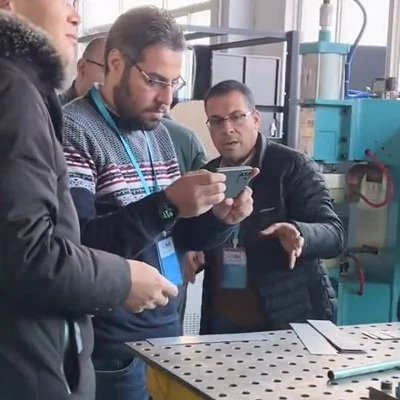
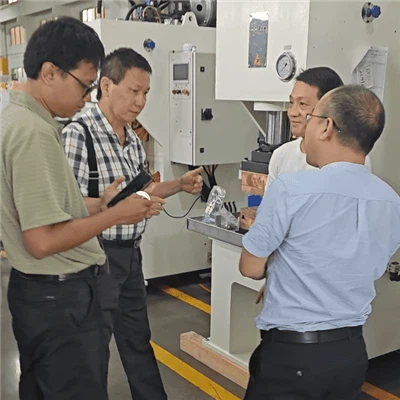
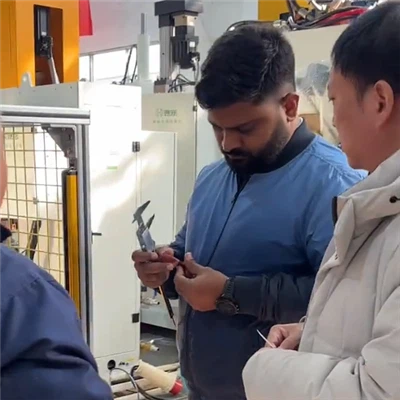
HAIFEI Customer Site





Why Work with HAIFEI?
HAIFEI develops resistance welding equipment and customized automation for copper conductive components. Our project scope includes copper braid shunts, flexible connectors, laminated copper foil busbars, solid copper busbars, electrical contacts and related assemblies.
For a copper braid project, the engineering review does not stop at the nominal conductor size. The material behavior, compacted geometry, cutting requirement, subsequent punching or joining process and production target are evaluated together.
Project support can include:
- Product and process review;
- Copper braid sample testing;
- Welding and compacting parameter development;
- Customized electrode and tooling design;
- Standalone machine or automatic-line selection;
- Integration with punching, inspection and assembly stations;
- Pre-shipment testing with customer material;
- Operating and maintenance guidance;
- Spare electrode, blade and wear-part recommendations;
- Remote or on-site technical support.
The final proposal is based on the product that the customer needs to manufacture, not on a general machine description.
Request a Customized Copper Braid Welding Line Proposal
Send HAIFEI your copper braid drawing, conductor cross-section, material width and thickness, compacted-end dimensions, finished length and required production output.
If your product must also be punched, connected to a terminal or welded to a solid copper busbar, include the complete assembly drawing. Our engineers will review the full manufacturing process and recommend a suitable standalone machine or integrated automatic line.
Not sure which configuration is suitable? Send us a photograph of your existing copper braid product and the required end dimensions. We can first identify the necessary processing stations and then confirm whether material samples are required.
Get a Customized Line Proposal
FAQ

01.What copper braid sizes can the automatic line process?
02.Can the same machine process bare and tinned copper braid?
03.Can one line produce different finished lengths?
04.Is different tooling required when the braid size changes?
05.Can the line weld copper braid directly to a terminal?
06.Can the line connect to punching or inspection equipment?
Wuxi Haifei Intelligent Equipment Co., Limited is one of the leading manufacturers and suppliers of automatic copper braid welding and processing line in China. With abundant experience, we warmly welcome you to buy advanced automatic copper braid welding and processing line for sale here from our factory. Quality products and reasonable price are available.
Hot Tags: Automatic Copper Braid Welding and Processing Line, China Automatic Copper Braid Welding and Processing Line manufacturers, suppliers, factory, robotic welder, automatic orbital welding machine, automatic welding company, robotic welding intelligence and automation, automated orbital welding, robotic welding systems cost


