


Haifei provides custom spot welding automation systems for manufacturers that need stable weld quality, faster cycle time, and repeatable mass production. Each system is designed according to the customer's workpiece structure, material combination, weld point layout, production capacity, and inspection requirements.
The system can integrate MFDC spot welding power supply, servo electrode pressure control, robotic handling, automatic loading and unloading, custom fixtures, cooling units, weld monitoring, and data traceability. It is widely used for automotive parts, EV battery components, busbar assemblies, electrical hardware, sheet metal parts, appliance components, and customized metal joining applications.


Custom Spot Welding Automation for Your Production Line
Manual spot welding often faces problems such as unstable weld position, inconsistent pressure, uneven weld marks, low production efficiency, and high dependence on operator skill. For manufacturers with batch production requirements, a customized automatic spot welding system can help improve welding consistency while reducing labor intensity.
HAIFEI designs the complete automation structure around the actual product, not only the welding machine itself. Before designing the system, we evaluate the workpiece shape, material thickness, welding access, weld point quantity, fixture positioning method, electrode structure, production rhythm, and quality inspection standard.
According to different production needs, the system can be designed as a semi-automatic spot welding workstation, rotary table spot welding machine, robotic spot welding cell, multi-head spot welding machine, or conveyor-based automatic spot welding line.
Contact us to discuss your custom spot welding automation project!
What This Spot Welding Automation System Can Include?
1. MFDC or AC Resistance Welding Power Source
The welding power source can be selected according to the material, thickness, weld strength requirement, and production rhythm. MFDC power supply is commonly used when customers need stable current output, fast response, low spatter, and better control of heat input. AC spot welding power can also be configured for suitable applications.
The system can be used for carbon steel, stainless steel, galvanized steel, nickel, copper alloy, aluminum alloy, and mixed metal welding after sample testing.
2. Servo Electrode Pressure Control
Stable electrode pressure is one of the key factors affecting spot welding quality. HAIFEI can configure servo pressure control to improve pressure consistency during the welding process. This helps reduce problems such as weak welding, excessive indentation, spatter, unstable nugget formation, and inconsistent weld marks.
For products with strict appearance or strength requirements, servo control can also help maintain better process repeatability during long-term production.
3. Custom Welding Fixture
A reliable fixture is not only used to hold the product. It also affects weld point accuracy, part gap control, electrode contact angle, positioning repeatability, and operator loading efficiency.
HAIFEI designs customized fixtures according to the customer's product drawing or sample. The fixture can be developed with positioning pins, clamps, pneumatic locking, quick-change structure, cooling design, anti-mistake loading, and safety protection.
4. Robotic or Multi-Axis Motion System
For products with multiple weld points or complex welding angles, the system can integrate industrial robots, XY motion platforms, servo slides, rotary tables, or multi-axis positioning units.
The motion structure is selected based on weld point layout, product size, cycle time, and available workshop space. For some projects, robotic spot welding is suitable. For others, a dedicated multi-station automatic welding machine may be more stable and cost-effective.
5. Automatic Loading and Unloading
Depending on the product and budget, the system can be designed with manual loading plus automatic welding, automatic feeding, vibration bowl feeding, conveyor transfer, robotic loading, or customized material handling units.
For high-volume production, automatic loading and unloading can reduce manual operation time and improve line efficiency. For medium-volume production, semi-automatic loading may provide better cost control.
Key selling points of the product
Improved Welding Consistency
Automated welding eliminates operator variability, ensuring uniform electrode pressure and welding current across every weld point. This significantly reduces weld defects such as weak joints, burn-through, or inconsistent nugget size.
01
Increased Production Efficiency
Automation enables faster cycle times and continuous operation, allowing manufacturers to achieve higher throughput compared with manual welding.
02
Reduced Labor Costs
Automation reduces dependence on manual operators, lowering long-term labor costs while improving production reliability.
03
Enhanced Product Quality
Consistent welding parameters improve joint strength, reduce scrap rates, and ensure reliable product performance.
04
Flexible Manufacturing Capability
Modern spot welding automation systems support quick tooling changes and adaptable programming, allowing manufacturers to handle different product models with minimal downtime.
05
Typical Workpieces for Automated Spot Welding
Automotive Metal Parts
The system can be used for seat frame components, brackets, nuts, studs, door components, battery tray parts, support structures, and stamped metal assemblies. For automotive parts, fixture repeatability, weld strength, and cycle time are especially important.
01
EV Battery and Energy Storage Components
For new energy applications, automatic spot welding can be used for nickel strips, copper connectors, aluminum tabs, battery module busbars, conductive plates, and related metal connection parts. The system can be configured according to the material combination, weld strength requirement, and production line layout.
02
Electrical and Low-Voltage Components
The equipment can be applied to terminals, contacts, copper parts, switchgear components, conductive assemblies, and electrical hardware. For these products, stable current output, accurate positioning, and controlled weld marks are important for product performance.
03
Sheet Metal and Appliance Parts
Automatic spot welding is suitable for cabinet parts, enclosure panels, appliance brackets, fan covers, metal housings, and stamped sheet metal parts. The system can help improve production consistency and reduce manual welding variation.
04
Hardware and Industrial Components
For metal racks, hinges, frames, brackets, support parts, and other batch-welded metal components, HAIFEI can design different automation layouts according to production volume and product size.
05
Welding Automation for Spot Welding Workflow
A typical automated spot welding process follows a structured workflow to ensure efficiency and repeatability.
Step 1 – Part Loading
Workpieces are loaded automatically using conveyors or robotic handling systems.
Step 2 – Positioning
Components are positioned accurately within the welding fixture.
Step 3 – Clamping
Clamping devices secure the workpieces to prevent movement during welding.
Step 4 – Spot Welding Operation
The welding electrodes apply pressure and deliver controlled current to create the weld nugget.
Step 5 – Quality Verification
Optional monitoring systems inspect weld quality in real time.
Step 6 – Unloading
Finished components are automatically transferred to the next production stage.
Information Needed for Quotation
Information Needed |
Why It Matters |
|---|---|
| Product drawing or sample photo | To evaluate product structure, fixture design, and welding access |
| Material and thickness | To select the welding power source and electrode design |
| Weld point quantity and position | To calculate cycle time and automation layout |
| Required output per hour | To decide semi-automatic, rotary table, robotic, or fully automatic design |
| Weld strength requirement | To confirm welding parameters and testing method |
| Surface appearance requirement | To control indentation, spatter, and weld mark consistency |
| Existing production process | To decide whether the system needs to connect with other equipment |
| Available workshop space | To design machine size, loading direction, and safety layout |
| Preferred automation level | To match the customer's budget and labor-saving target |
Why Choose Our Welding Automation for Spot Welding?

Choosing the right automation partner is critical to production success.
Haifei is a welding equipment manufacturer specializing in resistance welding machines, diffusion welding equipment, and customized welding automation systems. We provide project-based solutions for manufacturers in automotive components, new energy, electrical hardware, sheet metal, home appliances, and precision metal joining industries.
Our team supports customers from early requirement analysis to process testing, machine design, manufacturing, installation, and production adjustment. Whether you need a semi-automatic spot welding workstation or a fully customized robotic spot welding line, HAIFEI can design a solution based on your workpiece and production target.
Certifications
40+ Patents and 2 National Software Copyrights, 10,000㎡ Factory with 100+ skilled employees.


Our Partners
We have served over 5,000+ customers worldwide, and our long-term partners include Tesla, BYD, and Siemens.Over 50+ Fortune 500 companies.


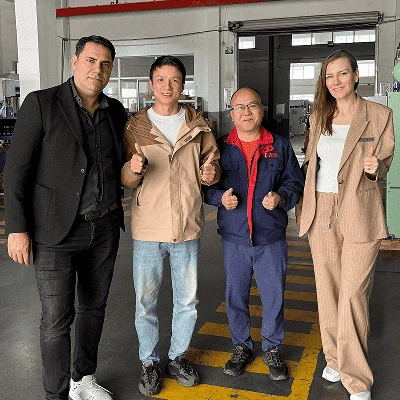
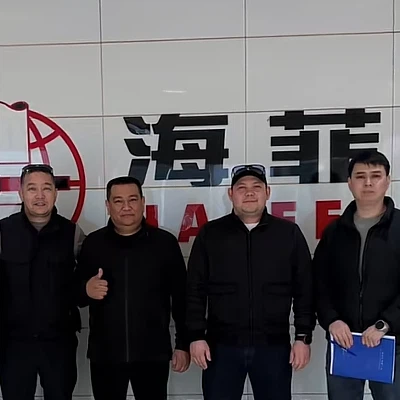
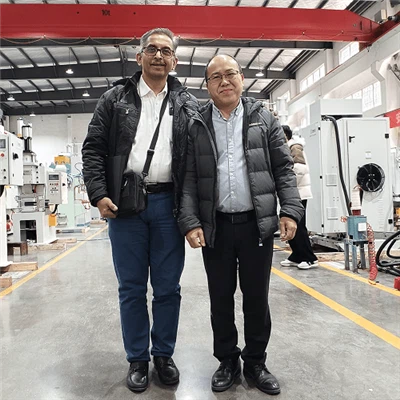
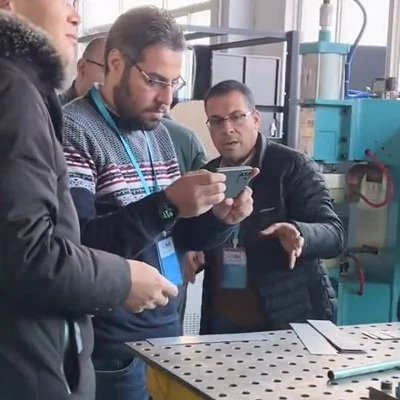
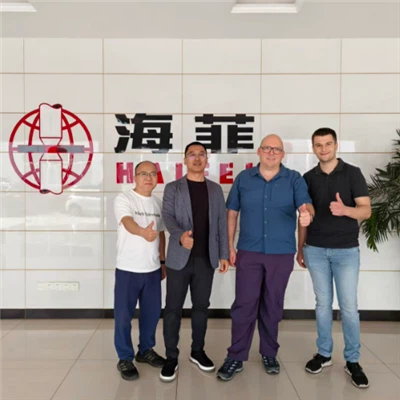
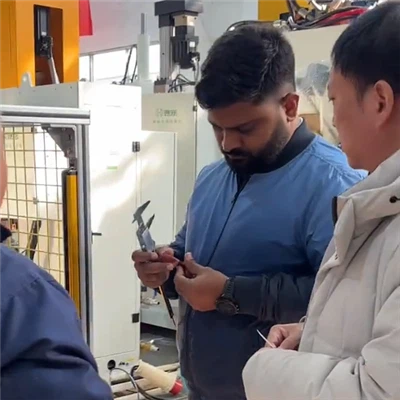
Customer visits Haifei factory




FAQ Custom Spot Welding Automation System
01.What materials can be welded using spot welding automation?
02.How many weld points can be completed per minute?
03.Can the system be customized for different product sizes?
04.What industries benefit most from automated spot welding?
05.How does automation improve weld quality?
Wuxi Haifei Intelligent Equipment Co., Limited is one of the leading manufacturers and suppliers of custom spot welding automation system in China. With abundant experience, we warmly welcome you to buy advanced custom spot welding automation system for sale here from our factory. Quality products and reasonable price are available.
Hot Tags: Custom Spot Welding Automation System, China Custom Spot Welding Automation System manufacturers, suppliers, factory, robotic welder, automatic orbital welding machine, automatic welding machine price, automatic pipeline welding, robotic welding systems cost, automated orbital welding


