


Aluminum parts are widely used in new energy vehicles, battery systems, lightweight automotive structures, electrical components, and precision manufacturing. However, aluminum spot welding is more difficult than ordinary steel welding because aluminum has high thermal conductivity, a surface oxide layer, and a higher risk of electrode sticking.
Haifei Aluminum Spot Welding Workstation is developed for these production challenges. It can be configured with a medium-frequency inverter welding power source, servo welding head, industrial robot, positioning fixture, cooling system, safety protection, and process control system according to the customer's workpiece and production requirements.
The workstation is suitable for manufacturers who need automated aluminum spot welding with stable welding quality, reduced manual operation, and better production consistency.


Why Aluminum Spot Welding Requires a Dedicated Workstation

Oxide Layer
Control
Aluminum surfaces naturally form an oxide layer, which can affect current conduction and weld nugget formation. If the welding process is not properly controlled, the result may be weak welding, unstable weld strength, or inconsistent weld appearance.
Haifei uses stable welding current control, matched electrode pressure, and process parameter optimization to help reduce the influence of the oxide layer during aluminum spot welding.
High Thermal Conductivity of Aluminum
Aluminum conducts heat quickly, so welding heat can be lost faster than expected. This makes it harder to form a stable weld nugget, especially when welding aluminum plates or aluminum alloy structural parts.
The workstation can be equipped with a suitable inverter power source and optimized welding waveform to provide controlled heat input during the welding process.
Electrode Sticking and
Tip Wear
When welding aluminum, electrode sticking is a common production problem. Aluminum adhesion on the electrode tip can affect weld quality, increase maintenance frequency, and reduce production efficiency.
Haifei can configure suitable electrode materials, cooling design, and optional electrode dressing systems to help reduce aluminum adhesion and keep the welding process more stable during continuous production.
Welding Pressure and Part
Deformation
Aluminum parts are often lighter and softer than steel parts. If the welding pressure is too high, the part may be deformed or marked. If the pressure is too low, the weld strength may not meet requirements.
The workstation uses controlled welding pressure and customized fixtures to help maintain part position, reduce deformation, and improve weld consistency.
Key Advantages of Haifei Aluminum Spot Welding Workstation
Stable Welding on Aluminum Surfaces
Aluminum oxide layers and high thermal conductivity often make spot welding unstable. Haifei uses controlled welding waveforms, matched electrode pressure, and stable inverter output to help form consistent weld nuggets on aluminum alloy parts.
This is especially useful for aluminum plates, aluminum brackets, aluminum battery components, and other workpieces that require reliable welding strength in batch production.
Servo Welding Pressure Control
The servo welding system allows more accurate control of welding pressure during the welding process. This helps reduce part deformation, improve pressure consistency, and support stable welding results for aluminum parts with different shapes or thicknesses.
For customers with strict welding quality requirements, servo pressure control can help improve repeatability and reduce the influence of manual adjustment.
Robotic Welding for Repeatable Production
For aluminum parts with multiple welding points or complex welding positions, the workstation can be integrated with an industrial robot. The robot follows programmed welding paths and maintains repeatable positioning during production.
This reduces manual operation differences and is suitable for batch production lines that require stable output and consistent welding sequence.
Custom Fixtures for Real Workpieces
Fixture design has a direct impact on aluminum spot welding quality. If the part is not positioned correctly, welding pressure and welding current may not be applied evenly.
Haifei designs fixtures according to customer drawings, part size, welding position, material thickness, and takt time requirements. Proper fixture design helps control part movement, welding pressure, and final weld consistency.
Reduced Electrode Sticking
The workstation can be configured with suitable electrode materials, cooling design, and optional electrode dressing systems. This helps reduce aluminum adhesion on the electrode tip and keeps welding quality more stable during continuous production.
For high-frequency production, reducing electrode sticking can also help lower downtime and maintenance workload.
Process Monitoring and Quality Control
The workstation can monitor key welding data such as current, pressure, welding time, welding sequence, and abnormal alarms. This helps operators trace welding conditions, identify abnormal results, and maintain stable production quality.
For customers who need quality traceability, Haifei can provide process monitoring functions according to project requirements.
Target Industries & Applications
Robot + welding torch + Newton's ring electrode + electrode grinder + control system, etc.
New Energy Vehicles
Battery pack enclosures, motor housings, aluminum battery trays.
01
Aerospace
Interior components, auxiliary power unit (APU) casings, and other lightweight aluminum structures.
02
Premium Appliances
Welding for high-end refrigerator and air conditioner aluminum panels and frames.
03
Transportation
Interior aluminum panel assembly for rail vehicles.
04
General Fabrication
Automated production of aluminum electrical enclosures, heat sinks, and architectural elements.
05

Solving Critical Customer Challenges
Challenge |
Our Solution |
Your Benefit |
|
| 1 | Unpredictable weld quality and high scrap rates on aluminum parts. | Intelligent adaptive control with full-process validation. | Achieve consistent weld integrity with over 99.9% first-pass yield, reducing waste and rework costs. |
| 2 | Frequent production stoppages for electrode maintenance and high consumable costs. | Advanced electrode technology combined with automated tip maintenance. | Slash downtime and consumable expenses, achieving higher equipment uptime and predictable operating costs. |
| 3 | Manual welding is too slow, skill-dependent, and creates a production bottleneck. | A fully automated robotic welding cell. | Enable 24/7 production, multiply your output, and eliminate reliance on scarce skilled welders. |
Why Customers Trust HAIFEI?
cooperative partner
We have served over 5,000+ customers worldwide, and our long-term partners include Tesla, BYD, and Siemens.
Over 50+ Fortune 500 companies.


Certifications
40+ Patents and 2 National Software Copyrights, 10,000㎡ Factory with 100+ skilled employees.

Invention Patent Certificate

Design patent certificate

Utility Model Patent Certificate

Utility Model Patent Certificate

CE certificate for polymer diffusion welding machine

CE certificate for diffusion welding machine
Haifei Customer Site


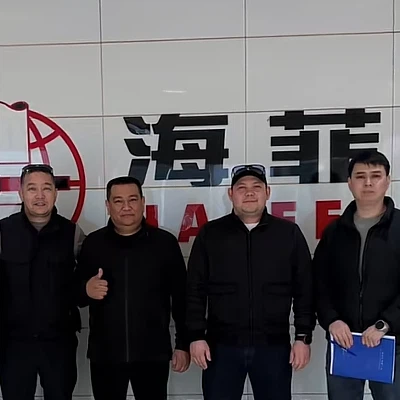
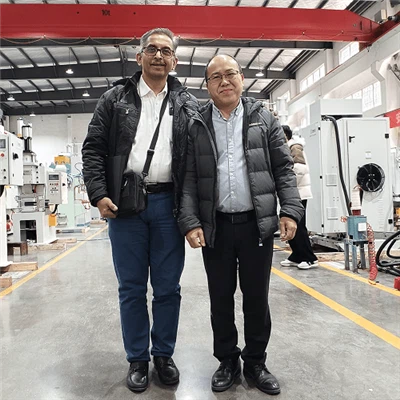
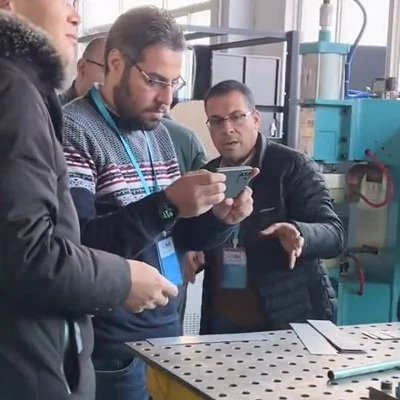


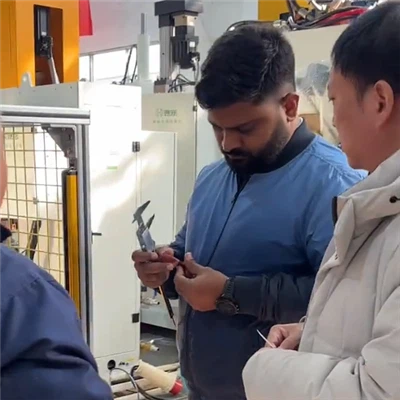

Quality first, service first
1
2
3
4
Project advantages
Complete Solutions
We provide comprehensive solutions tailored to clients' welding needs to enhance product quality.
Flexible Adaptability
Design and production plans can be flexibly adjusted to meet evolving requirements.
Reliable Quality
All equipment is built with branded components to extend service life and ensure durability.
Process-Matched Customization
Drawing on deep expertise in welding processes, we deliver precise customization that aligns with specific technical needs.
Professional After‑Sales Support
Dedicated maintenance and service plans are developed to guarantee long‑term, stable equipment operation.
Cost‑Efficiency Optimization
We help clients achieve optimal cost control and maximize return on investment.
How Haifei Customizes the Workstation for Your Production Line
| Step 1 |
Workpiece Drawing Review |
Before designing the workstation, Haifei reviews the customer's part drawing, material type, material thickness, welding position, welding quantity, and required welding strength. This step helps confirm whether the part is suitable for spot welding and what type of welding power source, welding head, fixture, and automation system should be used.
|
| Step 2 |
Welding Sample Test |
For projects with special materials or strict welding requirements, customers can provide samples for welding evaluation. Haifei can test welding parameters, check welding results, and provide technical feedback before final equipment design. Sample testing helps reduce project risk and makes the final solution more reliable.
|
| Step 3 |
Fixture and Electrode Design |
After confirming the welding process, Haifei designs the fixture and electrode structure based on the actual workpiece. The fixture controls part positioning, while the electrode design affects welding current transfer, pressure stability, and weld appearance. Good fixture and electrode design are critical for aluminum spot welding consistency.
|
| Step 4 |
Automation Integration |
According to production requirements, the workstation can be integrated with robots, loading systems, positioning units, inspection devices, safety protection, and production line controls. Haifei can provide semi-automatic or fully automatic solutions based on the customer's production capacity and factory layout.
|
| Step 5 |
Machine Assembly and Debugging |
After equipment production, Haifei carries out machine assembly, electrical debugging, welding process testing, and production simulation. The goal is to ensure that the workstation can meet the required welding performance before delivery.
|
| Step 6 |
Installation, Training, and After-Sales Support |
Haifei can provide installation guidance, operator training, welding parameter support, maintenance suggestions, and after-sales technical service according to project requirements. This helps customers put the equipment into production more smoothly.
|
FAQ

01.What aluminum parts can this spot welding workstation weld?
02.Can Haifei customize the workstation based on our drawings?
03.Can you provide aluminum welding sample tests before ordering?
04.How does the workstation reduce electrode sticking when welding aluminum?
05.Is this workstation suitable for automatic production lines?
06.What information should we provide before quotation?
Wuxi Haifei Intelligent Equipment Co., Limited is one of the leading manufacturers and suppliers of aluminum spot welding workstation in China. With abundant experience, we warmly welcome you to buy advanced aluminum spot welding workstation for sale here from our factory. Quality products and reasonable price are available.
Hot Tags: aluminum spot welding workstation, China aluminum spot welding workstation manufacturers, suppliers, factory, robotic welder, automatic orbital welding machine, automatic pipeline welding, automated track welders, automatic welding equipment, small automatic welding machine


