


In modern manufacturing, metal joining technology plays a critical role in determining product performance, reliability, and long-term operational stability. From traditional mechanical fabrication to rapidly expanding industries such as renewable energy systems, electric vehicles, and power distribution equipment, the requirements for metal joints are becoming increasingly demanding. Manufacturers today are not only concerned with joint strength but also with electrical conductivity, fatigue resistance, dimensional stability, and long-term durability.
Against this background, diffusion welding and traditional fusion welding have emerged as two fundamental joining technologies widely used across industrial sectors. For engineers, plant managers, and procurement teams, a common and practical question often arises: Should existing fusion welding methods be retained, or should the process be upgraded to a solid-state diffusion welding solution?
This decision affects more than just product quality. It directly impacts production efficiency, capital investment, equipment lifespan, and ongoing maintenance costs. Without a clear understanding of the differences between diffusion welding and fusion welding, companies may risk selecting unsuitable equipment or investing in processes that fail to meet long-term production requirements.
This article provides a systematic comparison between solid-state diffusion welding and fusion welding processes, focusing on welding principles, joint characteristics, process requirements, material compatibility, and environmental considerations. Practical engineering data and real-world considerations are incorporated throughout the discussion to help readers better understand how to select a diffusion welding machine and determine which welding method best fits their manufacturing needs.
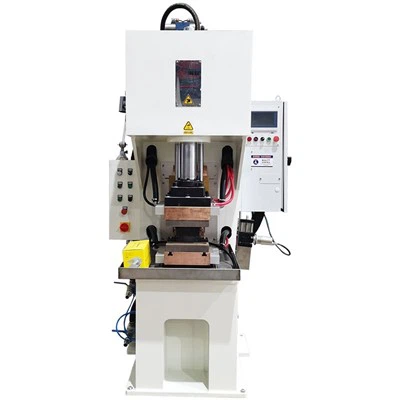
1. Core Welding Principles: From Atomic Bonding to Molten Metal Joining
The most fundamental distinction between diffusion welding and fusion welding lies in their underlying joining mechanisms. These differences determine not only process temperatures but also joint structure, electrical performance, and long-term reliability.
1.1 Diffusion Welding: Atomic-Level Bonding Without a Molten Pool
Diffusion welding is a typical solid-state welding process, widely recognized for producing high-integrity joints without melting the base materials. The solid-state diffusion welding process relies on precisely controlled temperature, pressure, and holding time to enable atomic movement across the contact interface. As atoms migrate and interdiffuse, the interface gradually transforms into a continuous metallurgical bond.
During diffusion welding, the materials remain in the solid phase throughout the process. No molten pool is formed, which eliminates many of the defects commonly associated with fusion welding methods.
In most industrial applications, the diffusion welding temperature is controlled within 50% to 80% of the material's melting point. This temperature range is sufficient to activate atomic diffusion while preventing excessive grain growth or structural damage.
Typical industrial parameter ranges include:
| Material Type | Typical Diffusion Welding Temperature | Recommended Pressure Range |
|---|---|---|
| Copper | 650–850°C | 15–35 MPa |
| Aluminum | 450–550°C | 10–25 MPa |
| Stainless Steel | 850–1050°C | 20–40 MPa |
Under these controlled conditions, microscopic voids at the interface gradually disappear, and grain boundaries grow across the interface, forming a joint structure that closely resembles the base material. Because melting and solidification do not occur, diffusion welding significantly reduces the likelihood of defects such as porosity, spatter, and solidification cracks.
This characteristic makes copper busbar diffusion welding and battery flexible connector diffusion welding particularly suitable for industries that demand extremely low electrical resistance and high structural integrity, such as:
- Electric vehicle battery systems
- Energy storage modules
- Power distribution busbars
- High-current electrical conductors
In these applications, joint reliability directly affects operational safety and system performance.
1.2 Fusion Welding: High-Temperature Liquid Metal Joining
In contrast, traditional fusion welding relies on external heat sources to melt the base materials at the joint interface. Once molten metal forms, it flows together to create a weld pool. As the molten metal cools and solidifies, a solid weld joint is formed.
Common fusion welding processes include:
- Arc welding
- MIG welding (Metal Inert Gas)
- TIG welding (Tungsten Inert Gas)
- Laser welding
- Oxy-fuel welding
During fusion welding, temperatures typically exceed the melting point of the material. For example:
- Mild steel melts at approximately 1500°C
- Copper melts at approximately 1085°C
- Aluminum melts at approximately 660°C
Because the material undergoes melting and solidification, the weld zone develops a distinct solidification microstructure. The grain size within the weld metal is often larger than that of the base material, which can influence mechanical strength, electrical conductivity, and fatigue resistance. Additionally, the heat-affected zone (HAZ) surrounding the weld often experiences changes in mechanical properties, such as increased hardness or reduced ductility.


2. Joint Characteristics: Differences in Surface Quality and Internal Structure
The performance of a welded joint depends not only on its visual appearance but also on its internal structure and electrical characteristics. Understanding these differences is essential when comparing diffusion welding vs fusion welding performance.
2.1 Diffusion Welding: Smooth, Seamless, and Structurally Integrated
One of the defining features of diffusion welding joints is their structural continuity. Under proper process conditions, the interface becomes nearly indistinguishable from the base material, resulting in a smooth surface with minimal visible marks.
Because no molten metal is involved, there is no formation of weld beads or excessive surface buildup. This makes diffusion welding particularly advantageous in applications where dimensional precision and appearance are critical.
From an electrical perspective, diffusion welding joints demonstrate superior performance. Industry test results have shown that, in copper conductor applications, diffusion-welded joints can reduce contact resistance by 20% to 40% compared to traditional fusion welds.
Lower contact resistance offers several practical benefits:
- Reduced energy loss
- Lower operating temperature
- Improved electrical efficiency
- Increased operational safety
Furthermore, diffusion welding joints typically exhibit enhanced fatigue resistance. The absence of abrupt microstructural transitions reduces stress concentration, making these joints more resistant to crack propagation under repeated thermal or mechanical loading.
2.2 Fusion Welding: Weld Beads, Surface Irregularities, and Post-Processing Requirements
Fusion welding joints typically display visible weld beads, reinforcement zones, and heat-affected areas. While these features are acceptable in many structural applications, they may require additional finishing processes when higher precision or improved surface quality is necessary.
Common post-weld finishing steps include:
- Grinding
- Spatter removal
- Surface polishing
- Heat treatment
Fusion welding is also more susceptible to certain types of defects, including:
- Porosity
- Cracking
- Spatter formation
- Distortion
In large-scale production environments, these defects can lead to inconsistent product quality and increased rejection rates, ultimately raising overall manufacturing costs.
3. Process Requirements and Operational Complexity: Precision Control vs Experience-Based Operation
The stability of any welding process depends heavily on parameter control and equipment performance. The operational demands of diffusion welding machines differ significantly from those of traditional fusion welding systems.
3.1 Diffusion Welding: Strict Multi-Parameter Coordination
Diffusion welding requires precise coordination among three essential parameters:
- Temperature
- Pressure
- Holding time
These parameters must be carefully balanced to ensure proper atomic diffusion. If the temperature is insufficient, atomic mobility decreases, resulting in incomplete bonding. Conversely, excessive pressure may cause surface deformation or material indentation.
Typical parameter ranges for copper diffusion welding applications include:
- Welding pressure: 15–35 MPa
- Holding time: 5–30 seconds
- Temperature control accuracy: within ±2°C
For this reason, high-quality industrial diffusion welding machines are typically equipped with:
- Precision temperature control systems
- Stable hydraulic or servo-driven pressure systems
- Programmable process control units
When evaluating diffusion welding machine selection, companies should also verify whether the equipment supports parameter storage and production data traceability. These capabilities are especially valuable for achieving consistent weld quality in mass production environments.
3.2 Fusion Welding: Relatively Flexible Parameter Requirements
Fusion welding processes generally allow for greater flexibility in parameter control. The primary operating variables typically include welding current, voltage, and travel speed.
In many workshops, experienced welders rely on visual observation of the weld pool to make real-time adjustments. This approach allows flexibility but may introduce variability, particularly in high-volume production settings.
As automation increases, reliance on manual judgment can become a limitation, especially when product consistency is critical.
4. Material Compatibility and Application Scenarios: Versatility vs Specialized Applications
Material properties and intended use cases play a decisive role in determining the most suitable welding process.
4.1 Diffusion Welding: Ideal for Multi-Metal and Dissimilar Material Joining
Diffusion welding is widely recognized for its ability to join dissimilar metals with high reliability. This capability makes it particularly valuable in industries where traditional welding methods struggle to maintain joint quality.
Typical material combinations include:
- Copper to copper
- Copper to aluminum
- Aluminum to aluminum
- Copper to nickel
- Stainless steel to copper
In the renewable energy and electric vehicle sectors, battery flexible connector diffusion weldinghas become an increasingly standardized method due to its ability to maintain stable conductivity under high-current conditions.
Typical applications include:
- Electric vehicle battery connectors
- Power busbar systems
- Energy storage conductor assemblies
- High-frequency electrical components
These industries demand joints with low resistance, high mechanical strength, and long-term durability.
4.2 Fusion Welding: A Mature Solution for Similar Metal Structures
Fusion welding remains widely used in structural applications involving similar metals, particularly where cost efficiency and speed are primary considerations.
Typical applications include:
- Structural steel fabrication
- Industrial machinery frames
- Pipeline systems
- Heavy equipment manufacturing
These applications typically prioritize structural strength over electrical performance, making fusion welding a practical and economical choice.
5. Environmental Impact and Maintenance Requirements: Green Manufacturing vs Emission Challenges
Environmental regulations are becoming increasingly strict worldwide, making process sustainability an important factor in equipment selection.
5.1 Diffusion Welding: Clean Operation with Minimal Environmental Impact
Diffusion welding processes typically generate minimal emissions during operation. Because no filler materials or molten pools are involved, the process produces little to no smoke, spatter, or hazardous gases.
This characteristic reduces the need for complex ventilation or filtration systems, making diffusion welding an environmentally friendly solution for modern manufacturing facilities.
Maintenance requirements are also relatively predictable. Since fewer consumables are used, long-term operating costs are often lower, especially in automated production environments.
5.2 Fusion Welding: Emissions and Additional Environmental Controls
Fusion welding processes generate fumes, spatter, and metal particles during operation. To comply with environmental regulations, manufacturers often need to install exhaust systems and filtration equipment.
These additional systems increase both initial investment costs and long-term maintenance requirements. In large-scale production settings, environmental compliance can become a significant operational consideration.
Conclusion
In summary, diffusion welding and fusion welding differ fundamentally in terms of welding principles, joint structure, process control, material compatibility, and environmental performance. Diffusion welding, characterized by its solid-state atomic bonding mechanism and absence of molten metal, offers superior electrical performance, structural consistency, and long-term reliability. These advantages make it an increasingly preferred solution in industries such as electric vehicles, energy storage systems, and power distribution manufacturing.
Fusion welding, on the other hand, continues to provide a cost-effective and widely applicable solution for structural metal joining, particularly in applications where electrical performance is not a primary concern.
For companies evaluating diffusion welding machine selection, it is advisable to first define material type, thickness range, production volume, and quality requirements. When applications involve high-current conductors, dissimilar metal joining, or strict reliability standards, diffusion welding technology often delivers greater long-term value despite its higher initial investment.
As industrial manufacturing continues to evolve toward higher precision and reliability standards, diffusion welding is expected to play an increasingly important role in the future of advanced metal joining technologies.


